Leonard Cassuto
Professor of English, Fordham University
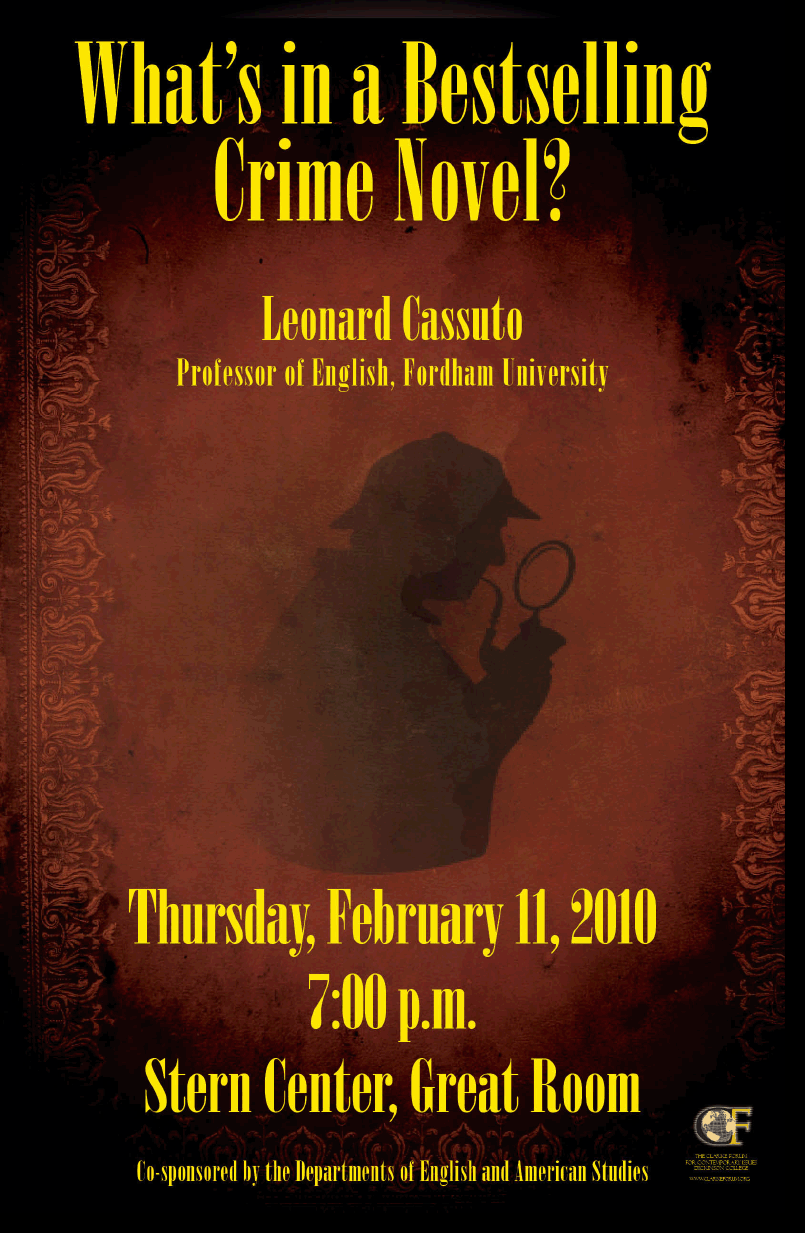
What’s in a Bestselling Crime Novel?
Thursday, February 11, 2010
Stern Center, Great Room, 7:00 p.m.
After exploring the origins and complexities of “bestsellers,” Cassuto applies his conclusions to the way crime novels are read and understood in the U.S.
Co-sponsored by the Departments of English and American Studies
Topical Background
The broad genre of “crime fiction” first captured the American imagination in the mid-19th century. Edgar Allen Poe’s short story “The Murders in the Rue Morgue,” published in 1841, told of a dark mystery based in Paris. Its protagonist, C. Auguste Duperin, appears to be one of the first characters resembling what would come to be the archetypical crime fiction detective.
Soon after Poe’s works hit the literary world, Britain’s Sir Arthur Conan Doyle turned the detective novel into a phenomenon. The popularity of his Sherlock Holmes anthology transcended the Atlantic and sparked an enormous production of crime and detective novels. Crime fiction quickly became one of America’s favorite literary genres.
New categories of crime fiction are popularized with each generation of crime novelists. “Whodunits,” “hardboiled” fiction, legal thrillers, police mysteries, and spy novels are just a few of the many types of crime Read more