Themes

Thursday, November 5, 2026

Anita Tuvin Schlechter Auditorium, 7 p.m.

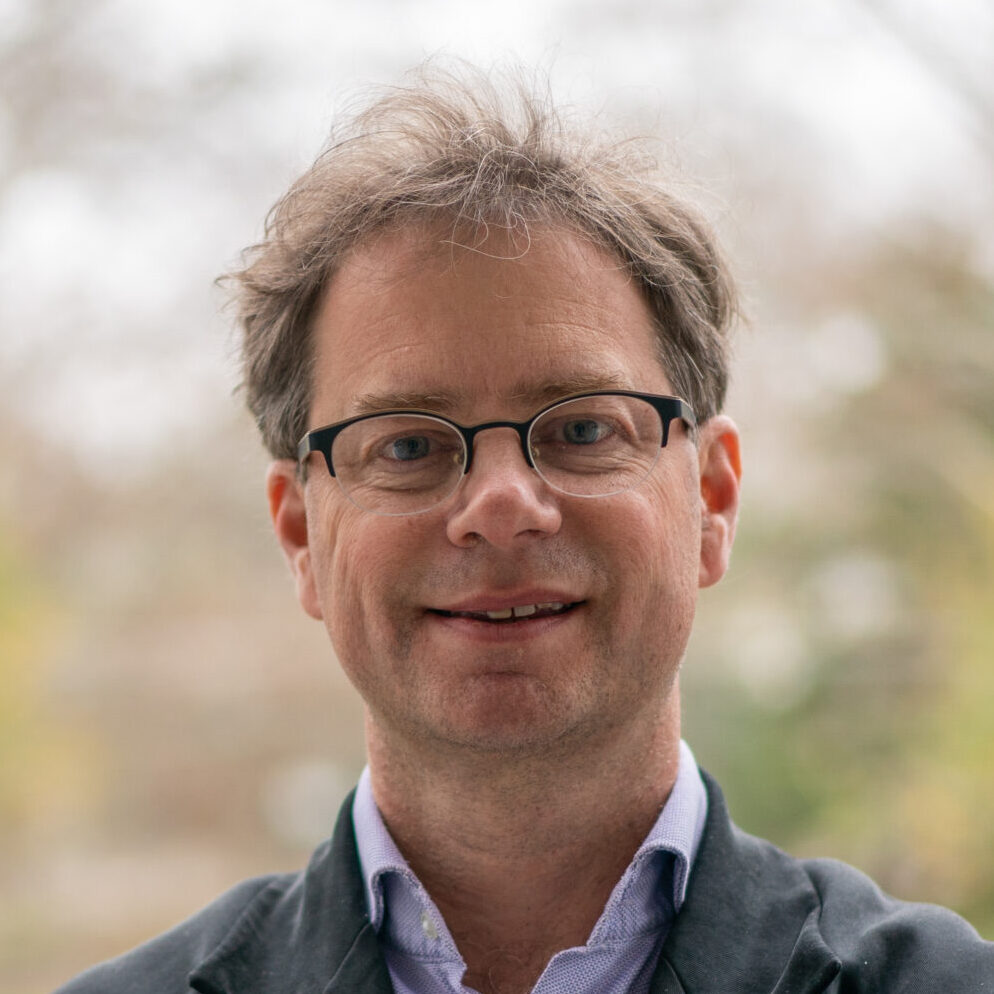
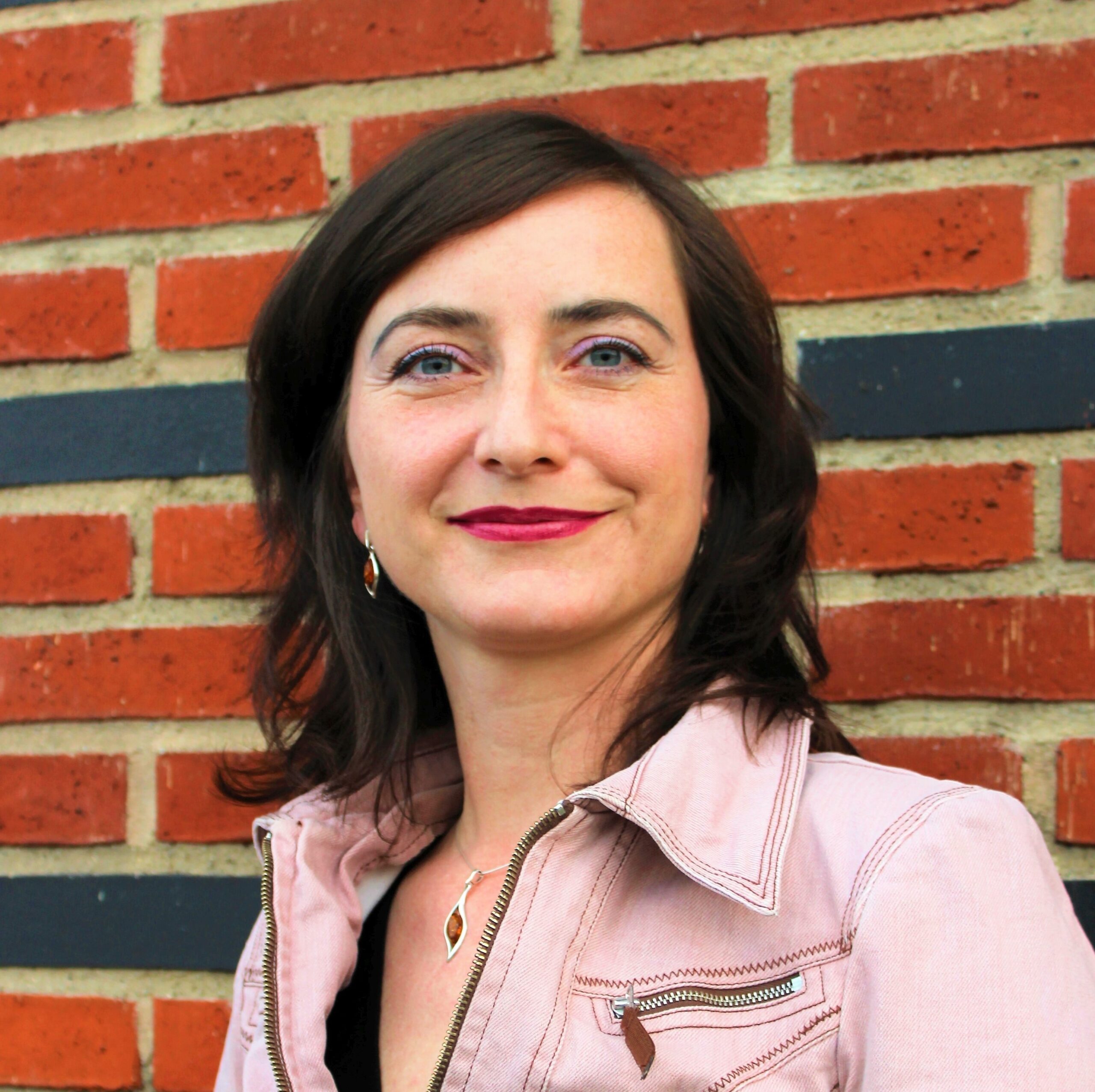
Tree Obsessions: Celebrating the Ephemeral in Long-Lived Plants

William (Ned) Friedman is the Arnold Professor of Organismic and Evolutionary Biology

In an age of environmental destruction and outright murder of our biological brethren, there is something deeply troubling about humanity’s relationship with the natural world. Technology has left us with mere facsimiles of nature – pixilated abstractions of biodiversity through satellite imagery, decoded strings of DNA – and we have become fundamentally disconnected from actual nature. I will argue that by mindfully engaging in the simple act of observing nature (and obsessing about it) in arboreta, botanical gardens, and our backyards, trees can help us forge a personal and empathic lifelong connection with the “other,” the vast and variant organisms with which we share the planet. As Johann Wolfgang Goethe aptly wrote: “To wander about among a vegetation which is new to one is pleasant and instructive.  It is the same with familiar plants as with familiar objects: in the end we cease to think about them at all.  What is seeing without thinking?” Indeed, seeing without thinking lies at the very heart of the human-created crisis of global change and extinction, and the Read more
Monday, October 5, 2026

Anita Tuvin Schlechter Auditorium, 7 p.m.

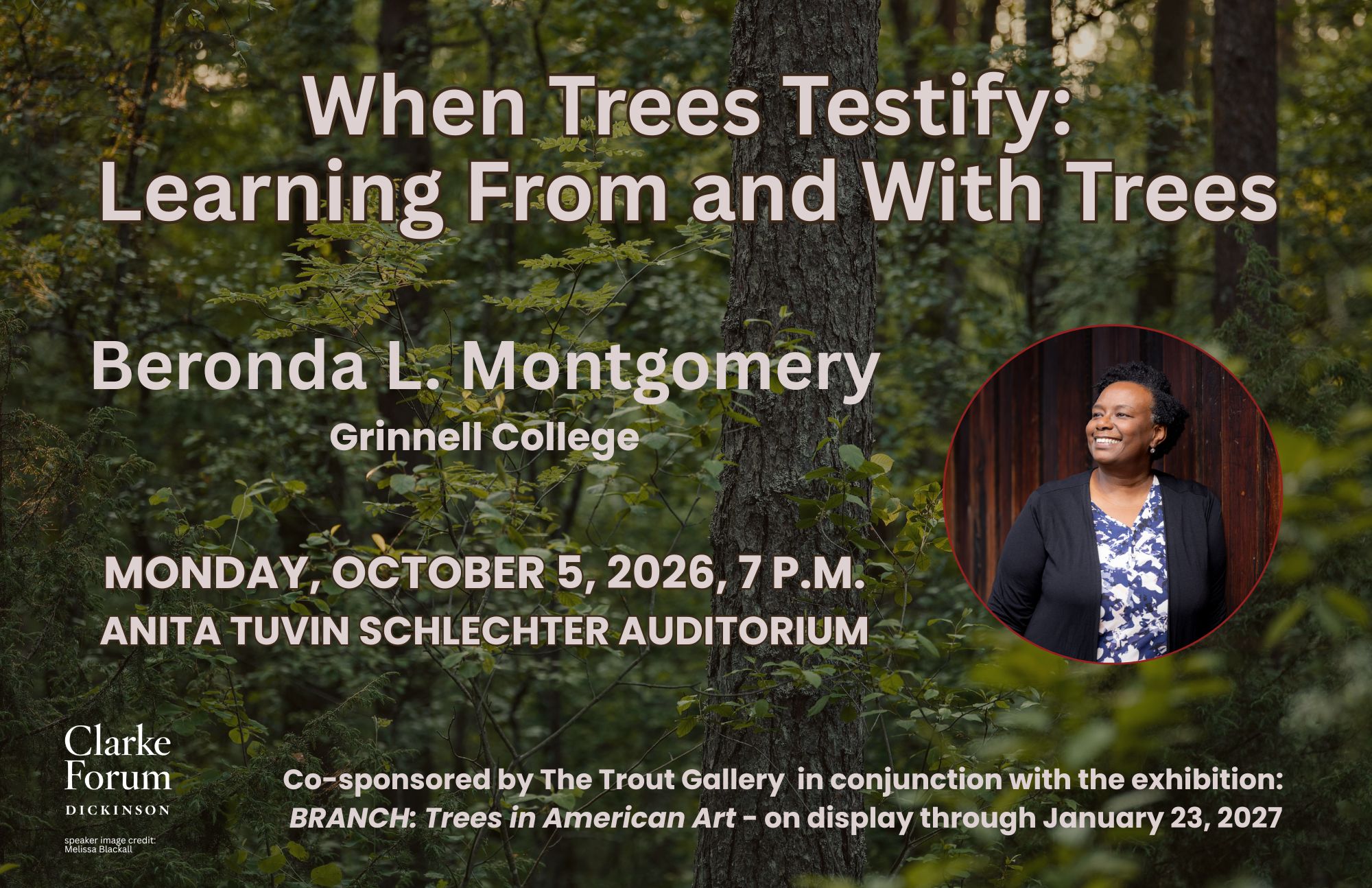
When Trees Testify: Learning From and With Trees

Beronda L. Montgomery is a writer, science communicator, researcher and professor at Grinnell College

Montgomery will discuss themes from her recent book, When Trees Testify: Science, Wisdom, History, and America’s Black Botanical Legacy, including the ways seven trees—as well as the cotton shrub—are intertwined with Black history and culture. The histories of trees in America are also the histories of Black Americans. Pecan trees were domesticated by an enslaved African named Antoine; sycamore trees were both havens and signposts for people trying to escape enslavement; poplar trees are historically associated with lynching; and willow bark has offered the gift of medicine. These trees, and others, testify not only to the complexity of the Black American narrative but also to a heritage of Black botanical expertise that, like Native American traditions, predates the United States entirely.

The program is presented by the Clarke Forum for Contemporary Issues and co-sponsored by The Trout Gallery and is in conjunction with the Trout Gallery exhibition Branch: Trees in American Art. It is also part of the Clarke Forum’s annual theme, Revolutions.

Biography (provided by the speaker)

Beronda L. Read more

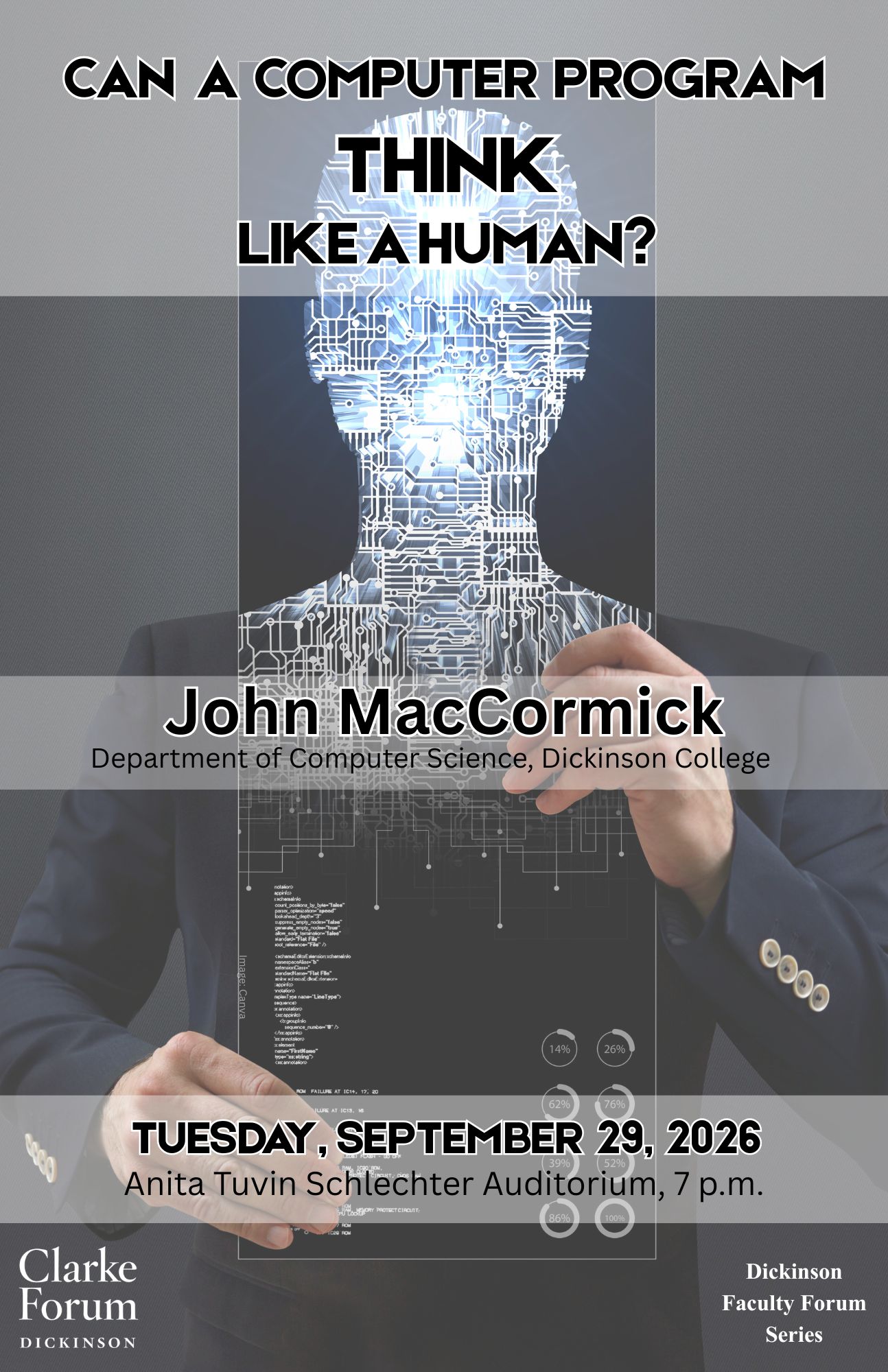
Tuesday, September 29, 2026

Anita Tuvin Schlechter Auditorium, 7 p.m.

Dickinson Faculty Forum

Can a Computer Program Think Like a Human?

John MacCormick is Professor of Computer Science at Dickinson College

Computer scientists have known since the 1950s that it is possible, in principle, for a computer to emulate human cognitive processes.  But the startling advances in artificial intelligence over the last two decades have given us new insights into some specific similarities between human cognition and the computer programs known as a deep neural networks. These similarities will be explained without assuming any background knowledge from the audience. Armed with an understanding of how modern AI systems work, we can debate the consequences for a liberal arts education.

This program is presented by the Clarke Forum for Contemporary Issues and part of it’s Dickinson Faculty Forum series. It is also affiliated with the Clarke Forum’s annual theme, Revolutions.

Biography (provided by the speaker)

John MacCormick’s work in computer science spans several sub-fields, including artificial intellegence, computer vision, large-scale distributed systems, computer science education, and the public understanding of computer science. He is the author of four books, including Nine Algorithms That Changed the Future: The Ingenious Ideas That Drive Today’s Computers and  Read more

Wednesday, September 23, 2026

Anita Tuvin Schlechter Auditorium, 7 p.m.

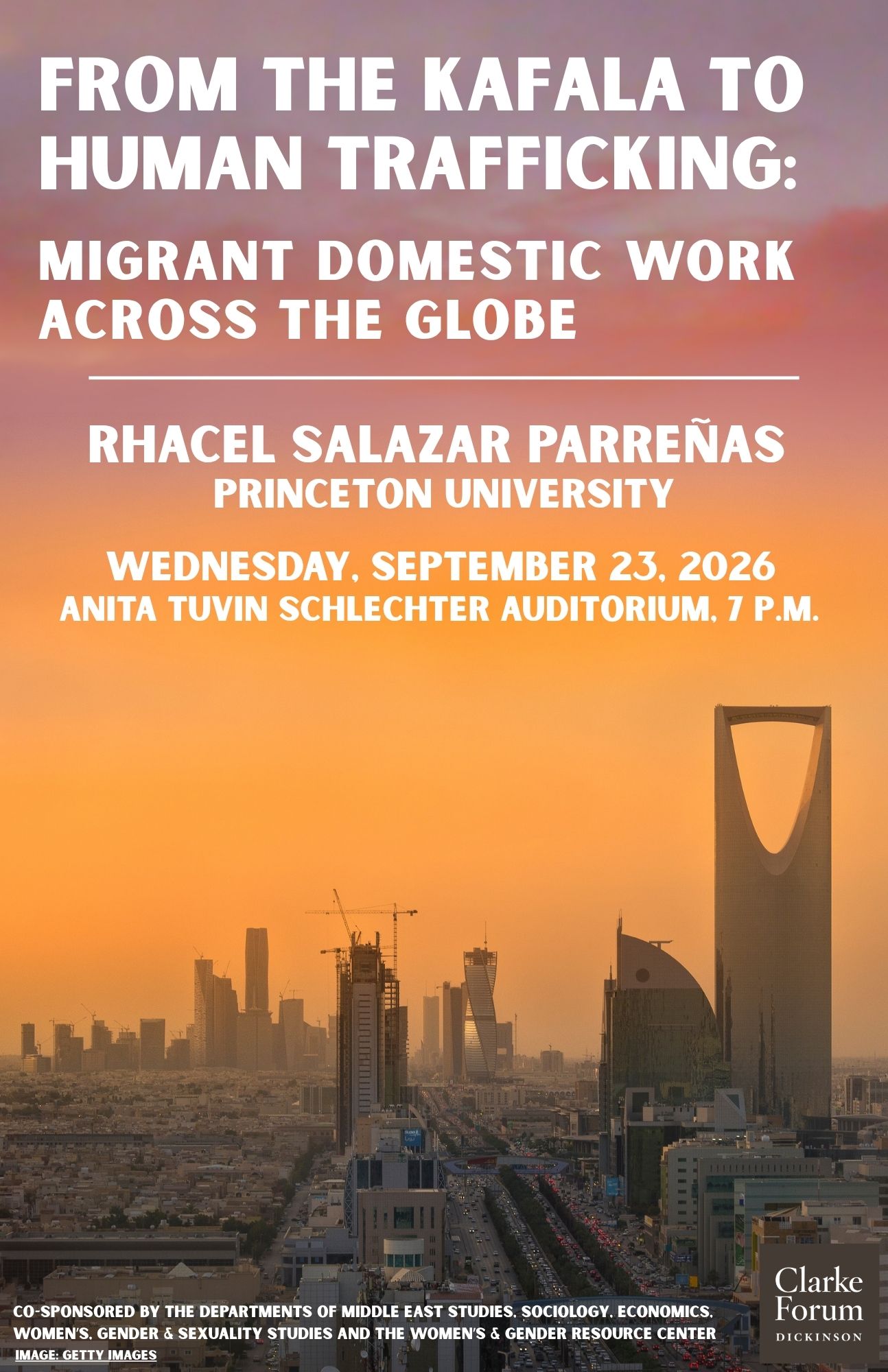
From the Kafala to Human Trafficking: Migrant Domestic Work Across the Globe

Rhacel Salazar Parreñas is the Doris Stevens Professor in Women’s Studies and Professor of Sociology and Gender and Sexuality Studies at Princeton University

This talk provides a global overview of the labor exploitation faced by migrant domestic workers. It demonstrates how these workers share a legal status as bound laborers who cannot easily leave their jobs, rendering them uniquely vulnerable to exploitation and trafficking. Across the globe, migrant domestic workers operate under systems where their legal status mandates they work solely for a specific sponsor and, for the most part, live in their employer’s home. This reality suggests that the kafala—or a kafala-like system—is not unique to the Middle East, but is instead a global condition of labor.

This structural binding reveals that migrant women, who make up the vast majority of this workforce, are not treated as independent economic migrants, but are instead legally reduced to household dependents. This status severely limits their ability to participate in a free labor market, preventing them from seeking higher salaries or better labor standards, while simultaneously leaving them highly exposed to abuse. Read more

Monday, September 14, 2026 – Winfield C. Cook Constitution Day Program

Anita Tuvin Schlechter Auditorium, 7 p.m.

Winfield C. Cook Constitution Day Program

Freedom is Made Safe … Through Character and Learning

Jane E. Calvert, The John Dickinson Writings Project
Jeffrey Rosen, George Washington University Law School

The Clarke Forum and the Department of Music present Jane Calvert (author of Penman of the Founding: A Biography of John Dickinson) and Jeff Rosen (CEO Emeritus of the National Constitution Center) for an evening of conversation and performance celebrating Constitution Day. Organized by Dickinson Professor of Music, Jennifer Blyth, readings from Calvert’s book form the basis of a discussion that will be complemented by performed versions of “The Liberty Song,” and some original compositions from Jeff Rosen’s podcast on “The Pursuit of Happiness.”

The program is presented by the Clarke Forum for Contemporary Issues and the Department of Music.  It is also part of the Clarke Forum’s annual theme, Revolutions.

Biographies (provided by the speakers)

Headshot of Jane CalvertDr. Jane E. Calvert is founding director and chief editor of The John Dickinson Writings Project (JDP). She received her Ph.D. in early American history from the University of Chicago in 2003. Her work focuses on the intersection of theology and political thought in Read more

Thursday, September 10, 2026

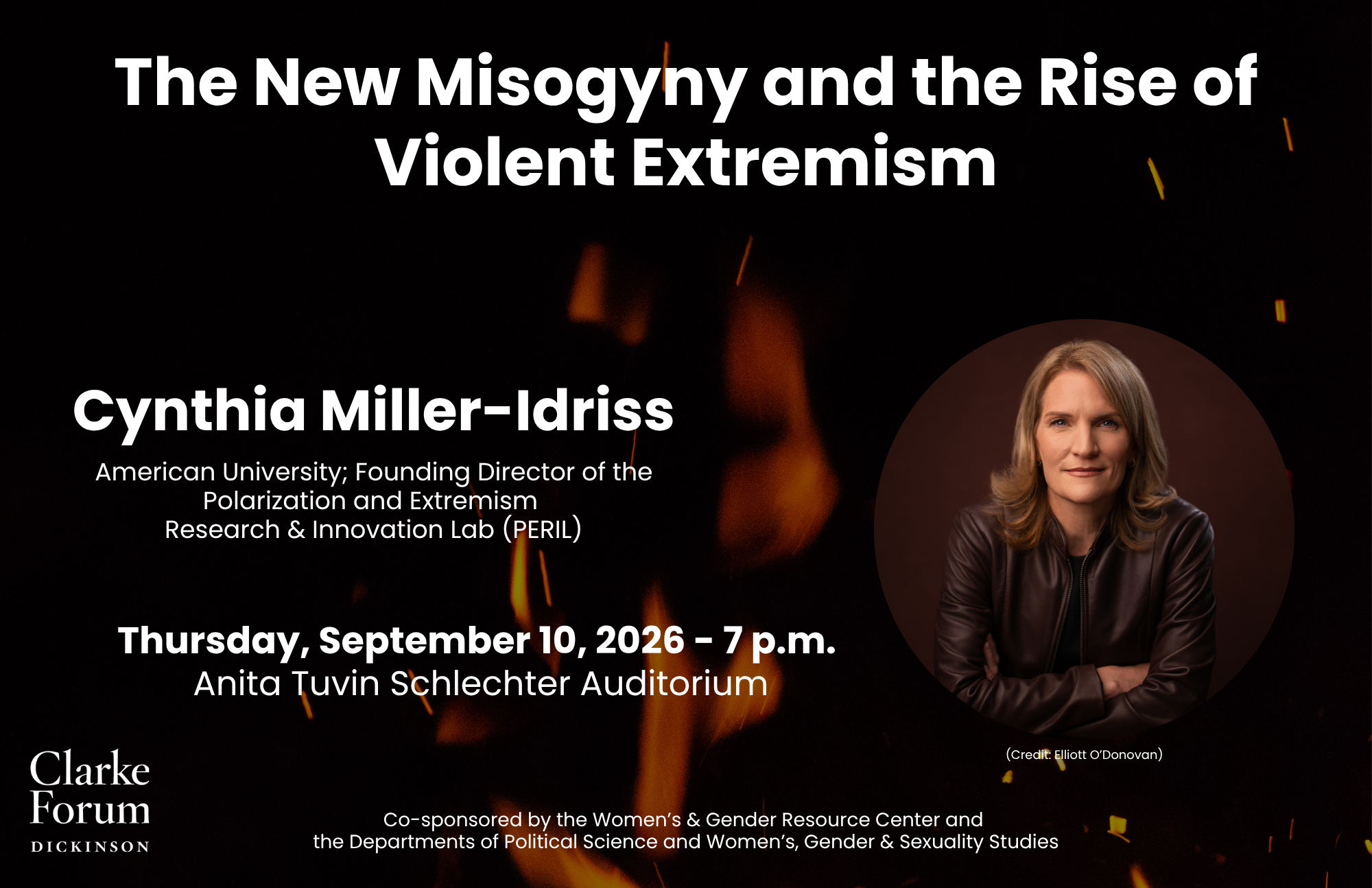
Poster for Cynthia Miller-Idriss's talk

Anita Tuvin Schlechter Auditorium, 7 p.m.

No livestream, however, the program will be recorded for future campus-only viewing.

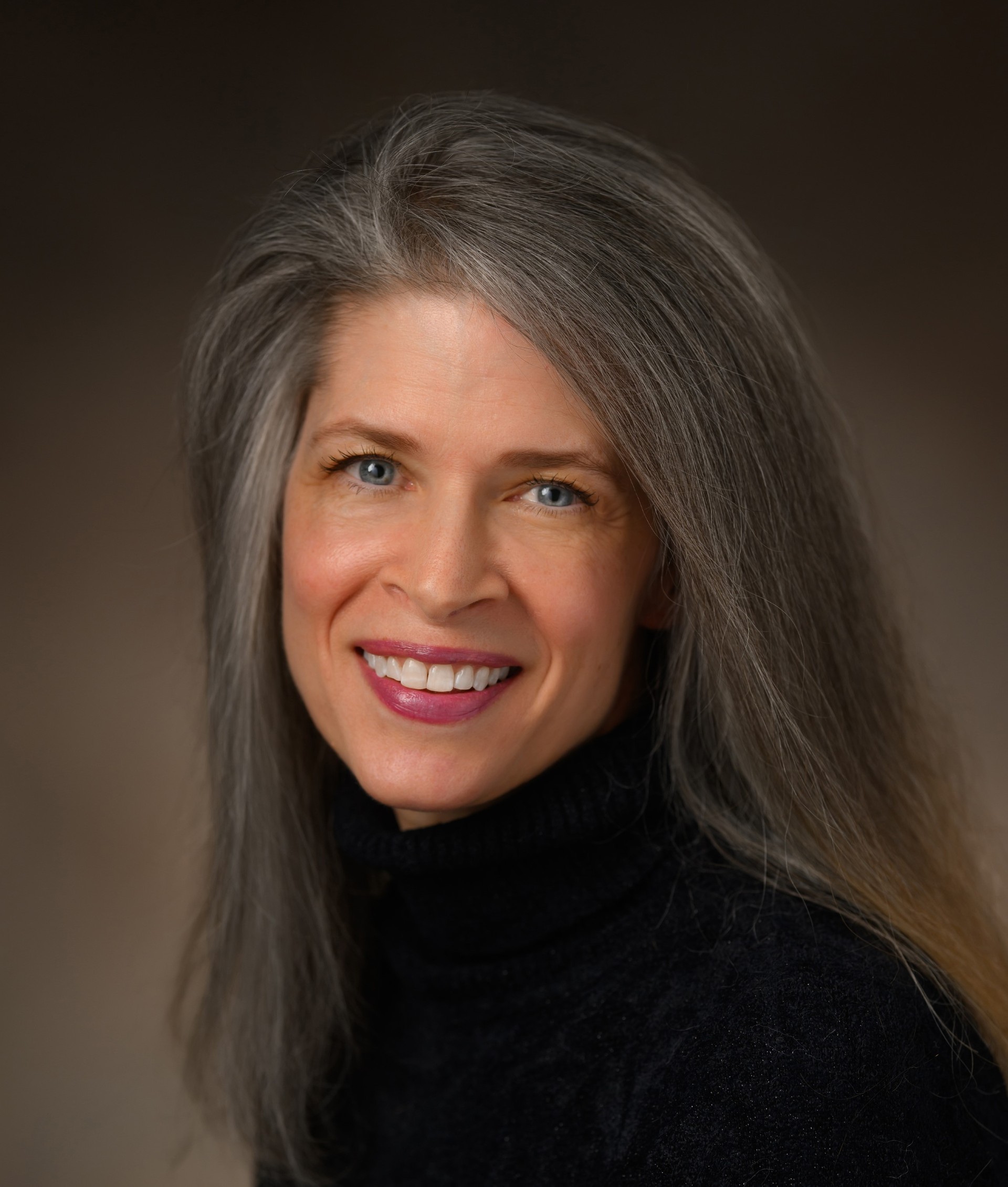
The New Misogyny and the Rise of Violent Extremism

Cynthia Miller-Idriss,  professor in the School of Public Affairs and in the School of Education at the American University and founding director of the Polarization and Extremism Research and Innovation Lab (PERIL)

What two things do most mass shooters, terrorists, or violent extremists have in common? Most of us know the first: they are almost always men or boys. But the second? They are almost always virulent misogynists, homophobes, or transphobes—even if they are also motivated by racism, antisemitism, or xenophobia. In dozens of incidents from North America to Norway to New Zealand, an increasing number of misogynist incel (involuntarily celibate) and male supremacist attackers have explicitly targeted and killed women, blaming feminism or sexual frustration with women as motivation for their attacks. Yet, despite all evidence, the bright red thread of misogyny running through these attacks is barely acknowledged by the media or even experts—and this failing leaves us powerless to stop the violence. Cynthia Miller-Idriss, a leading expert on extremism, will discuss this crucial oversight, revealing how an epidemic of misogyny—both Read more

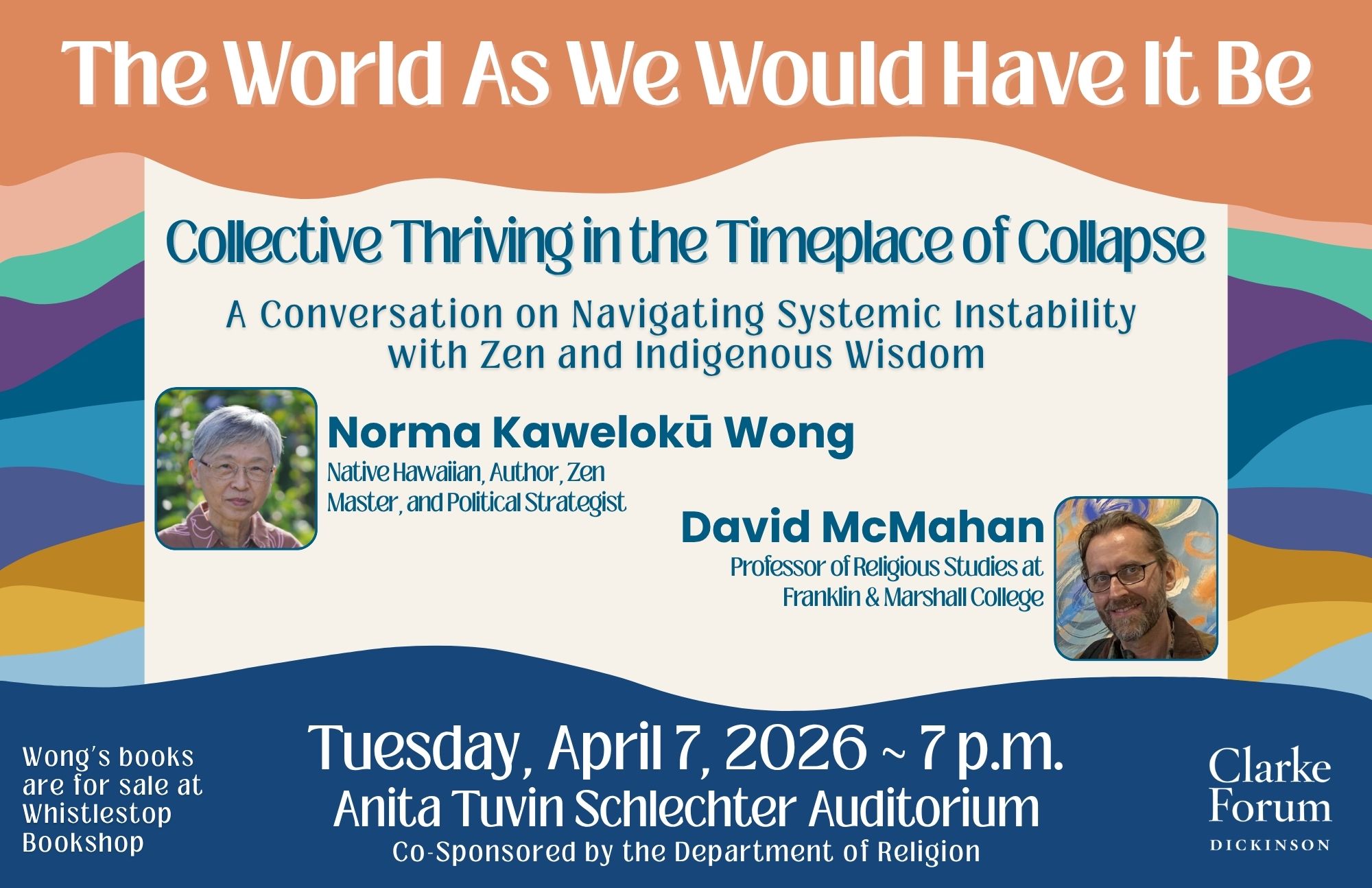
Tuesday, April 7, 2026

Anita Tuvin Schlechter Auditorium, 7 p.m.

Livestream Link

The World As We Would Have It Be: Collective Thriving in the Timeplace of Collapse

Norma Kawelokū Wong (Collective Acceleration), Native Hawaiian and Hakka Writer/Teacher, 86th Generation Zen Master, and Political Strategist

David L. McMahan, the Charles A. Dana Professor of Religious Studies at Franklin & Marshall College in Pennsylvania

“We know the story of the collapse. We have much less imagination of the timeplace of the other side. Thus, the far horizon story should always take place beyond the apocalyptic time when everything completely fell apart and the skies were dark for so long no one knew lightness nor blueness. It is there and then we need to practice into.” –Norma Kawelokū Wong

We are living at a moment of rapid systemic breakdown in which chaos dominates our present condition and directs our future. Instability is no longer a failure of power but its primary technique, governing through exhaustion, fear, and confusion. Against this unpredictable, disorienting, and exhaustive background, who are we, who do we evolve to become, and how do we show up in this time of collapse? How do we relate to one another and what collectives Read more

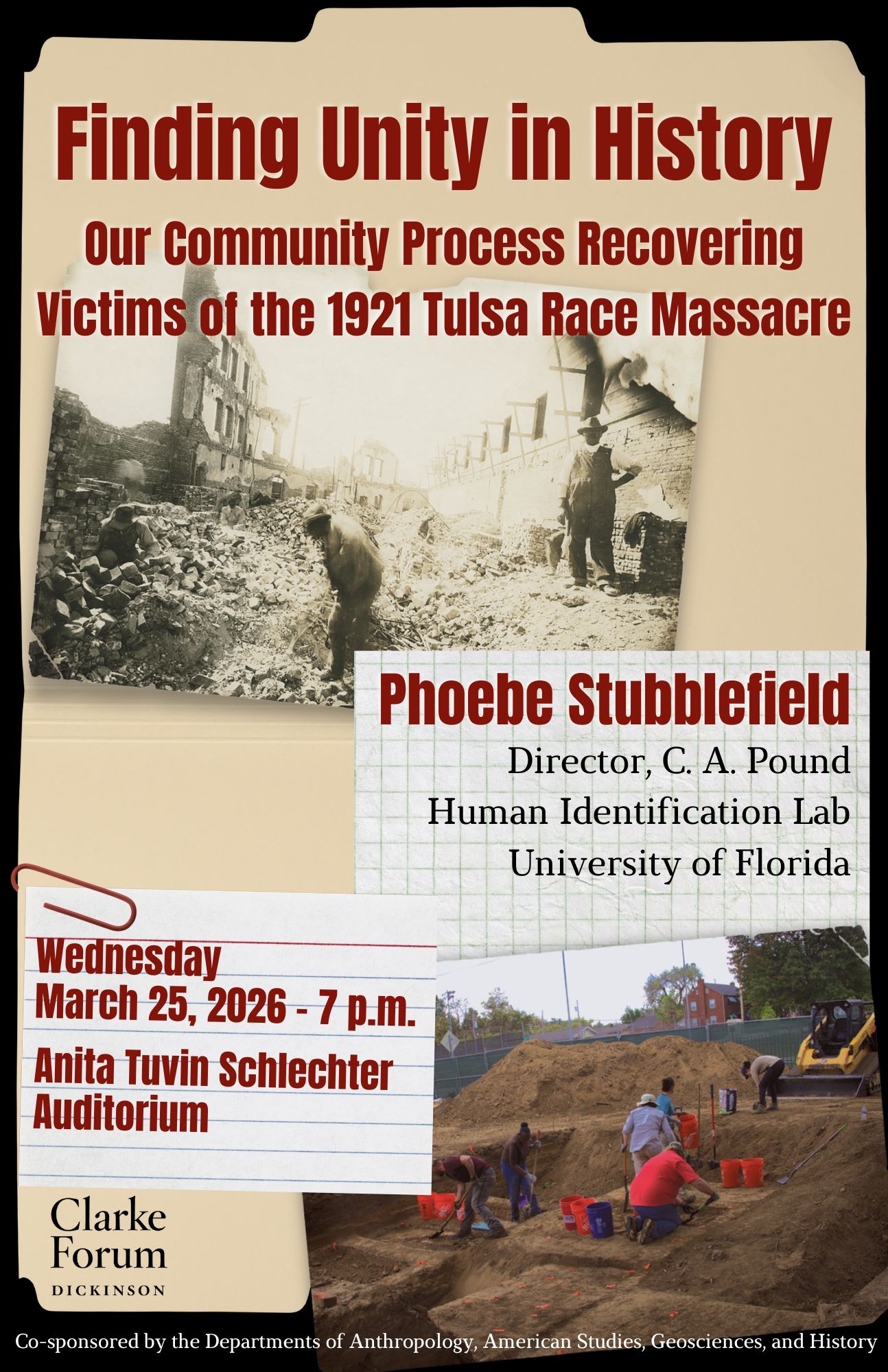
Wednesday, March 25, 2026

Anita Tuvin Schlechter Auditorium, 7 p.m.


Finding Unity in History: Our Community Process Recovering Victims of the 1921 Tulsa Race Massacre

Phoebe R. Stubblefield, Director of the C.A. Pound Human Identification Laboratory, University of Florida

On June 1,1921, the unincorporated community of Greenwood Oklahoma was systematically looted and burned by a white mob.  The conflict derived from an attempt by the mob to lynch a young African American man, Dick Rowland, who had been accused of assaulting a white woman. Thirty-nine deaths were documented by death certificates, but the actual number of deaths is unknown due to the period of martial law which ended the rioting, poor documentation, and focus on recovery.  Twenty African American adult males were buried in the Tulsa city cemetery, Oaklawn, in unmarked graves.  In 2020 former mayor GT Bynum initiated the investigation, which continues today, to recover these and any other victims of the race massacre and return them to their families.  Our team of anthropologists have recovered over 50 individuals from unmarked graves in Oaklawn, and forensic analysis has identified six with gunshot wounds that make them potential victims of the riot.  Collaboration with our historians,  geneticists, and genealogists resulted in the first Read more

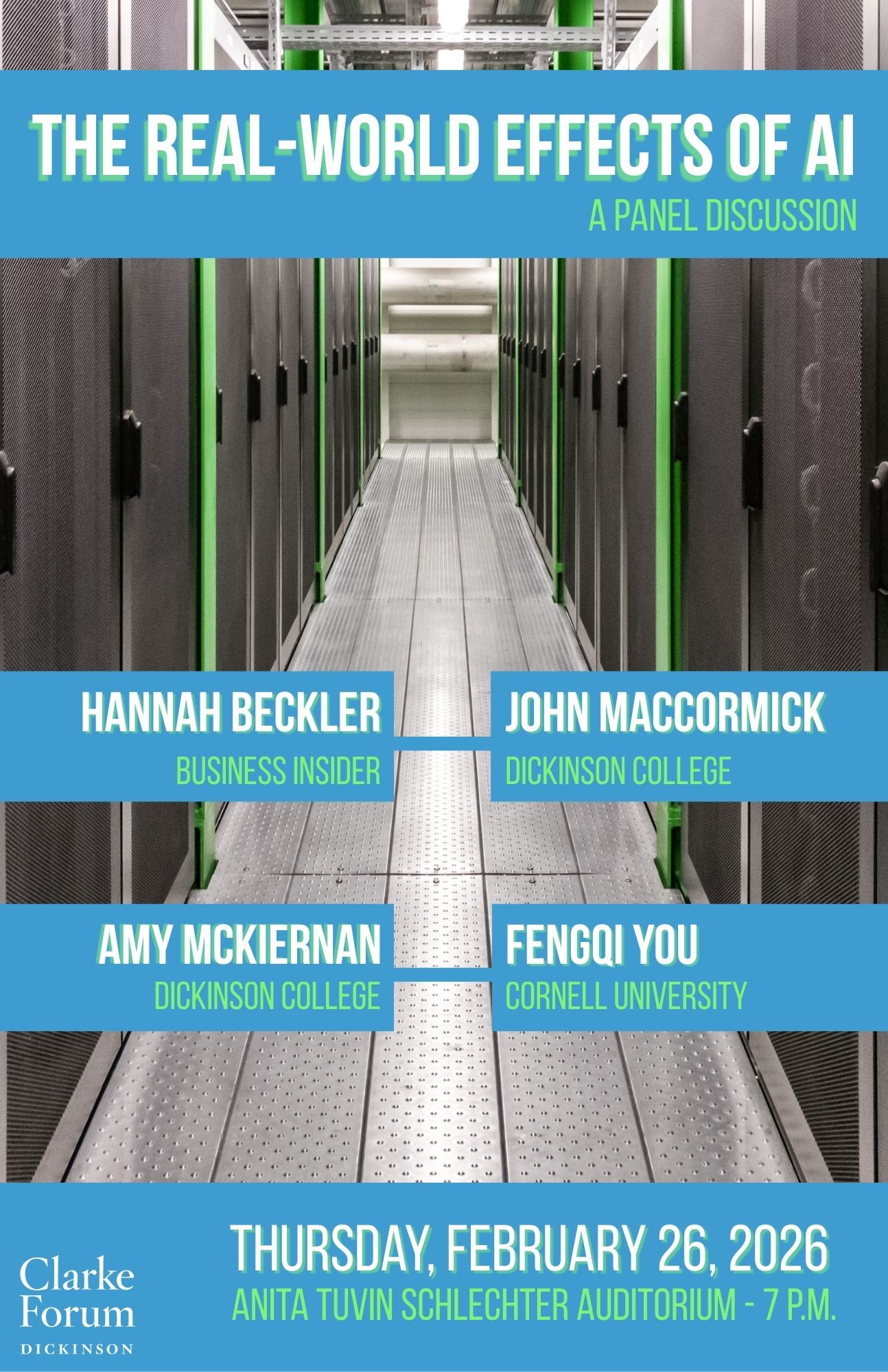
Thursday, February 26, 2026

Poster to advertise Real-World Effects of AI discussionAnita Tuvin Schlechter Auditorium, 7 p.m.

Livestream Link

Real-World Effects of AI

Panelists

Hannah Beckler, Business Insider
John MacCormick, Dickinson College
Amy McKiernan, Dickinson College
Fengqi You, Cornell University

Last July, the current US administration announced an action plan for “Winning the AI Race” which includes almost 100 federal policy actions, among them the dissolution of federal regulations around AI development and the promotion of rapid buildouts of data centers. This panel explores what the AI boom means for all of us, from scientific research, healthcare diagnostics and automated content creation to its effects on public utilities and the environment. The speakers will discuss different applications of generative AI and a range of ethical concerns its use poses. The panel will be moderated by Sara Markowitz, assistant director of the Clarke Forum for Contemporary Issues.

This program is presented by the Clarke Forum for Contemporary Issues and is part of the Clarke Forum’s Leadership in an Age of Uncertainty Series.

Topic overview written by Layla Ilarraza ’26.

Biographies (provided by the panelists)

Headshot of Hannah BecklerHannah Beckler is an award-winning investigative reporter at Business Insider. Her work has been honored with a National Magazine Award and the Hillman Award in Read more

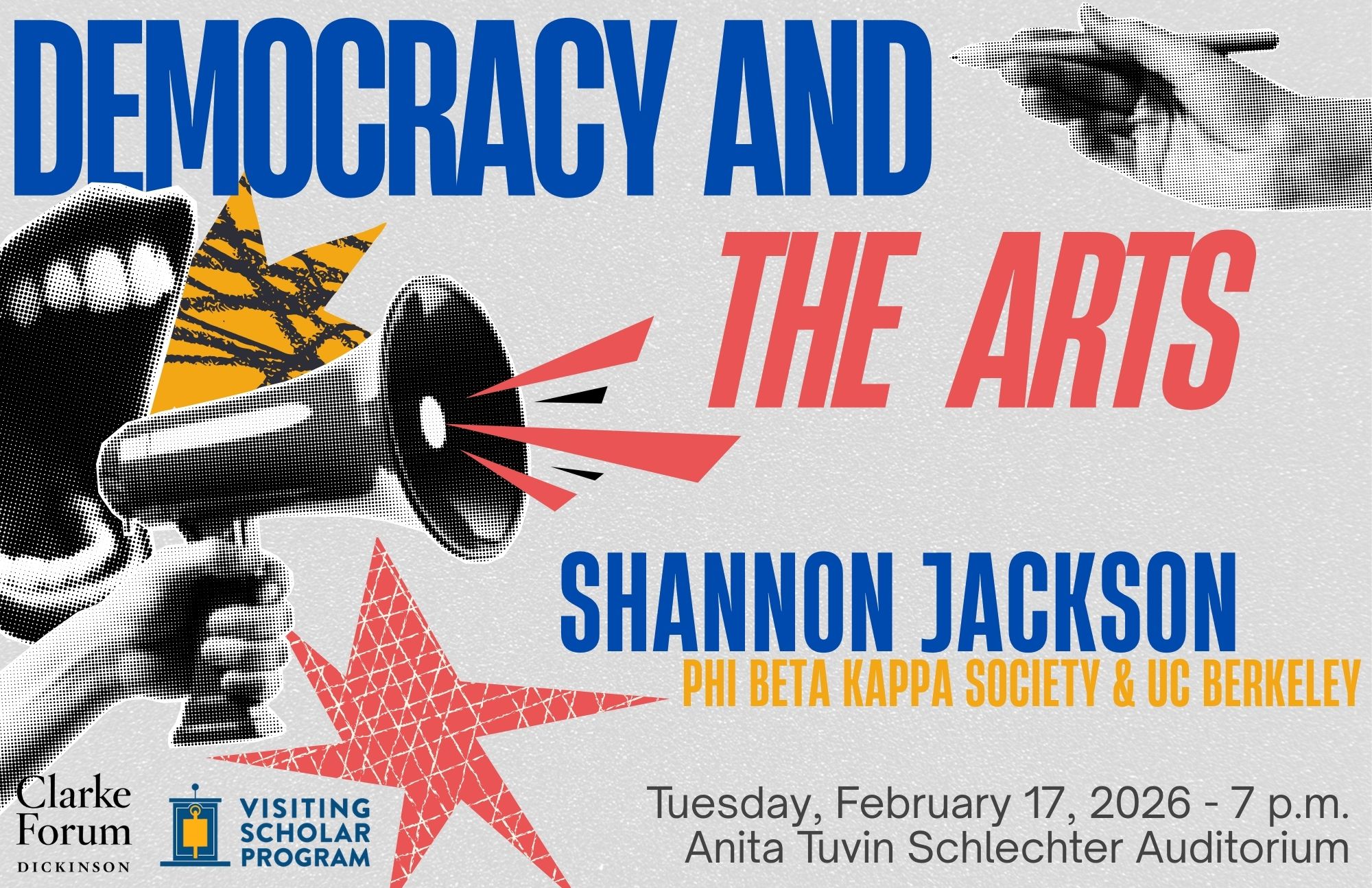
Tuesday, February 17, 2026

Anita Tuvin Schlechter Auditorium, 7 p.m.

This event is in-person only. It will not be livestreamed nor recorded for future viewing. 

Phi Beta Kappa Visiting Scholar Program

The Arts, Democracy, and Public Life

Shannon Jackson is the Cyrus and Michelle Hadidi Professor of the Arts & Humanities at UC Berkeley and the Chair of the History of Art Department

How do the arts activate public life? What is the role of the arts in sustaining democracy?  In different eras and regions of the world, citizens have responded to these questions quite differently. As we mark the 250th anniversary of both the Phi Beta Kappa Society and of the United States of America, these questions have never been more resonant. The arts are key to advancing the rights of free assembly and of free expression.  The arts contribute to social movements and to the formation of civic identity.  This lecture alights upon a range of socially engaged art practices, investigating how the arts both shape and challenge our sense of community. Considering historic examples as well as those from our present moment, we will explore how public art can open us to new ideas of what democracy might mean.

This program Read more

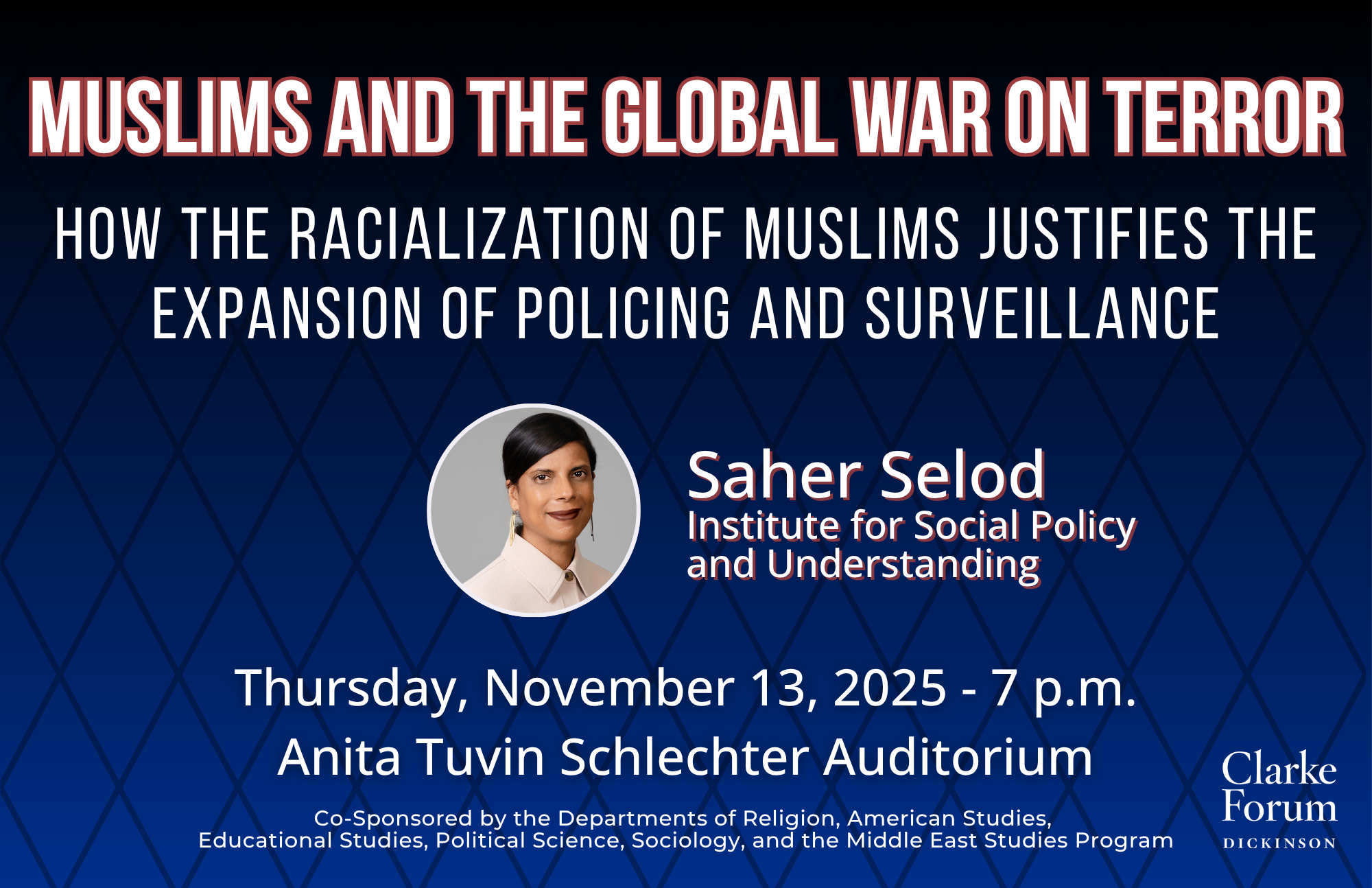
Thursday, November 13, 2025

Anita Tuvin Schlechter Auditorium, 7 p.m.

Livestream Link

Muslims and the Global War on Terror: How the Racialization of Muslims Justifies the Expansion of Policing and Surveillance

Saher Selod, Director of Research for the Institute for Social Policy and Understanding

Dr. Selod will discuss her most recent co-authored book, A Global Racial Enemy: Muslims and 21st-Century Racism,  published on Polity Press in 2024. The book examines how Muslims experience racialization on a global scale. With special attention paid to the United States, China, India, and the United Kingdom, the authors examine both the unique national contexts and – crucially – the shared characteristics of anti-Muslim racism. In this presentation she will discuss how a range of counterterrorism policies, from hyper-surveillance to racialized policing, and the ensuing representation of Islam, have worked across borders to justify and institutionalize an acceptable, state-sponsored face of racism against Muslims.

This program is presented by the Clarke Forum for Contemporary Issues and co-sponsored by the departments of religion, American studies, educational studies, political science, sociology, and the Middle East Studies Program. This program is part of the Clarke Forum’s Leadership in an Age of Uncertainty Series.

Topic overview written by Maggie Maston ’28 Read more

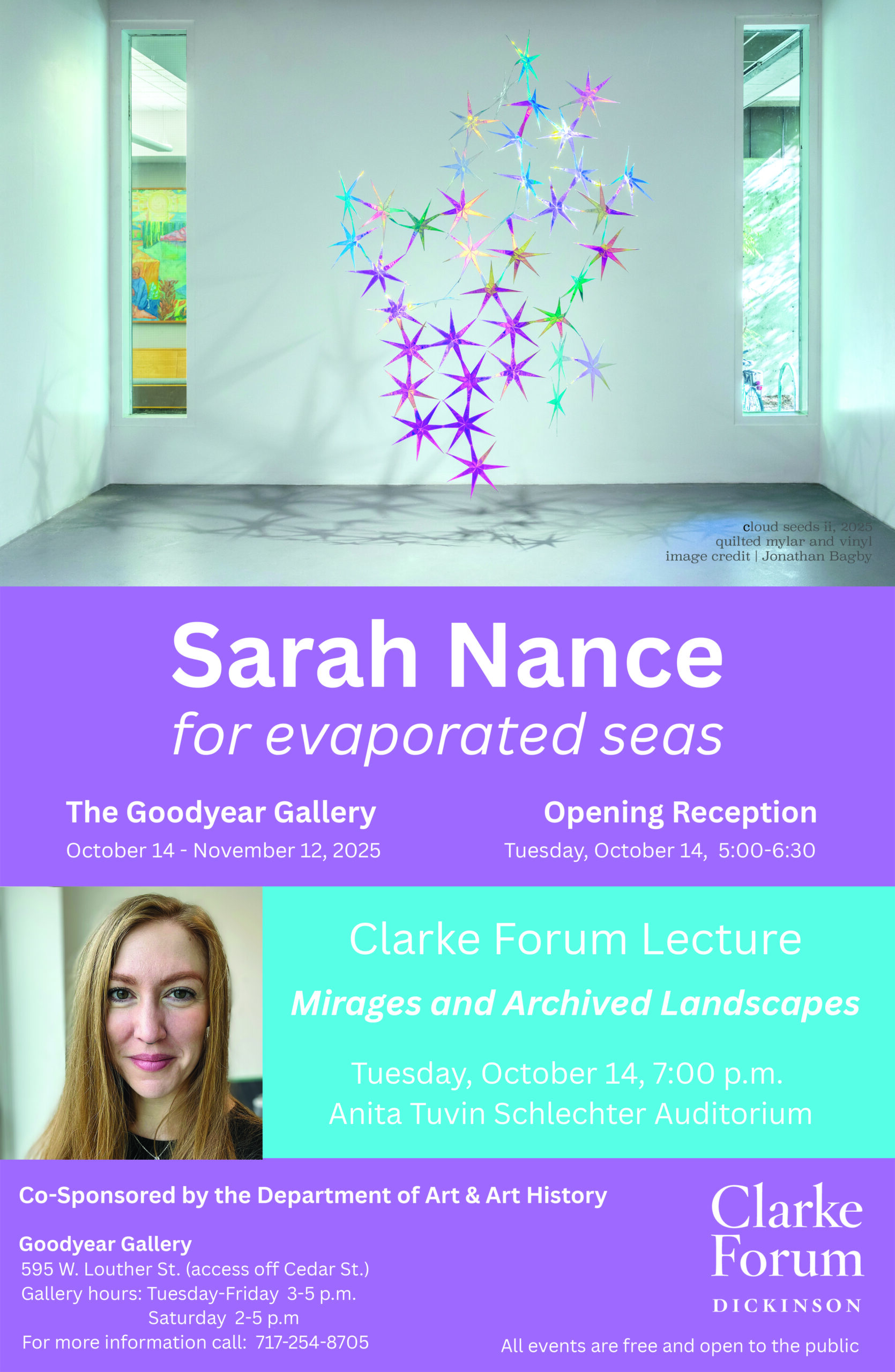
Tuesday, October 14, 2025

Poster to advertising Nancy Vance's exhibit and lectureAnita Tuvin Schlechter Auditorium, 7 p.m.

Mirages and Archived Landscapes

Sarah Nance, Assistant Professor of Integrated Practice (Binghamton University, SUNY)

Nance creates shrouds for “archived” landscapes—environments, such as former inland seas, that are now observable only through fossil records, artifacts, or recorded data. These shrouds vary from handworked textiles to experimental vocal performances and, when installed on site, become surface layers that point to complex records of deep time. In her most recent work, Nance focuses on the complex visual experience of shininess and its ability to disorient and obscure. She considers the mirage in particular, as a phenomenon that creates slippages in a landscape’s boundaries in time and space.

The program is sponsored by the Clarke Forum for Contemporary Issues and the Department of Art & Art History. The program is also part of the Clarke Forum annual theme, Thought Experiments.

This lecture complements an exhibition of Nance’s artwork on display from October 14 through November 12, 2025, at Dickinson’s Goodyear Gallery, Goodyear Building
(Cedar Street entrance), 595 West Louther Street. Gallery hours: Tues.-Fri. 3-5 p.m. and Sat. 2-5 p.m.

Topic overview written by Eli Scott-Joseph.

Biography (provided by the speaker)

Sarah Nance is an interdisciplinary artist Read more

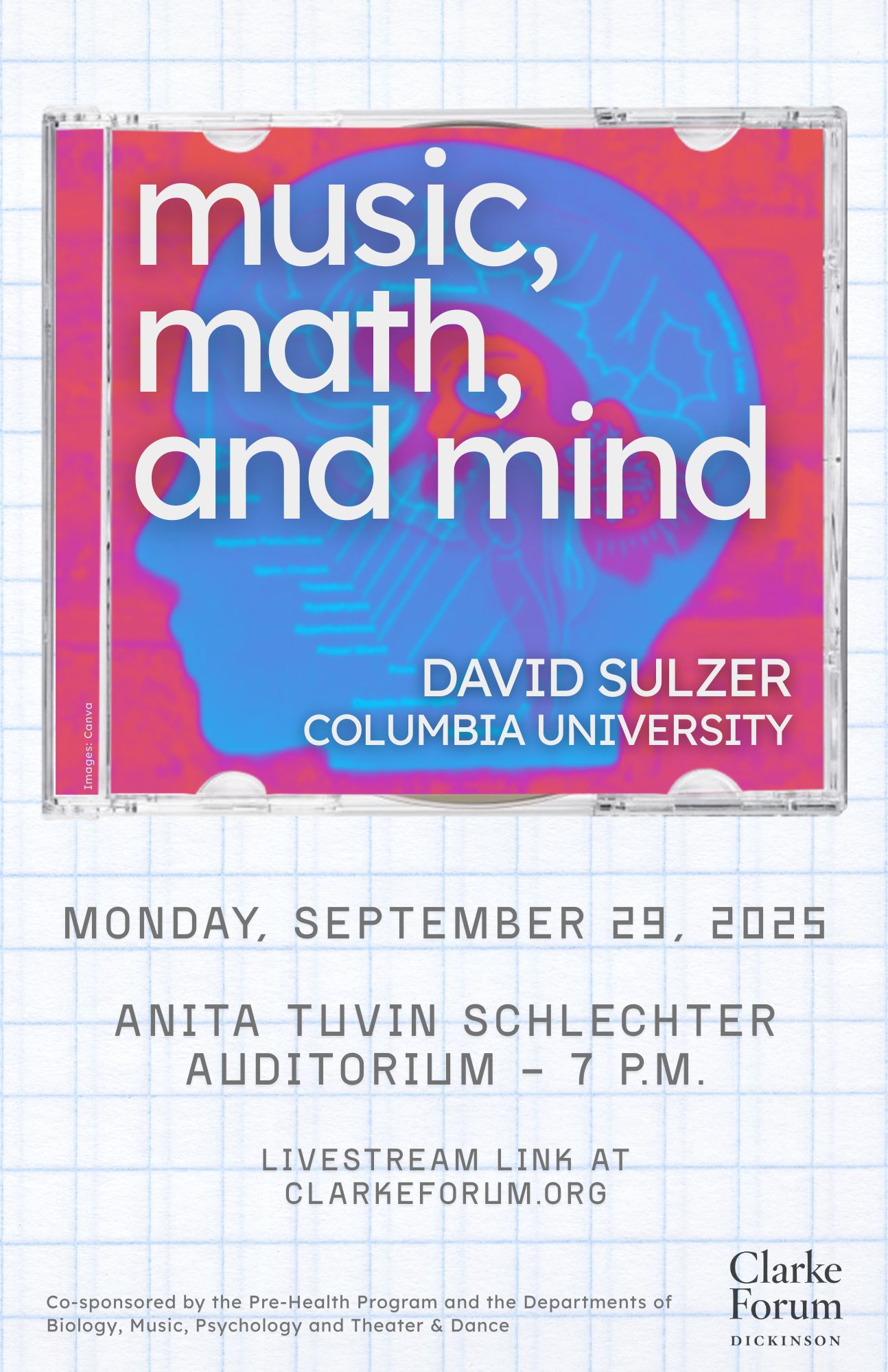
Monday, September 29, 2025

Poster to Advertise David Sulzer's programAnita Tuvin Schlechter Auditorium, 7 p.m.

Music, Math, and Mind

David Sulzer, Columbia University

Dr. Sulzer will discuss how music is heard and understood in the nervous system by humans and other animals with a cortex. In this lecture, we’ll also explore other animals who can play music, especially the Thai Elephant Orchestra. 

This program is presented by the Clarke Forum for Contemporary Issues and co-sponsored by the Pre-Health Program and the departments of biology, music, psychology and theater & dance. The Clarke Forum’s student project managers initiated this program. The program is also part of the Clarke Forum annual theme, Thought Experiments.

Topic overview written by Supasinee Siripun ’27

Biography (provided by the speaker)

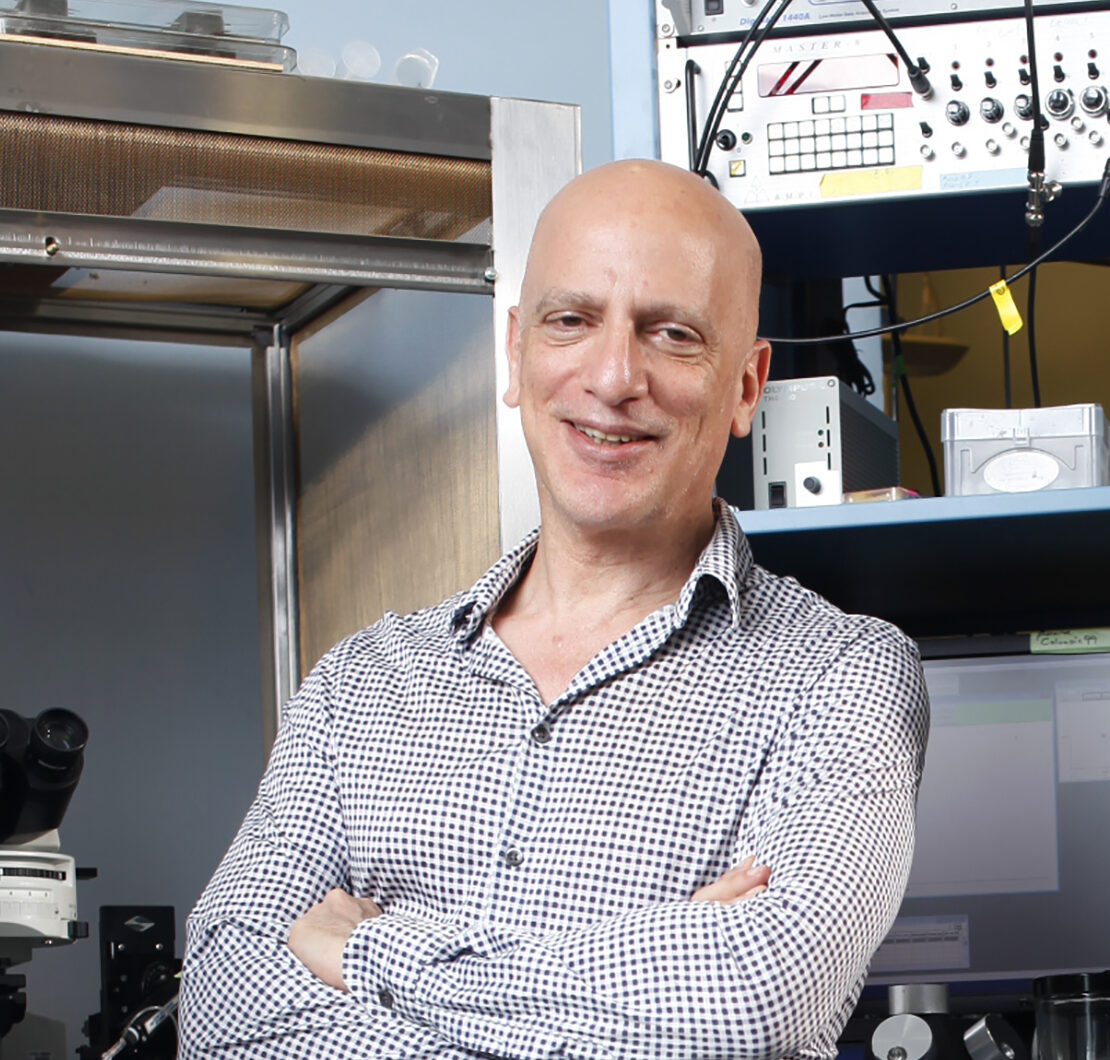
A photo of Dr. David Sulzer in his lab. Dave Soldier leads a double life as a musician and a neuroscientist. As composer, he cofounded (with conservationist Richard Lair) the Thai Elephant Orchestra, 14 elephants for whom he built giant instruments and who released 3 CDs, and projects with children, including rural Guatemala (Yol Ku: Mayan Mountain Music) and New York’s East Harlem (Da HipHop Raskalz). His Soldier String Quartet helped usher the use of hip-hop, R&B, and punk rock into classical music in the 1980s, and his long-running Memphis/New Read more

Thursday, September 18, 2025

Anita Tuvin Schlechter Auditorium, 7 p.m.


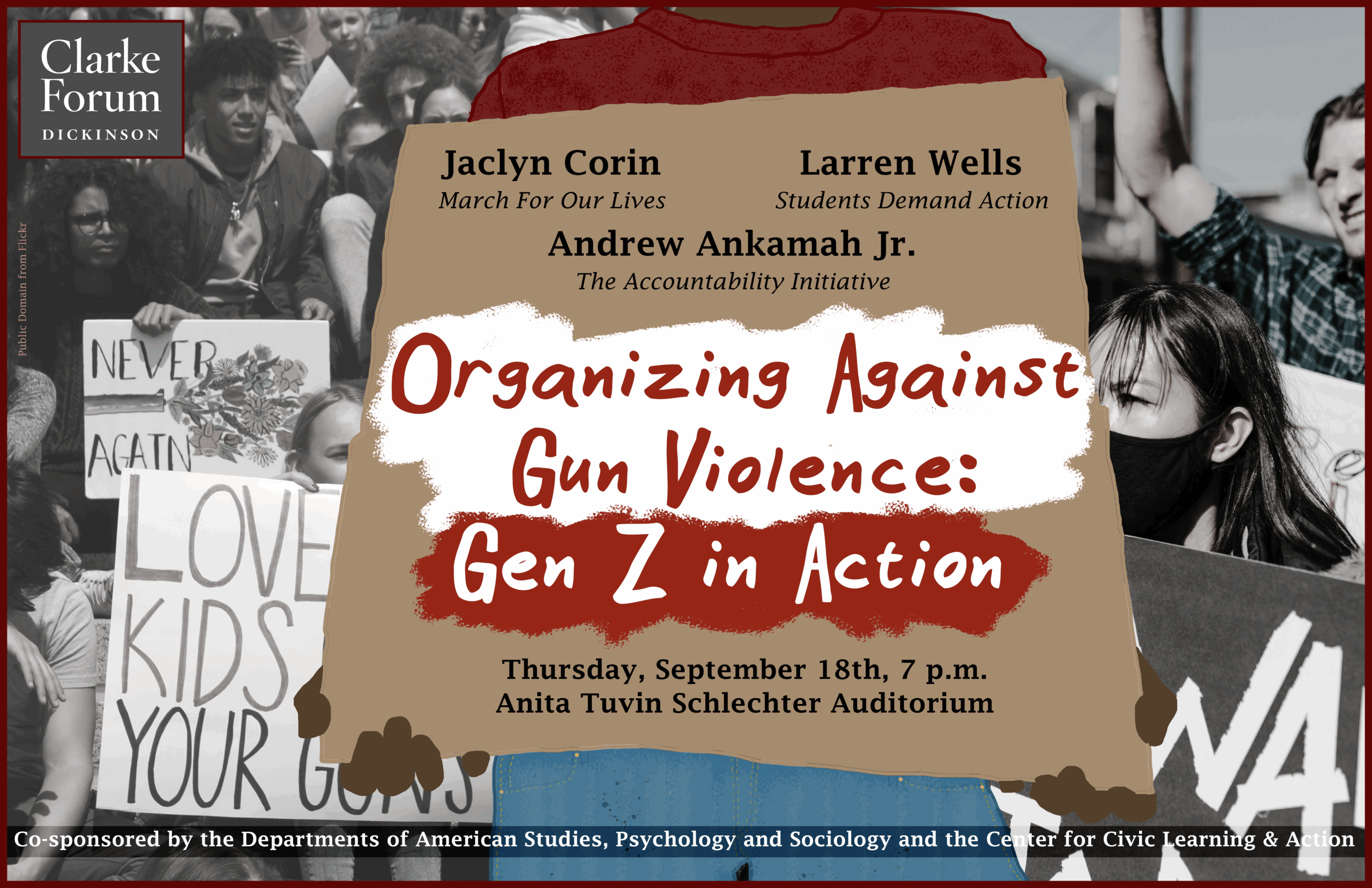
Organizing Against Gun Violence: Gen Z in Action

Andrew K. Ankamah Jr., The Accountability Initiative; Advisor for Pennsylvania State Representative Amen Brown

Jaclyn Corin, Survivor of the 2018 Parkland shooting; Executive Director of March For Our Lives

Larren Wells, Students Demand Action, University of Pittsburgh

In the United States, gun violence remains the leading cause of death for children and teens, and school shootings have become tragically routine. On February 14, 2018, the Parkland shooting at Marjory Stoneman Douglas High School left 17 students and educators dead and marked the deadliest school shooting since Sandy Hook. For many Gen Z Americans, the news broke while they were sitting behind a school desk. Since that day, there have been over 1,500 school shooting incidents across the country, some with even deadlier outcomes. Beyond schools, millions of American children live in homes where at least one firearm is stored loaded and unsecured, and many can access these weapons without their parents’ knowledge. As firearm-related injuries continue to rise, young people are leading a national push for evidence-based solutions.

From promoting safe storage laws and permit-to-purchase systems to advocating for red flag legislation Read more

Thursday, April 10, 2025

Anita Tuvin Schlechter Auditorium, 7 p.m.

Livestream Link

Program is Part of the Dialogues Across Differences Project 

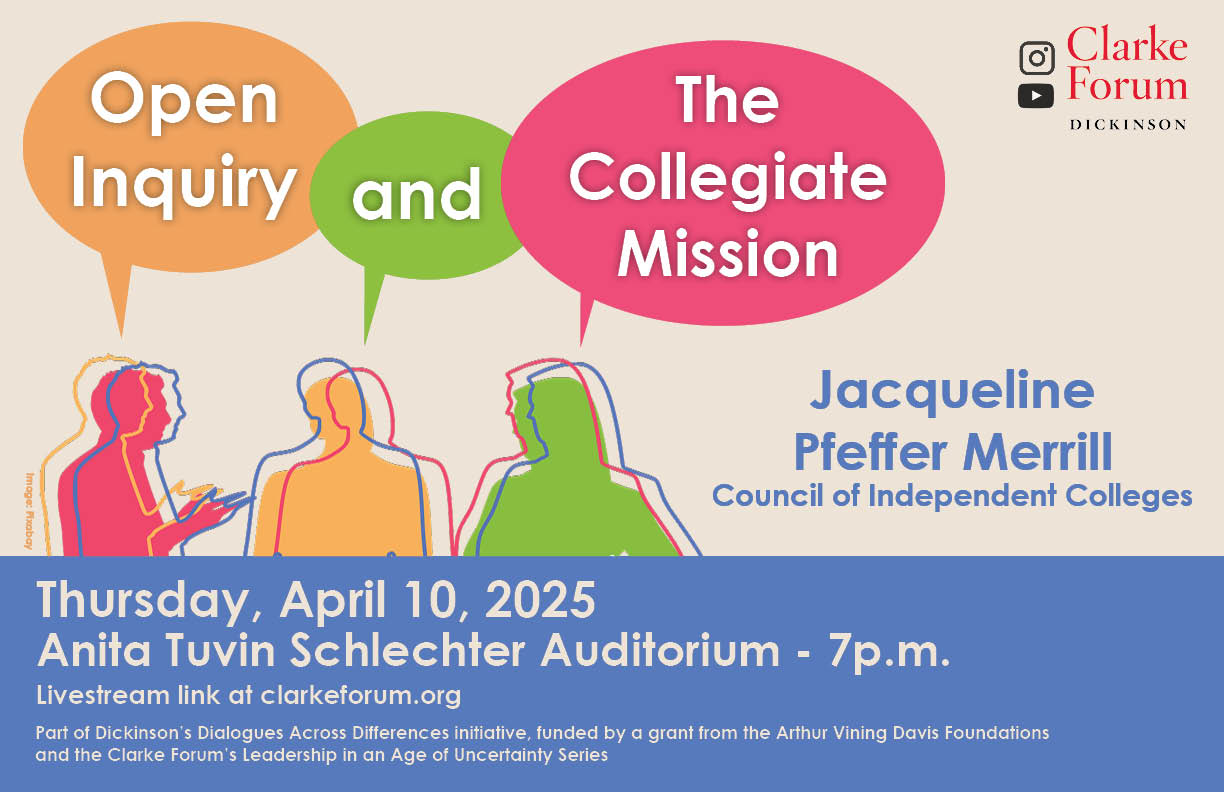
Open Inquiry and the Collegiate Mission

Jacqueline Pfeffer Merrill, Director of the Campus Free Expression Project, Council of Independent Colleges

Free expression, open inquiry, and civil discourse are threatened values in our country. Higher education institutions have an essential role in addressing this crisis and raising the bar for public discourse—but many colleges have themselves struggled to uphold these values at this time of polarization and disagreement over national and international events. A national expert on college speech and academic freedom, Dr. Jacqueline Pfeffer Merrill will share her observations from campuses across the country—and how these concerns relate to Dickinson College founder Benjamin Rush’s vision for higher education in uniting a divided democracy.

This program is sponsored by the Clarke Forum for Contemporary Issues and is part of the Dialogues Across Differences Project, which is funded by a grant from the Arthur Vining Davis Foundations. This program is part of the Clarke Forum’s Leadership in an Age of Uncertainty Series.

Topic overview written by Supasinee Siripun ’27

Biography (provided by the speaker)

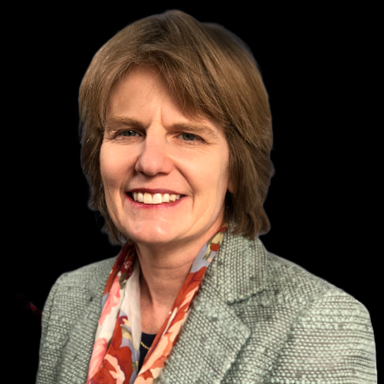
Headshot of Jacqueline Pfeffer MerrillJacqueline Pfeffer Merrill is director of the Campus Free Expression Read more

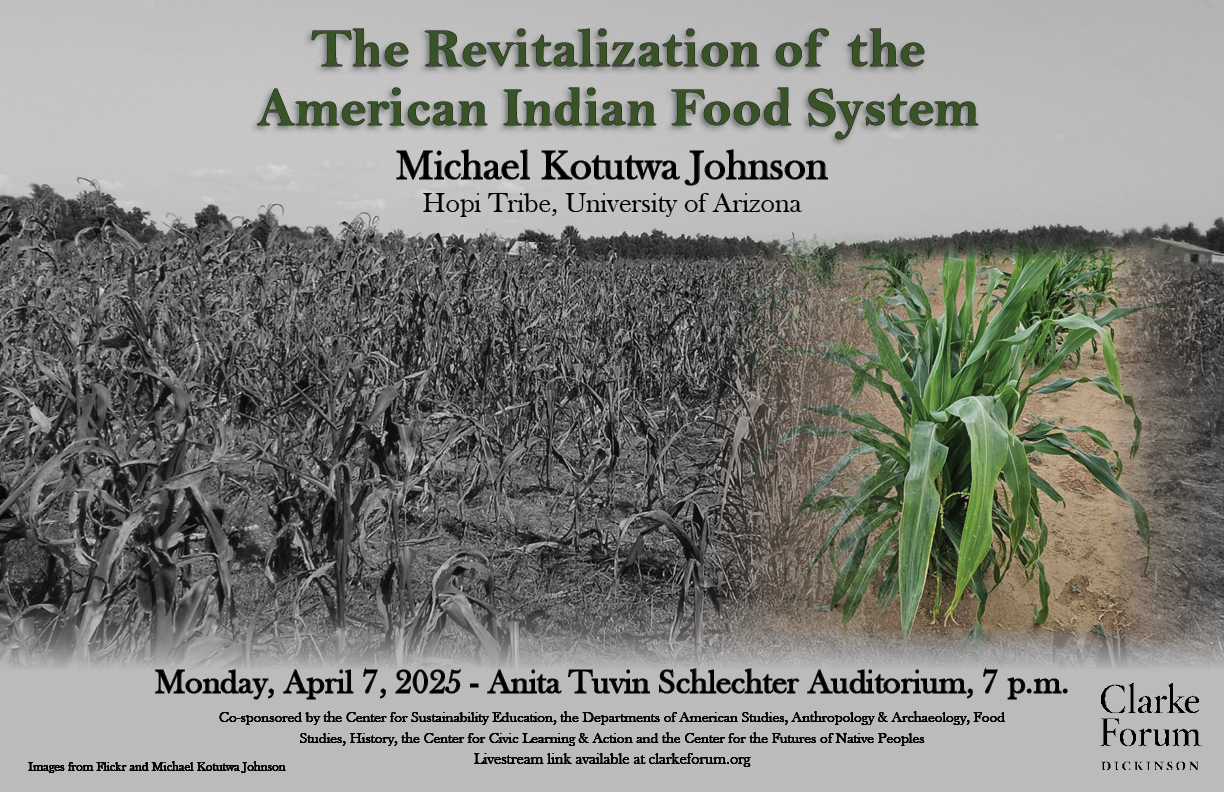
Monday, April 7, 2025

Anita Tuvin Schlechter Auditorium, 7 p.m.

Livestream Link

The Revitalization of the American Indian Food System

Michael Kotutwa Johnson, Assistant Professor of Indigenous Resilience at the University of Arizona’s School of Natural Resources and the Environment

Since time immemorial, Indigenous people, like those in the United States, gathered and hunted their own food unimpeded. The crops they grew and wild plants they collected were vital to their survival in the many places where they resided. However, through various federal policies, most American Indian tribes no longer have access to traditional foods and have become almost entirely dependent on federal food programs. As a result, you have higher than usual rates of diabetes, heart disease, and even cancer. For example, a tribe in Arizona has been documented to have the highest rate of diabetes in the Globe. My talk will focus on my research to help develop solutions to the lack of traditional foods by calling for the Revitalization of the American Indian Food System. I will also lay out the cultural aspects demonstrating that these foods are not just viewed as commodities for Indigenous people but an integral part of who they are and the places where they are Read more

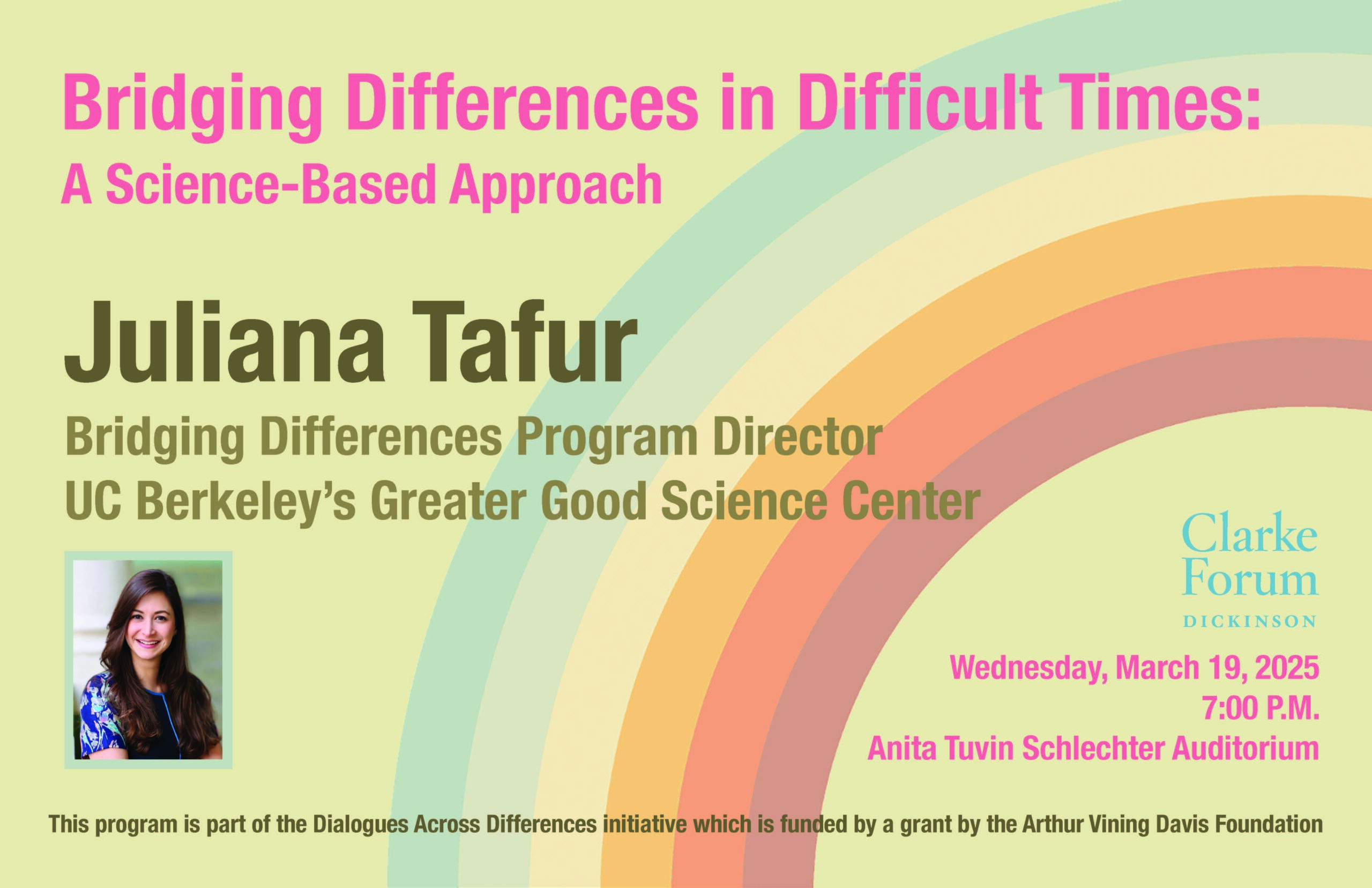
Wednesday, March 19, 2025

Poster to advertise Juliana Tafur's programAnita Tuvin Schlechter Auditorium, 7 p.m.

Program is Part of the Dialogues Across Differences Initiative

Bridging Differences in Difficult Times: A Science-Based Approach

Juliana Tafur, Director of the Bridging Differences program at UC Berkeley’s Greater Good Science Center 

Over the past two decades, Americans have grown increasingly isolated and divided, fueling a loneliness epidemic and deepening distrust between groups. This social fragmentation threatens our emotional well-being, breeds prejudice, and even undermines the foundations of our democracy. Yet, despite these challenges, a majority of Americans long for unity: 7 in 10 say they feel a responsibility to connect with people who have different backgrounds and viewpoints, and when asked to imagine an ideal future, most envision a more united nation.

In this talk, Juliana Tafur, Bridging Differences Program Director at the Greater Good Science Center at UC Berkeley will introduce science-backed strategies for fostering connection. Rather than focusing solely on direct dialogue, she will highlight practical approaches—such as finding shared goals—that help people build bridges in ways that feel safe, meaningful, and effective. Grounded in research, this interactive session will translate theory into practice, allowing participants to not only understand but also experience the power of these strategies firsthand.

At a Read more

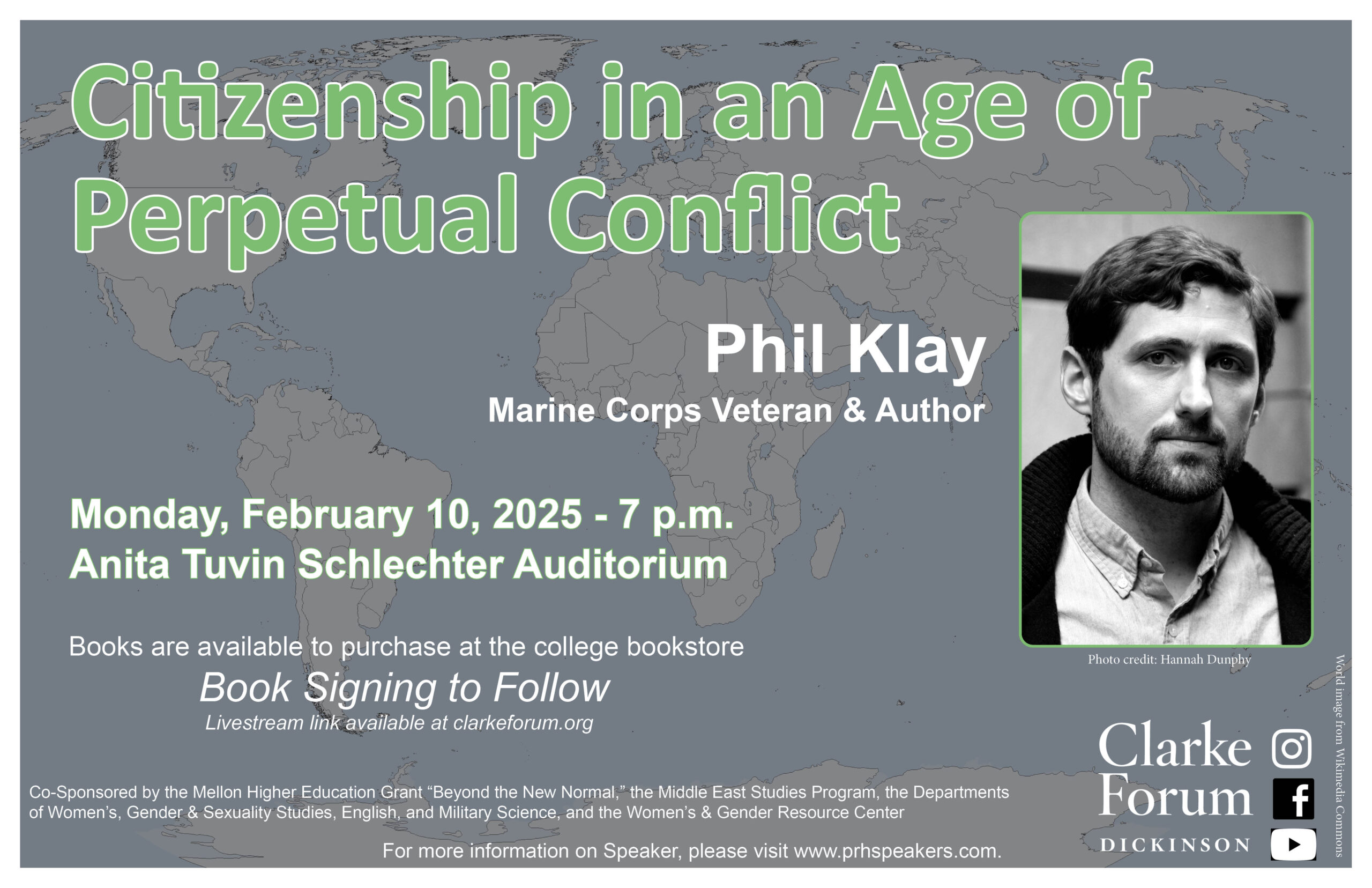
Monday, February 10, 2025

Poster to advertise Phil Klay's programAnita Tuvin Schlechter Auditorium, 7 p.m.

Citizenship in an Age of Perpetual Conflict

Phil Klay, Marine Corps Veteran & Author

Though the war in Afghanistan ended in failure and the war in Iraq wound down to a small troop presence, America remains enmeshed in military conflicts around the world. From Africa to the Middle East, we have troops directly in harm’s way, while in countries like Ukraine and Israel we provide support of various kinds, from munitions to critical intelligence.  How should we think about our role as citizens of a country so deeply involved in warfare, and how might literature help us better understand the stakes of the killing done in our name?  A book signing will follow the presentation. Books are available for purchase at the college bookstore.

The program is sponsored by the Clarke Forum for Contemporary Issues and co-sponsored by the Mellon Higher Education Grant “Beyond the New Normal” and by the Middle East Studies Program, the departments of women’s, gender & sexuality studies, English, and military science, and the Women’s & Gender Resource Center.  This program is part of the Clarke Forum’s Leadership in an Age of Uncertainty Series and its annual theme, Alternative Models Read more

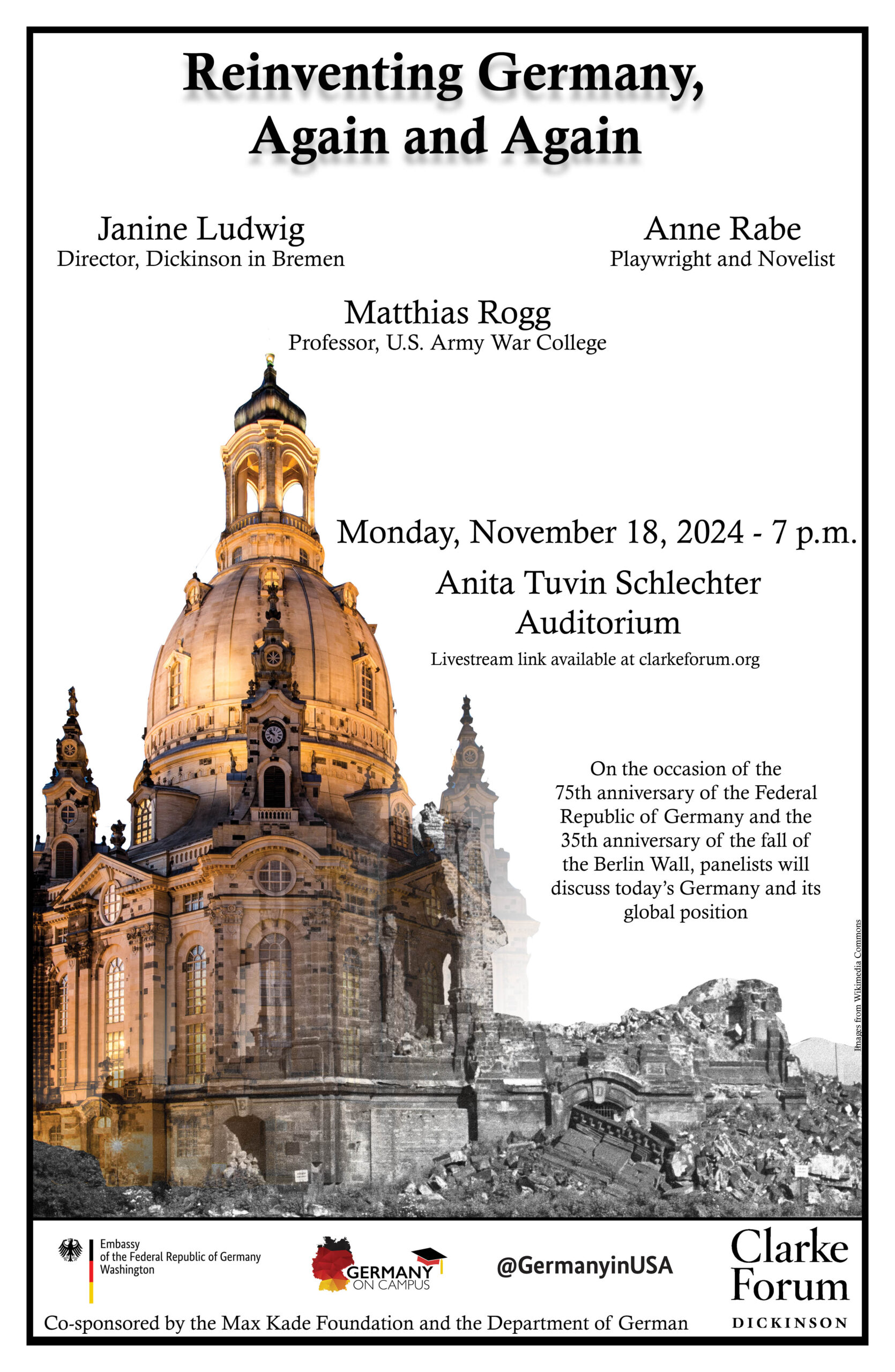
Monday, November 18, 2024

Anita Tuvin Schlechter Auditorium, 7 p.m.


Reinventing Germany, Again and Again

Janine Ludwig, cultural historian of East Germany
Anne Rabe, playwright and novelist
Matthias Rogg, historian and colonel in the German army
Antje Pfannkuchen (moderator), co-director, Clarke Forum

The history of modern Germany has forced continuous reorientations. On the occasion of the 75th anniversary of the Federal Republic of Germany and the 35th anniversary of the fall of the Berlin Wall the panelists will discuss today’s Germany and its global position.

This Clarke Forum event represents our Germany on Campus program, co-sponsored by the German Embassy Washington DC, the Max Kade Foundation, and the Department of German. In addition, it is part of the Clarke Forum’s Leadership in an Age of Uncertainty Series which is supported by the Churchill Fund and it’s annual theme, Alternative Models.

Topic overview written by Noah Salsich ’25

Biographies (provided by the speakers)

Janine Ludwig photoJanine Ludwig is a literary scholar, also Vice Head of the Institute for Cultural German Studies (ifkud), and Chairwoman of the International Heiner Müller Society. Ludwig studied Contemporary German Literature, Philosophy, and Theater Studies/Cultural Communication. She is an expert on East German and post-war literature, but also an academic all-rounder. Read more

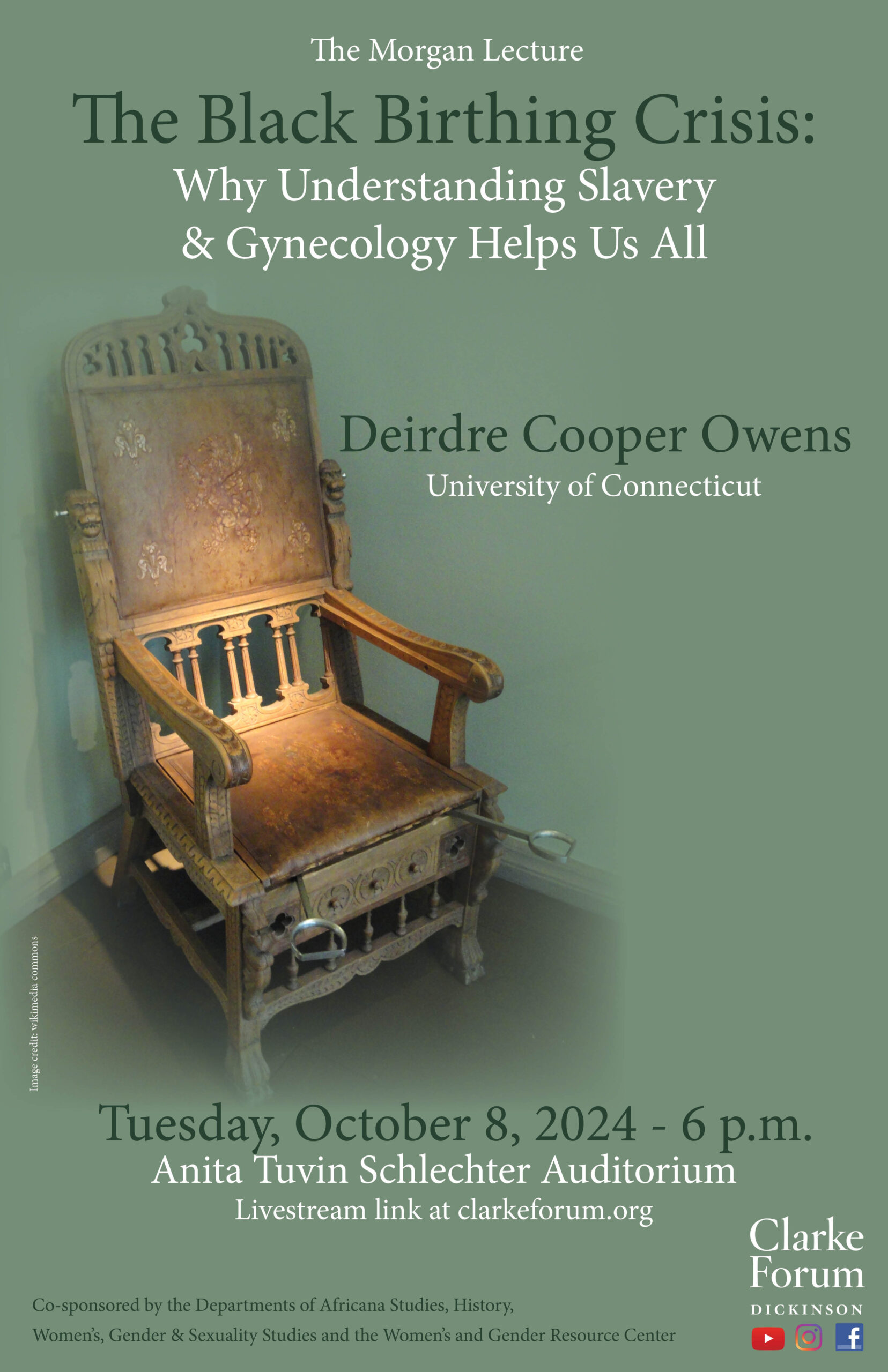
Tuesday, October 8, 2024 – The Morgan Lecture

Anita Tuvin Schlechter Auditorium, 6 p.m.

The Morgan Lecture

The Black Birthing Crisis: Why Understanding Slavery & Gynecology Helps Us All

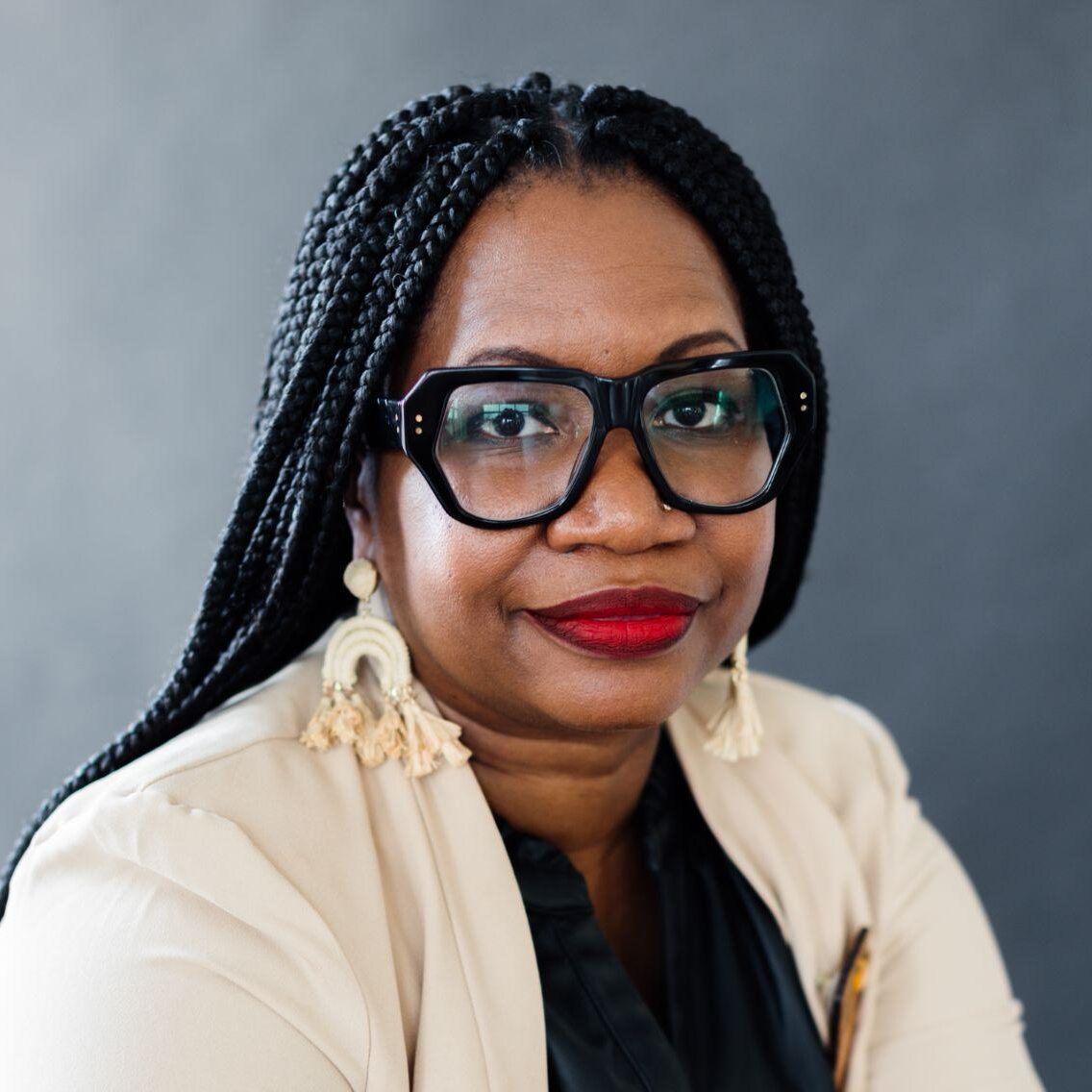
Deirdre Cooper Owens,  associate professor of history and Africana studies at the University of Connecticut

For decades, the United States has been the most dangerous high-income earning nation for pregnant Black women and birthing people. The current birthing crisis didn’t originate in a vacuum. With roots in colonial America, medical doctors and surgeons exceptionalized Black women’s medical experiences and lives throughout slavery and Jim Crow. Cooper Owens will present on the layered history of American slavery, the birth of gynecology, and the current U.S. birthing crisis offering insights and possible solutions to end this state of emergency. A book sale and signing will follow the presentation.

The program is sponsored by the Clarke Forum for Contemporary Issues and co-sponsored by the departments of Africana studies, history, women’s, gender & sexuality studies and the Women’s & Gender Resource Center. This program was initiated by the Clarke Forum’s student project managers. It is also part of the Clarke Forum’s annual theme, Alternative Models.

Topic overview written by Shayna Herzfeld ’25

Biography (provided by the speaker)

Deirdre Cooper Owens is an Read more