Events

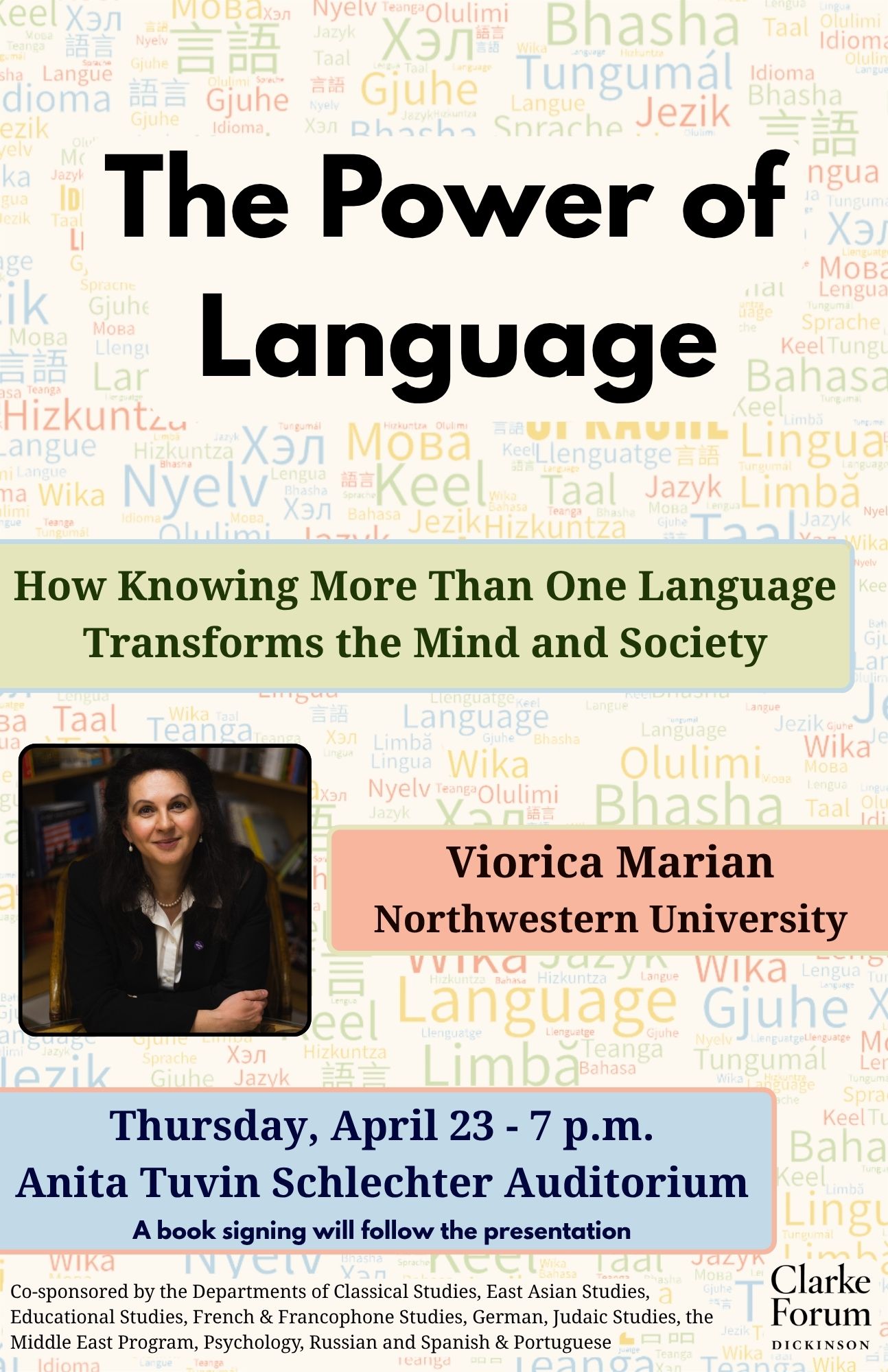
Thursday, April 23, 2026

Anita Tuvin Schlechter Auditorium, 7 p.m.

The Power of Language: How Knowing More Than One Language Transforms the Mind and Society

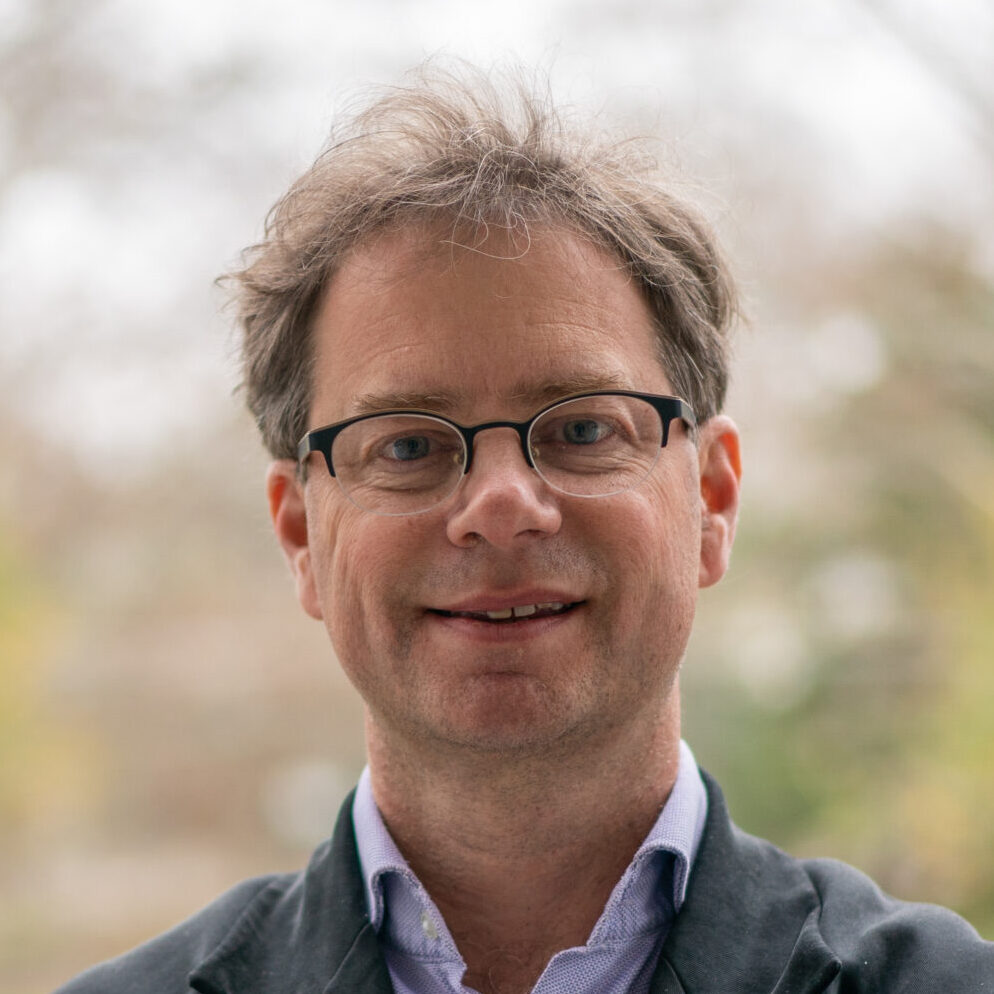
Viorica Marian, Sundin Endowed Professor of Communication and Psychology at Northwestern University

Bilingualism and multilingualism are the norm rather than the exception in the world. Yet historically, scientific research has focused disproportionately on monolingual speakers as the standard. For an accurate understanding of the mind, we must recognize the brain’s ability to accommodate multiple symbolic systems simultaneously as the signal, rather than the noise, in human experience.

In this talk, I will present evidence that bilingualism reshapes cognitive architecture. My research integrates behavioral, neuroimaging, cognitive, and computational methods to capture the continuous parallel activation and interaction of multiple languages in the brain and their consequences for cognitive function, from perceptual processes to higher-order thinking. Behavioral methods such as eye-tracking and mouse-tracking reveal that bilinguals’ eye movements drift toward objects whose names overlap across languages, and that hand movements and decision-making veer toward alternatives activated by another language. Neuroimaging shows that managing multiple languages is like a workout for the brain and reshapes neural connections, leading to measurable structural and functional adaptations.

The consequences are evident across the lifespan. In Read more

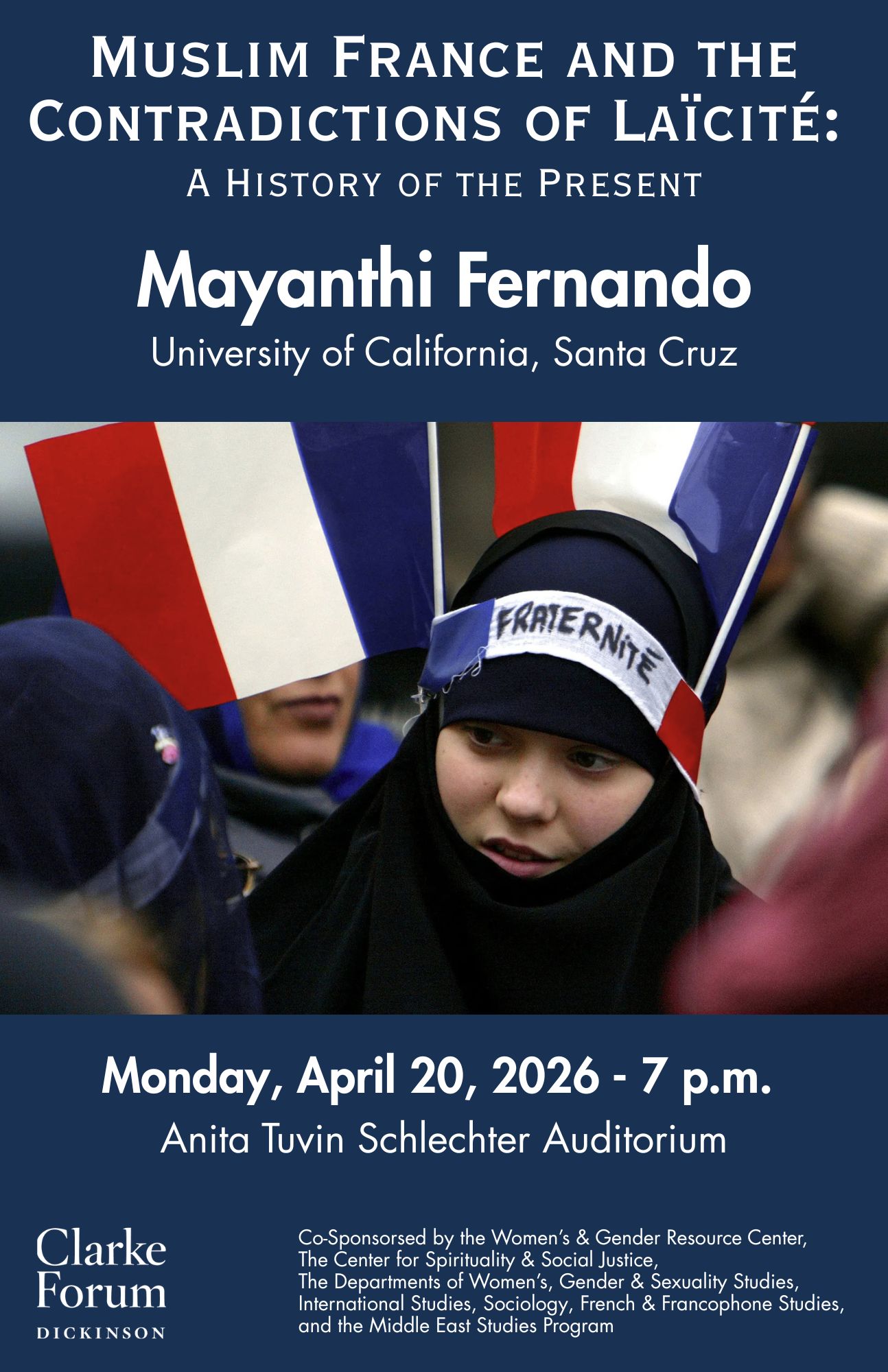
Monday, April 20, 2026

Anita Tuvin Schlechter Auditorium

Muslim France and the Contradictions of Laïcité: A History of the Present

Mayanthi Fernando, University of California Santa Cruz

In 1989 three Muslim schoolgirls from a Paris suburb refused to remove their Islamic headscarves in class, igniting a debate – still raging more than 30 years later – about the place of Muslims in the French Republic and within its governing framework of laïcité (secularism). The dominant narrative about laïcité, both in France and in the US media, is that in 1905, France separated church and state, and religion was restricted to the private sphere. Public Muslimness is therefore seen as contravening this longstanding arrangement of what it means to be French.

Mayanthi Fernando will complicate that narrative to offer a different history of the present. First, she will show how laïcité has entailed not the separation of religion from politics and the public sphere but rather the French state’s intervention into religious life, including defining what counts as religion, belief, practice, symbol, and so on, using a Christian framework to make those distinctions. Fernando will then delve more deeply into the headscarf drama. The language of the 2004 law banning “conspicuous religious signs” classifies the Read more

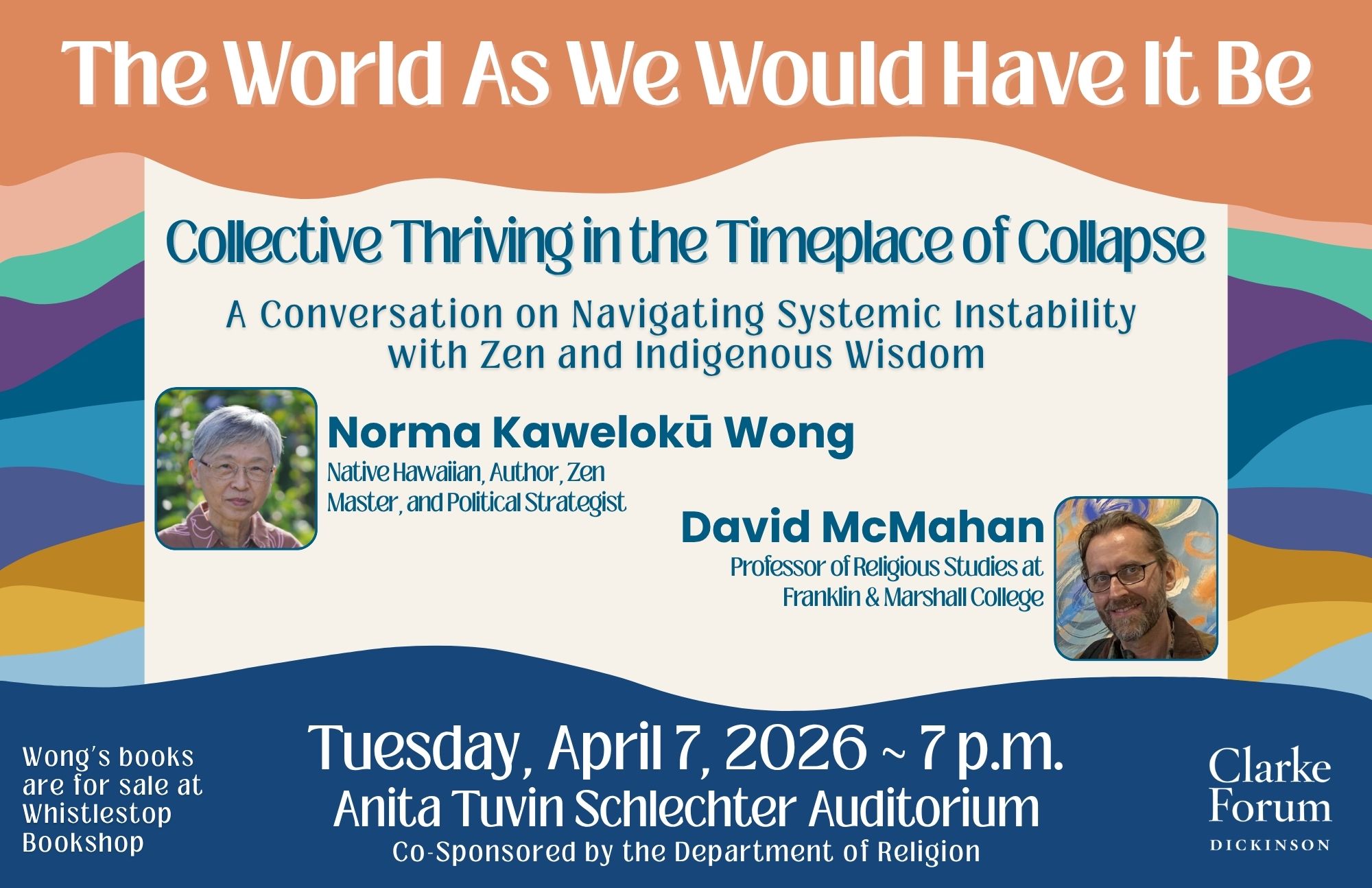
Tuesday, April 7, 2026

Anita Tuvin Schlechter Auditorium, 7 p.m.

The World As We Would Have It Be: Collective Thriving in the Timeplace of Collapse

Norma Kawelokū Wong (Collective Acceleration), Native Hawaiian and Hakka Writer/Teacher, 86th Generation Zen Master, and Political Strategist

“We know the story of the collapse. We have much less imagination of the timeplace of the other side. Thus, the far horizon story should always take place beyond the apocalyptic time when everything completely fell apart and the skies were dark for so long no one knew lightness nor blueness. It is there and then we need to practice into.” –Norma Kawelokū Wong

We are living at a moment of rapid systemic breakdown in which chaos dominates our present condition and directs our future. Instability is no longer a failure of power but its primary technique, governing through exhaustion, fear, and confusion. Against this unpredictable, disorienting, and exhaustive background, who are we, who do we evolve to become, and how do we show up in this time of collapse? How do we relate to one another and what collectives do we build? Lastly, how do we interdependently grow and lead in times of uncertainty? In this conversation between Zen Read more

Tuesday, March 31, 2026

Mathers Theater, 7 p.m.

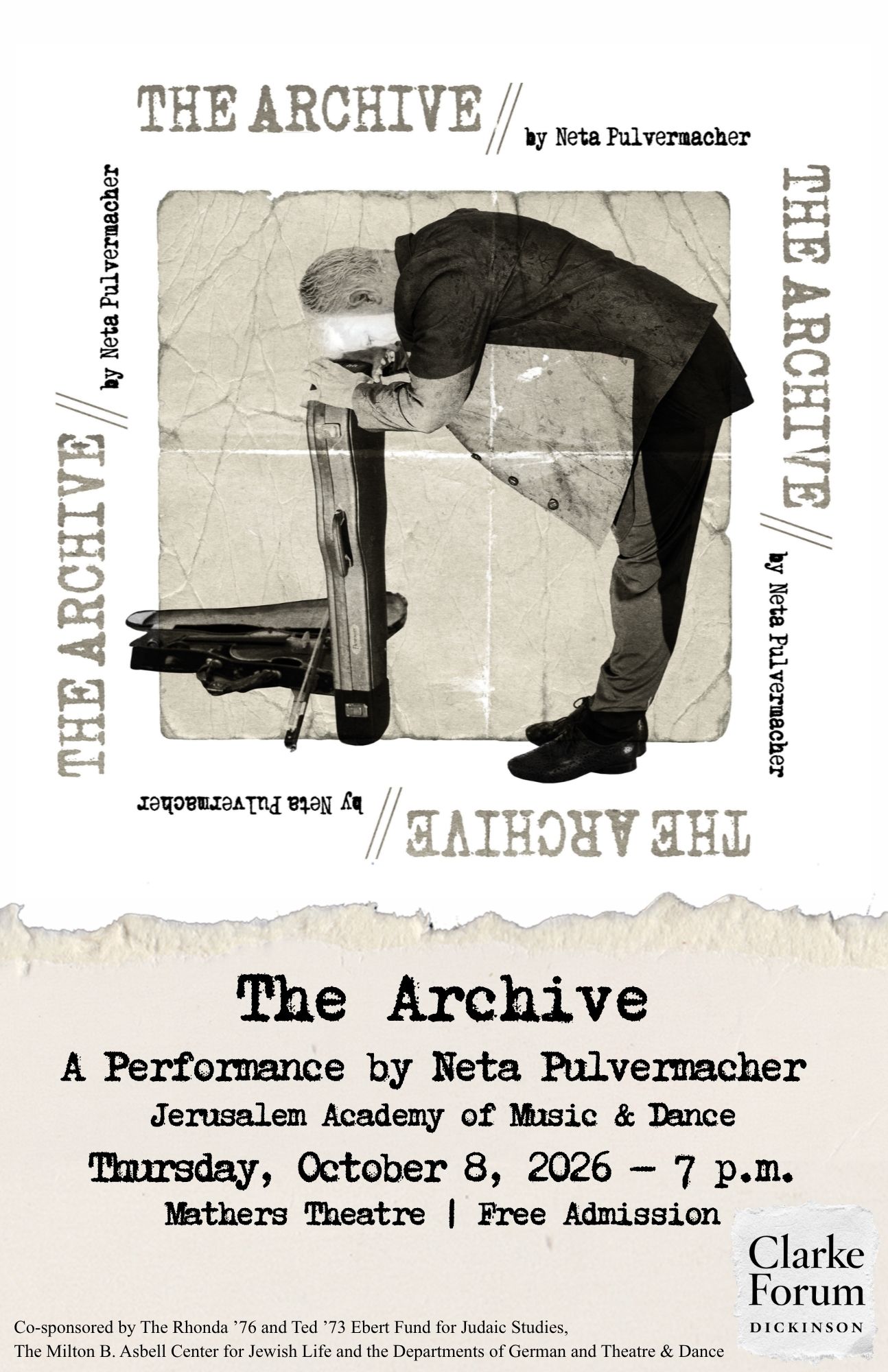
The Archive

Neta Pulvermacher, Israeli/American Choreographer, Dancer, Director and a Professor of Dance at the Jerusalem Academy of Music and Dance (JAMD)

The Archive
Created and Performed by Neta Pulvermacher

“They are not here,
And they are not coming
There is nothing here…
There is nothing here for you
It’s just this room and you and me.
And they are not here…
Go home, go home…
There’s no sense in waiting”

When the last person who remembers is gone, whole worlds disappear forever. Israeli/American artist, choreographer and performer Neta Pulvermacher, situates her riveting one woman show, The Archive, inside this perforated post-memory landscape. Exploring her German-Jewish family history, she constructs a jarring, witty and deeply moving performative journey that follows the traces to Frankfurt and Berlin – once her family’s home.

Inside a room containing a table, three chairs, a reading lamp, and an old violin, Pulvermacher sifts through documents, photographs, and personal artifacts. She dances, sings, and tells stories, conjuring fragmented narratives, voices, and characters that connect briefly only to fade away into oblivion. In her “Archive,” she asks us to consider the ephemerality of memory, history, and experience.

The Archive premiered at Villa Read more

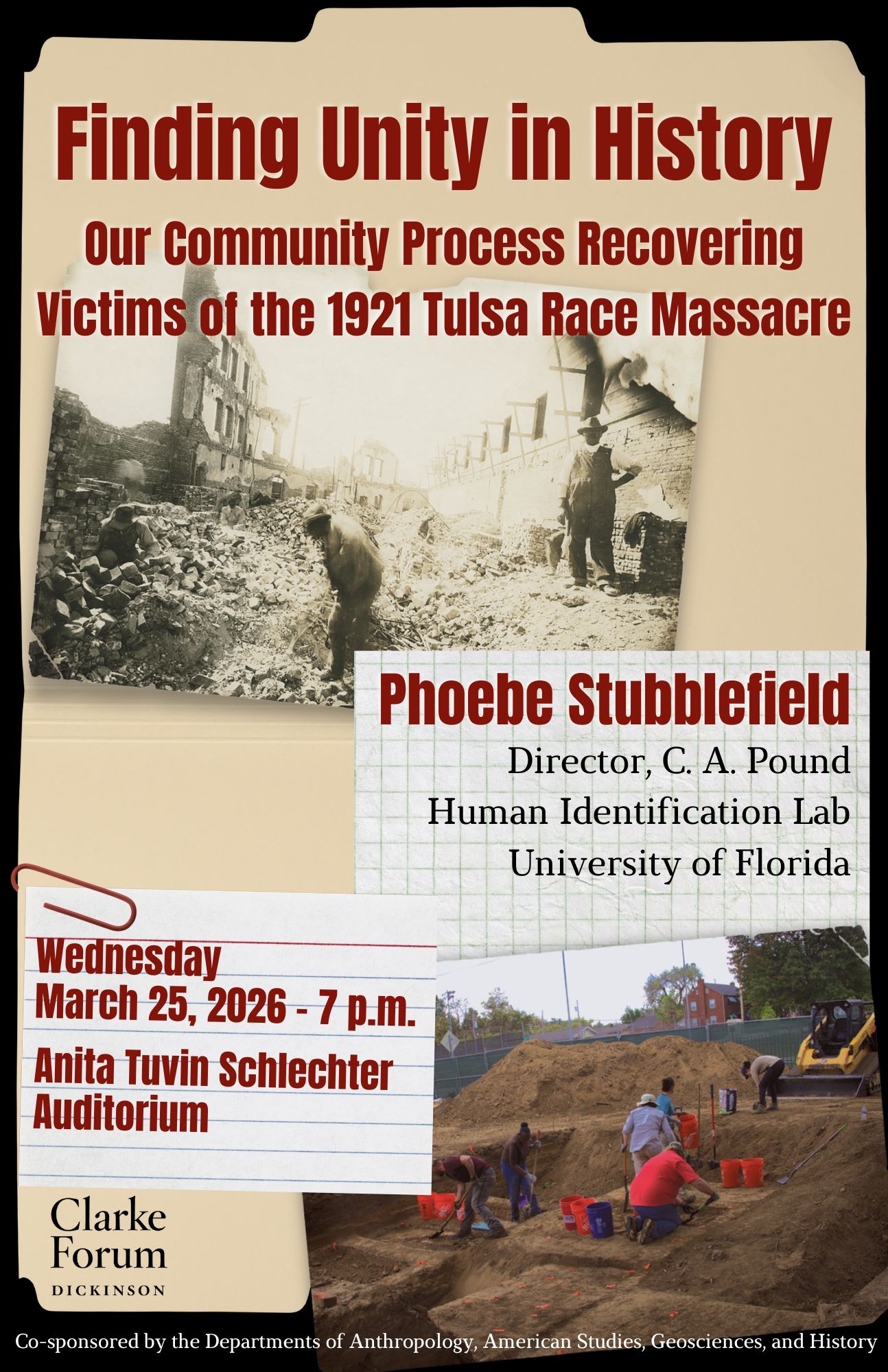
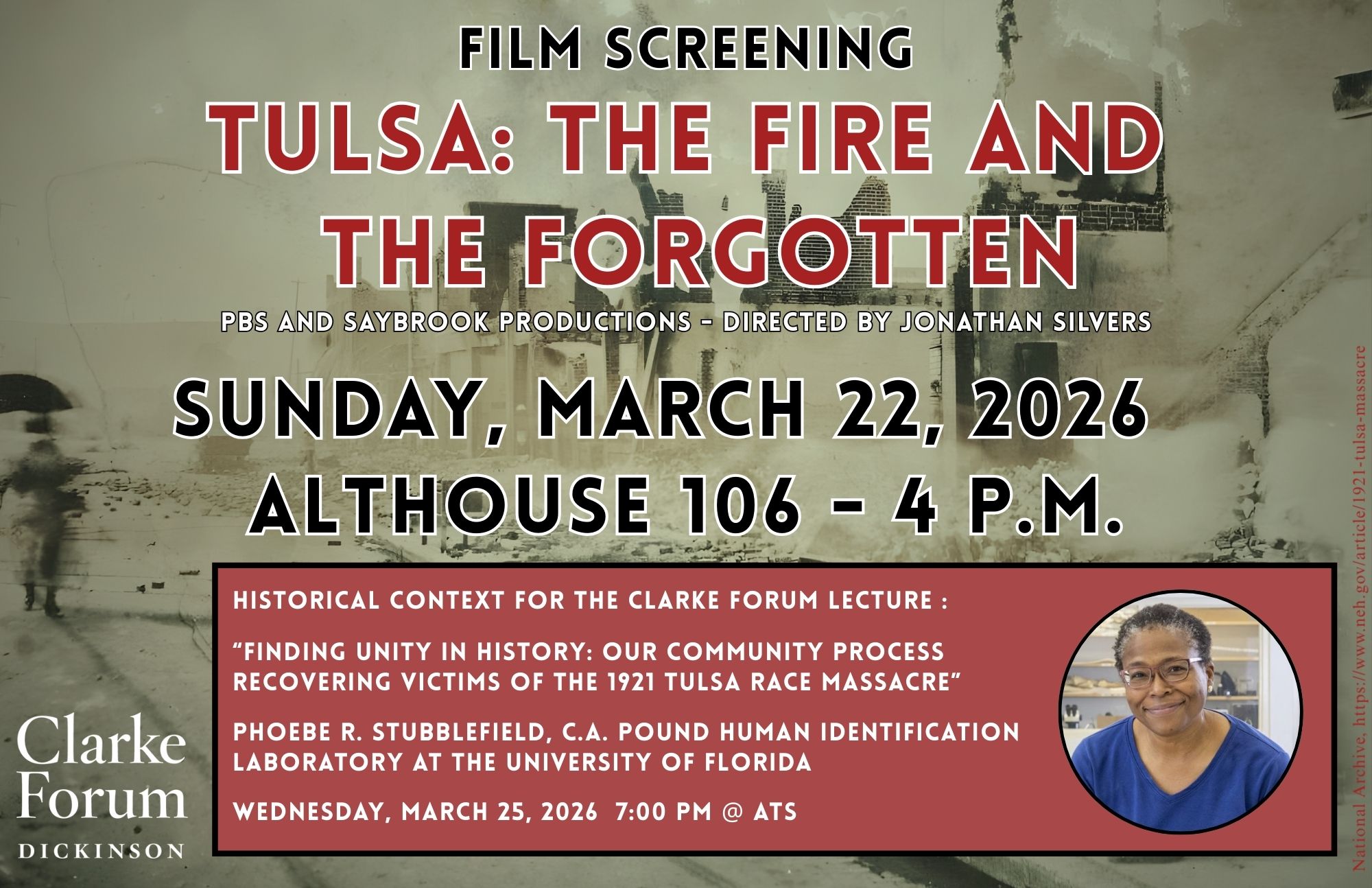
Wednesday, March 25, 2026

Anita Tuvin Schlechter Auditorium, 7 p.m.

Finding Unity in History: Our Community Process Recovering Victims of the 1921 Tulsa Race Massacre

Phoebe R. Stubblefield, Director of the C.A. Pound Human Identification Laboratory, University of Florida

On June 1,1921, the unincorporated community of Greenwood Oklahoma was systematically looted and burned by a white mob.  The conflict derived from an attempt by the mob to lynch a young African American man, Dick Rowland, who had been accused of assaulting a white woman. Thirty-nine deaths were documented by death certificates, but the actual number of deaths is unknown due to the period of martial law which ended the rioting, poor documentation, and focus on recovery.  Twenty African American adult males were buried in the Tulsa city cemetery, Oaklawn, in unmarked graves.  In 2020 former mayor GT Bynum initiated the investigation, which continues today, to recover these and any other victims of the race massacre and return them to their families.  Our team of anthropologists have recovered over 50 individuals from unmarked graves in Oaklawn, and forensic analysis has identified six with gunshot wounds that make them potential victims of the riot.  Collaboration with our historians,  geneticists, and genealogists resulted in the first victim Read more

Tuesday, March 17, 2026

Anita Tuvin Schlechter Auditorium, 7 p.m.

Bruce R. Andrews Lecture

Combating Online Harms: The Importance of Rigorous Scientific Testing of Proposed Interventions

Joshua A. Tucker is Director of the Jordan Center for Advanced Study of Russia, Co-Director of the Center for Social Media and Politics, and Professor of Politics at New York University

In the digital information era, policymakers and technology companies have implemented
numerous interventions designed to mitigate online harms, ranging from misinformation to political polarization. However, Professor Joshua A. Tucker argues that we cannot rely on the assumption that these “common sense” solutions are effective; instead, they must be subjected to rigorous scientific testing. Drawing on extensive research from NYU’s Center for Social Media and Politics (csmapnyu.org), Tucker will present findings from three major studies that challenge conventional wisdom. First, he will demonstrate how the popular advice to “do your own research” via search engines can paradoxically increase belief in misinformation due to low-quality search results. Second, he will discuss the limitations of source credibility labels, which appear to have little impact on downstream news consumption or trust in media. Finally, he will review the results of the U.S. 2020 Facebook & Instagram Election Study, which Read more

Thursday, February 26, 2026

Anita Tuvin Schlechter Auditorium, 7 p.m.

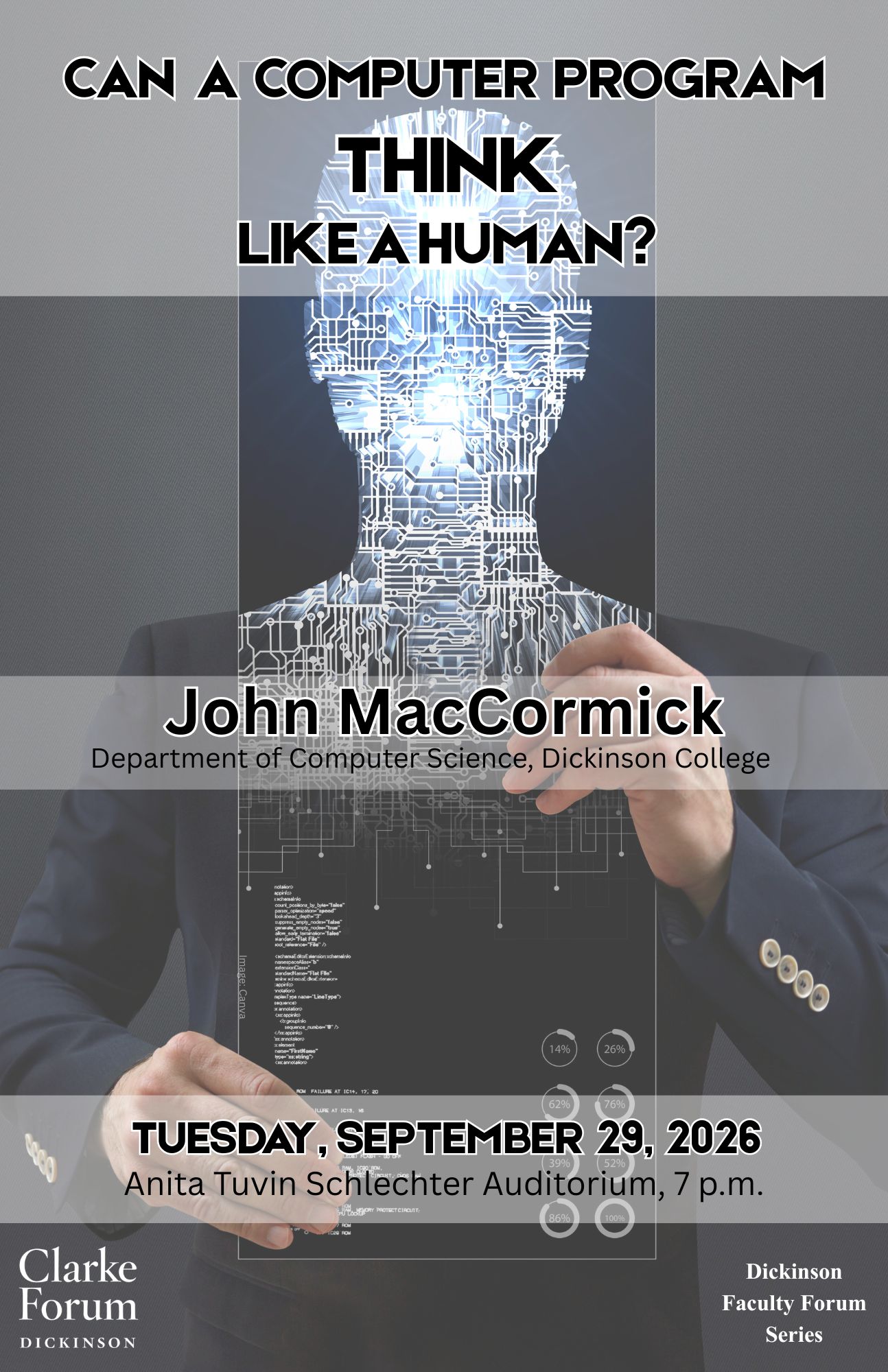
Real-World Effects of AI

Panelists

Fengqi You, Cornell University
Hannah Beckler, Business Insider
Amy McKiernan, Dickinson College
John MacCormick, Dickinson College.

Last July, the current US administration announced an action plan for “Winning the AI Race” which includes almost 100 federal policy actions, among them the dissolution of federal regulations around AI development and the promotion of rapid buildouts of data centers. This panel explores what the AI boom means for all of us, from scientific research, healthcare diagnostics and automated content creation to its effects on public utilities and the environment. The speakers will discuss different applications of generative AI and a range of ethical concerns its use poses.

This program is presented by the Clarke Forum for Contemporary Issues and is part of the Clarke Forum’s Leadership in an Age of Uncertainty Series.

Biographies (provided by the panelists)

Fengqi You is the Roxanne E. and Michael J. Zak Professor in Energy Systems Engineering at Cornell University. He holds affiliations with multiple Graduate Fields at Cornell, including Chemical Engineering, Computer Science, Electrical and Computer Engineering, Operations Research and Information Engineering, Systems Engineering, Mechanical Engineering, Civil and Environmental Engineering, and Applied Mathematics. Read more

Tuesday, February 17, 2026

Anita Tuvin Schlechter Auditorium, 7 p.m.

Phi Beta Kappa Visiting Scholar Program

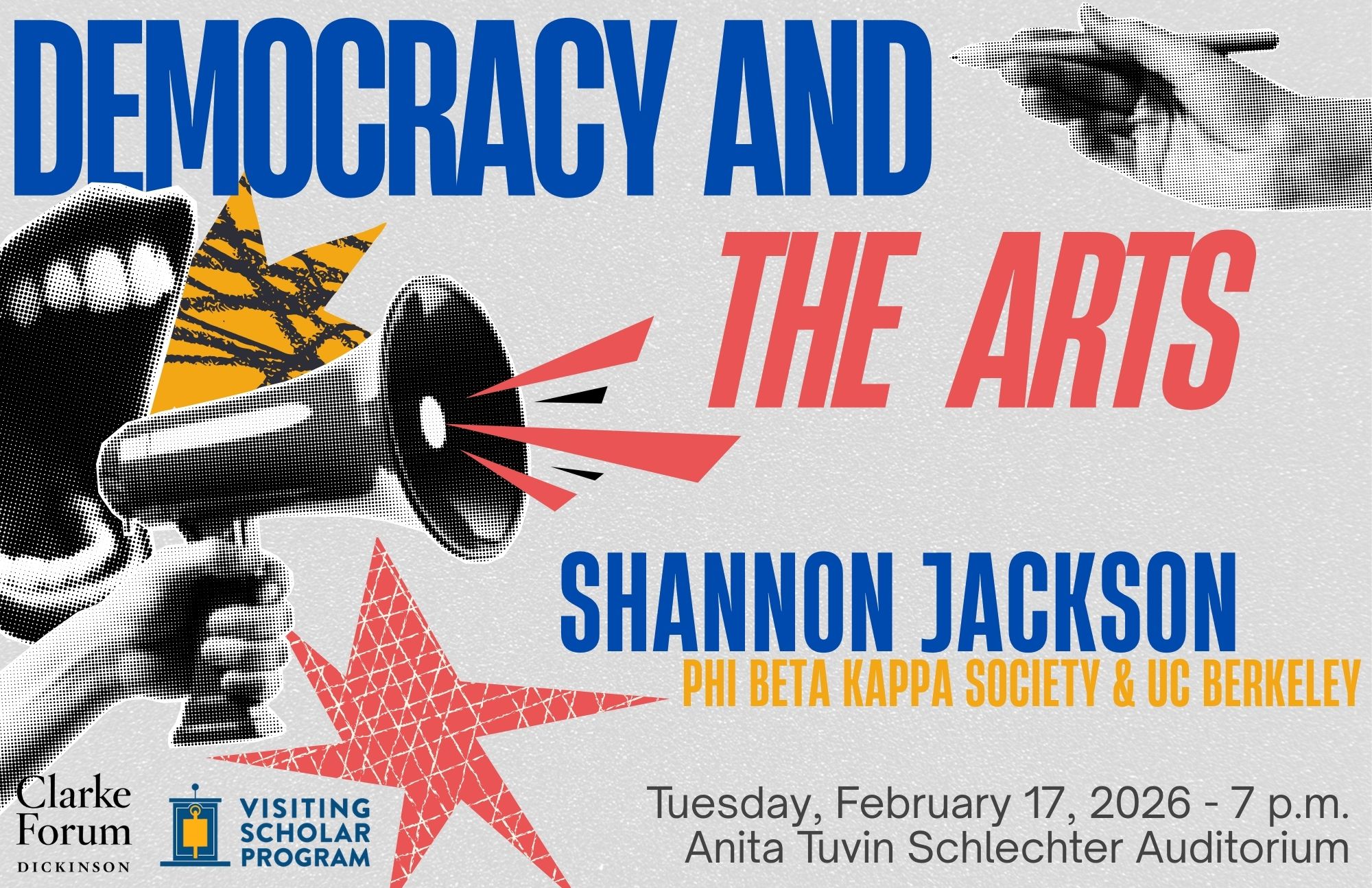
Democracy and the Arts

Shannon Jackson is the Cyrus and Michelle Hadidi Professor of the Arts & Humanities at UC Berkeley and the Chair of the History of Art Department

What is the role of the arts in activating and sustaining democratic life? How have artists sustained the rights of free expression? Why are some forms of artistic expression censored? How have the arts contributed to social movements? Should the arts have a politically useful role? Or stay strategically “un-useful”? In different eras and regions of the world, artists have responded to these questions quite differently. This lecture explores a range of socially engaged art practices, considering how some seek to make community, how some seek to expose inequity, and how some open new ideas of what democracy might mean.

This program is presented by the Clarke Forum for Contemporary Issues and the Phi Beta Kappa Society Visiting Scholar Program. The event is also part of the Clarke Forum annual theme, Thought Experiments.

Biography (provided by the speaker)

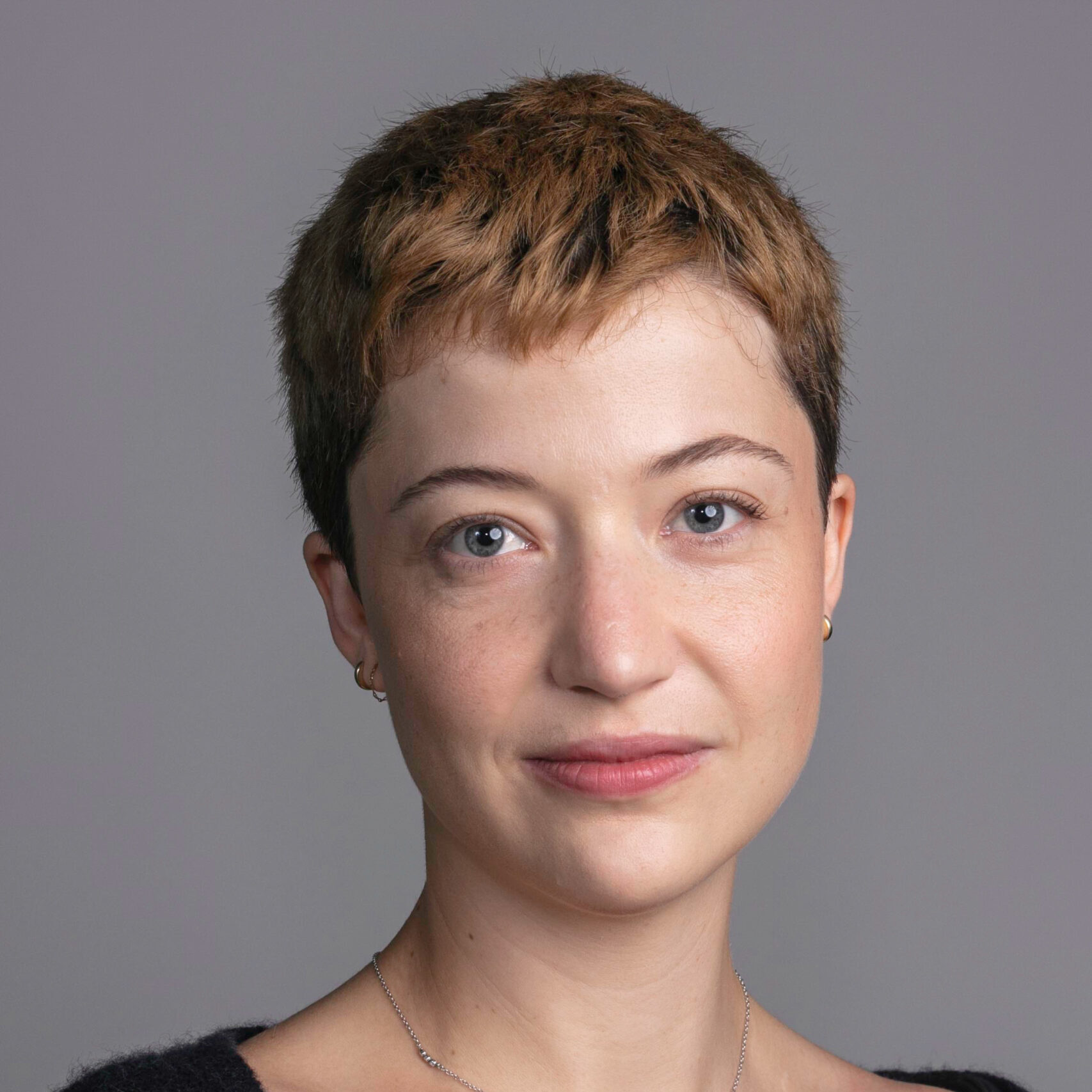
Headshot of Shannon JacksonShannon Jackson is the Cyrus and Michelle Hadidi Professor of the Arts & Humanities at UC Berkeley and the Read more

Tuesday, February 3, 2026

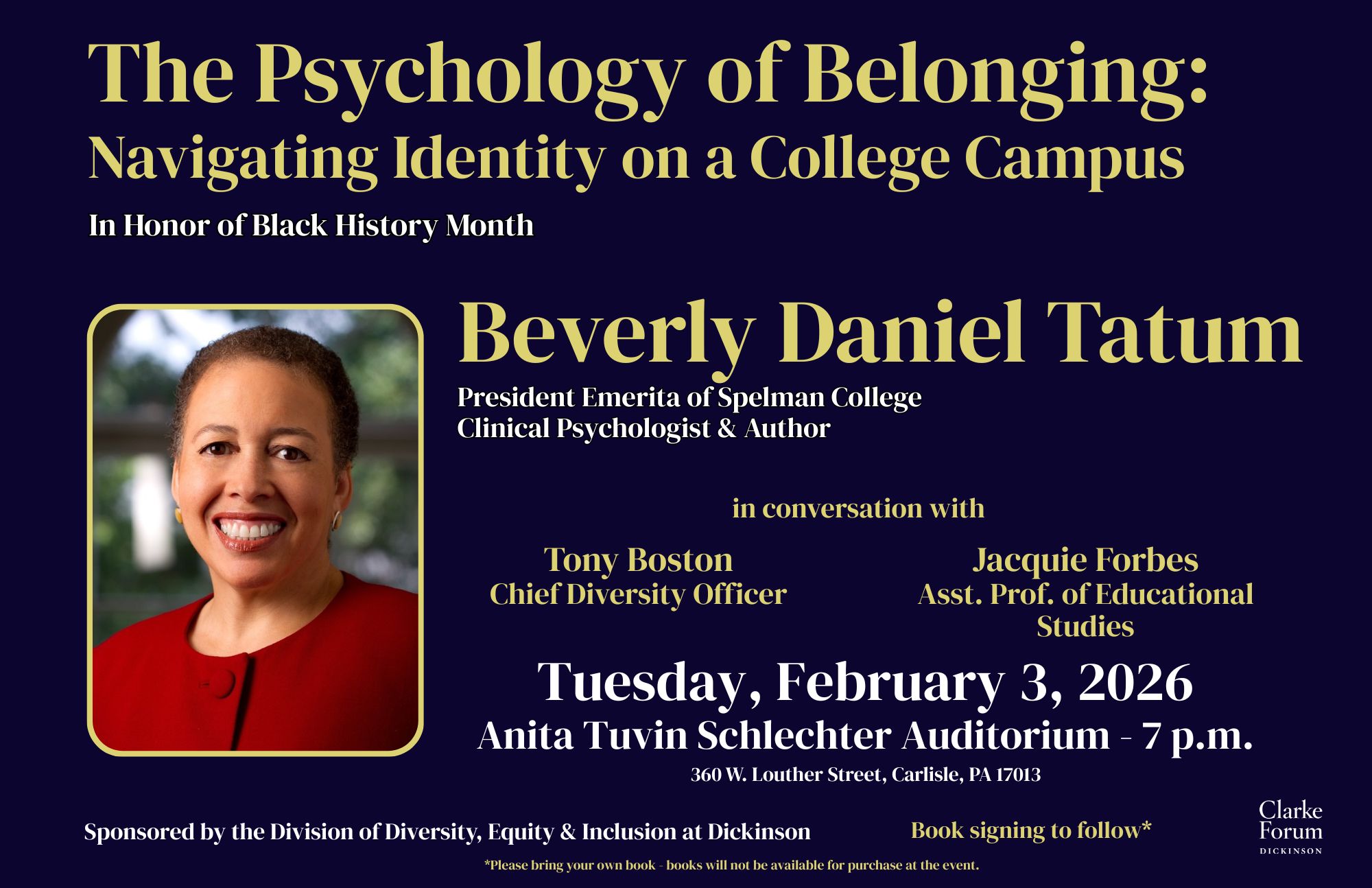
poster for Beverly Daniel Tatum's eventAnita Tuvin Schlechter Auditorium, 7 p.m.

Livestream Link

Black History Month Conversation

The Psychology of Belonging: Navigating Identity on a College Campus

Dr. Beverly Daniel Tatum, President Emerita of Spelman College, Best-Selling Author and Clinical Psychologist

Dr. Beverly Daniel Tatum—esteemed psychologist, scholar, and former president of Spelman College—joins Dickinson College for a moderated conversation inspired by her New York Times-bestselling book, “Why Are All the Black Kids Sitting Together in the Cafeteria?” And Other Conversations about Race. This dialogue will explore the psychological foundations of racial identity development and the ways in which students seek affirmation, belonging, and safety in community. Tatum will share insights into how identity formation shapes the student experience and why supportive environments are essential for student success.

As part of our Black History Month observance, this event offers a rare opportunity to engage directly with one of the nation’s leading voices in higher education. Together, we will reflect on what it means to build inclusive living and learning communities, a shared commitment that calls for both personal awareness and collective action.

Moderated by Dr. Jacquie Forbes, assistant professor of educational studies, and Dr. Tony Boston, vice president and chief diversity officer, the Read more

Thursday, November 20, 2025

Anita Tuvin Schlechter Auditorium, 7 p.m.


We Are Called to Be a Movement

Rev. Dr. William J. Barber II, President, Repairers of the Breach; Co-Chair, Poor People’s Campaign & New York Times Best-Selling Author

For years the Rev. William J. Barber II of the Poor People’s Campaign has been one of the most gifted moral fusion organizers, strategists and orators in the country. As an indispensable figure in the public policy and public theology landscape, he believes it’s time for everyone who cares about the state of our nation to heed the call and join forces to redeem the soul of America. It’s time to come together and renounce the politics of rejection, division and greed, and to lift up the common good, move up to higher ground and revive the heart of democracy. During this inspiring keynote, the Rev. Barber makes an impassioned argument with a message that could not be clearer: It’s time for change and the time needs you. A book signing will follow the presentation.

This program is presented by the Division of Diversity, Equity & Inclusion and the Clarke Forum for Contemporary Issues.

Topic overview written by Supasinee Siripun ’27

Biography (provided by the Read more

Thursday, November 13, 2025

Anita Tuvin Schlechter Auditorium, 7 p.m.

Livestream Link

Muslims and the Global War on Terror: How the Racialization of Muslims Justifies the Expansion of Policing and Surveillance

Saher Selod, Director of Research for the Institute for Social Policy and Understanding

Dr. Selod will discuss her most recent co-authored book, A Global Racial Enemy: Muslims and 21st-Century Racism,  published on Polity Press in 2024. The book examines how Muslims experience racialization on a global scale. With special attention paid to the United States, China, India, and the United Kingdom, the authors examine both the unique national contexts and – crucially – the shared characteristics of anti-Muslim racism. In this presentation she will discuss how a range of counterterrorism policies, from hyper-surveillance to racialized policing, and the ensuing representation of Islam, have worked across borders to justify and institutionalize an acceptable, state-sponsored face of racism against Muslims.

This program is presented by the Clarke Forum for Contemporary Issues and co-sponsored by the departments of religion, American studies, educational studies, political science, sociology, and the Middle East Studies Program. This program is part of the Clarke Forum’s Leadership in an Age of Uncertainty Series.

Topic overview written by Maggie Maston ’28 Read more

Tuesday, November 11, 2025

Althouse Hall, Room 106 – 5 p.m.

Film Screening of King Coal

A lyrical tapestry of a place and people, King Coal meditates on the complex history and future of the coal industry, the communities it has shaped, and the myths it has created. Elaine McMillion Sheldon reshapes the boundaries of documentary filmmaking in a spectacularly beautiful and deeply moving immersion into Central Appalachia where coal is not just a resource, but a way of life. While intimately situated in the communities under the reign of King Coal, where McMillion Sheldon has lived and worked her entire life, the film transcends time and place, emphasizing the ways in which people are connected through an immersive mosaic of belonging, ritual, and imagination. Emerging from the long shadows of the coal mines, King Coal untangles the pain from the beauty and illuminates the innately human capacity for change.

This event presented by the Clarke Forum for Contemporary Issues and the Center for Sustainability Education and is part of Dickinson’s Fall Energy Transition Series. Read more

Wednesday, November 12, 2025

Anita Tuvin Schlechter, 7 p.m.

Livestream Link

A Conversation on the Making of the Film, King Coal

Elaine McMillion Sheldon, Filmmaker
Sherry Harper-McCombs, Dickinson College

Following a screening of King Coal the night before (Althouse 106 @ 5 p.m.), Academy Award-nominated filmmaker Elaine McMillion Sheldon will join the Clarke Forum for an event about her 2023 film King Coal. She will reflect on her creative goals and on choosing the film’s hybrid form—a blend of vérité, poetic narration, dance, and sound design—that echoes the mythic power coal still holds over Appalachian communities.

McMillion Sheldon will discuss how nonfiction storytelling can transcend the traditional bounds of documentary to express a region’s imagination and grief. Her documentary practice included work with creative collaborators to incorporate breath art, choreography, and archival fragments which reimagine coal not as a commodity, but as a cultural force embedded in daily life, rituals, and dreams.

A short presentation of select video and audio clips from the film will be followed by a ​conversation with Dickinson professor emerita of theatre & dance, Sherry Harper-McCombs, and a Q&A with the audience, opening a space for dialogue around environmental storytelling, regional identity, and the ethics of nonfiction filmmaking.

This Read more

Wednesday, November 5, 2025 – The Morgan Lecture

Anita Tuvin Schlechter Auditorium, 7 p.m.

The Morgan Lecture

This event is in-person only. It will not be livestreamed nor recorded for future viewing. 

Love, Joy, Creativity & the Brain: The Heart of Culturally Responsive Education

Bettina L. Love, Columbia University

In this inspiring keynote, Dr. Love will explore the transformative power of love in education—within the classroom and beyond. Rooted in the belief that love and joy are the foundations of meaningful learning and human connection, she blends compelling storytelling, evidence-based research, and practical strategies to show how emotionally grounded teaching can radically reshape educational spaces.

Drawing from the groundbreaking neuroscience of Zaretta Hammond and the liberatory teachings of bell hooks, Dr. Love centers love not as sentimentality, but as an ethic—one rooted in care, accountability, and justice. She highlights how culturally responsive teaching, when combined with joy and emotional attunement, aligns both with how the brain learns best and how communities heal and thrive.

Creativity is presented as a vital force—a tool to honor cultural diversity, affirm identities, and spark curiosity—inviting students into deeper engagement and a stronger sense of belonging. This keynote offers educators an inspiring and actionable vision for designing classrooms where every child feels seen, Read more

Monday, September 29, 2025

Poster to Advertise David Sulzer's programAnita Tuvin Schlechter Auditorium, 7 p.m.

Music, Math, and Mind

David Sulzer, Columbia University

Dr. Sulzer will discuss how music is heard and understood in the nervous system by humans and other animals with a cortex. In this lecture, we’ll also explore other animals who can play music, especially the Thai Elephant Orchestra. 

This program is presented by the Clarke Forum for Contemporary Issues and co-sponsored by the Pre-Health Program and the departments of biology, music, psychology and theater & dance. The Clarke Forum’s student project managers initiated this program. The program is also part of the Clarke Forum annual theme, Thought Experiments.

Topic overview written by Supasinee Siripun ’27

Biography (provided by the speaker)

A photo of Dr. David Sulzer in his lab. Dave Soldier leads a double life as a musician and a neuroscientist. As composer, he cofounded (with conservationist Richard Lair) the Thai Elephant Orchestra, 14 elephants for whom he built giant instruments and who released 3 CDs, and projects with children, including rural Guatemala (Yol Ku: Mayan Mountain Music) and New York’s East Harlem (Da HipHop Raskalz). His Soldier String Quartet helped usher the use of hip-hop, R&B, and punk rock into classical music in the 1980s, and his long-running Memphis/New Read more

Wednesday, September 24, 2025

Poster to advertise Matt Turpin programAnita Tuvin Schlechter Auditorium, 7 p.m.

This event is in-person only. It will not be livestreamed or recorded.

U.S.-China Policy: How We Got Here and Where We’re Headed

Matthew Turpin, Visiting Fellow at the Hoover Institution and former National Security Council Director for China

Turpin will discuss the history of U.S. policy towards China, the debates that have shaped administrations since the end of the Cold War, and the risks and opportunities that policymakers weigh as they construct policy towards America’s most capable competitor.

This program is sponsored by the Clarke Forum for Contemporary Issues and co-sponsored by the Alexander Hamilton Society and the Department of International Studies.

Topic overview written by Ian Chavez ’28

Biography (provided by the speaker)

Matt Turpin HeadshotMatt Turpin is a visiting fellow at the Hoover Institution specializing in U.S. policy towards the People’s Republic of China, economic statecraft and technology innovation.  He is also a senior advisor at Palantir Technologies.

From 2018 to 2019, Turpin served as the U.S. National Security Council’s director for China and the senior advisor on China to the secretary of commerce.  In those roles, he was responsible for managing the interagency effort to develop and implement U.S. Government policies on the Read more

Thursday, September 18, 2025

Anita Tuvin Schlechter Auditorium, 7 p.m.


Organizing Against Gun Violence: Gen Z in Action

Andrew K. Ankamah Jr., The Accountability Initiative; Advisor for Pennsylvania State Representative Amen Brown

Jaclyn Corin, Survivor of the 2018 Parkland shooting; Executive Director of March For Our Lives

Larren Wells, Students Demand Action, University of Pittsburgh

In the United States, gun violence remains the leading cause of death for children and teens, and school shootings have become tragically routine. On February 14, 2018, the Parkland shooting at Marjory Stoneman Douglas High School left 17 students and educators dead and marked the deadliest school shooting since Sandy Hook. For many Gen Z Americans, the news broke while they were sitting behind a school desk. Since that day, there have been over 1,500 school shooting incidents across the country, some with even deadlier outcomes. Beyond schools, millions of American children live in homes where at least one firearm is stored loaded and unsecured, and many can access these weapons without their parents’ knowledge. As firearm-related injuries continue to rise, young people are leading a national push for evidence-based solutions.

From promoting safe storage laws and permit-to-purchase systems to advocating for red flag legislation Read more

Wednesday, September 10, 2025

Anita Tuvin Schlechter Auditorium, 7 p.m.

This program will not be livestreamed. It will, however, be recorded for future viewing via Dickinson login on our website.

Never Enough: What the Neuroscience of Addiction Can Teach Us About Living Our Best Lives

Judith Grisel, Bucknell University

Most chemicals that people use to medicate or enhance reality have both risks and benefits, at different times and for different people. Nonetheless, regular use of any mind-altering substance causes the exact opposite states to a drug’s original effects. Chronic stimulants result in lethargy, sedatives lead to anxiety and insomnia, and euphoriants guarantee misery.  Dr. Grisel will explain how the brain adapts to addictive drugs by creating the states of craving, tolerance, and dependence that characterize addiction. She’ll address the synergistic influences of genetic predispositions, childhood trauma, and drug exposure during periods of brain development that make some people more vulnerable than others. These general principles will be applied to illustrate specific risk factors and neural changes associated with cannabis use, and conclude by illustrating how advances in neuroscience can help to reduce suffering from addiction.

This program is sponsored by the Clarke Forum for Contemporary Issues and co-sponsored by the Wellness Center and the Read more

Tuesday, April 15, 2025

Anita Tuvin Schlechter Auditorium, 7 p.m.

Livestream Link

What Does It Mean to Be a Human Translator in the Age of AI?

Amélie Josselin-Leray, University of Toulouse

The advent of generative AI in the last two years has been considered as a matter of considerable concern in the field of language-related trades, and in particular in the field of translation and interpreting: will AI take over the jobs of translators and interpreters? In this presentation, Josselin-Leray will argue in favor of an even more pressing need to train future translators and show how the way to train translators has evolved in the last two decades, based on her 17-year-long experience as a trainer in a programme belonging to the EMT (European Master’s programmes in Translation) network, under the umbrella of the Directorate General for Translation at the European Commission. Over the last few decades, translators have been successively faced with new technologies such as Computer-Assisted Tools (also called translation memories) or Neural Machine Translation. Now they have to face Large Language Models (LLMs). To be able to integrate successfully the labour market which is more and more highly technologized, young language professionals thus need to acquire specific skills (post-editing, writing Read more

Thursday, April 10, 2025

Anita Tuvin Schlechter Auditorium, 7 p.m.

Livestream Link

Program is Part of the Dialogues Across Differences Project 

Open Inquiry and the Collegiate Mission

Jacqueline Pfeffer Merrill, Director of the Campus Free Expression Project, Council of Independent Colleges

Free expression, open inquiry, and civil discourse are threatened values in our country. Higher education institutions have an essential role in addressing this crisis and raising the bar for public discourse—but many colleges have themselves struggled to uphold these values at this time of polarization and disagreement over national and international events. A national expert on college speech and academic freedom, Dr. Jacqueline Pfeffer Merrill will share her observations from campuses across the country—and how these concerns relate to Dickinson College founder Benjamin Rush’s vision for higher education in uniting a divided democracy.

This program is sponsored by the Clarke Forum for Contemporary Issues and is part of the Dialogues Across Differences Project, which is funded by a grant from the Arthur Vining Davis Foundations. This program is part of the Clarke Forum’s Leadership in an Age of Uncertainty Series.

Topic overview written by Supasinee Siripun ’27

Biography (provided by the speaker)

Headshot of Jacqueline Pfeffer MerrillJacqueline Pfeffer Merrill is director of the Campus Free Expression Read more