Past Programs

Dr. David Nash

Founding Dean of the Jefferson School of Population Health, Thomas Jefferson University

Real Reform — Real Leadership
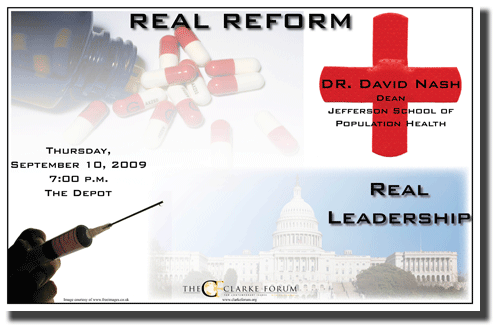
Nash PosterThursday, September 10, 2009

 (Part of The Clarke Forum’s series on Leadership in an Age of Uncertainty)
The Depot, 7:00 p.m.

The United States needs real leadership to tackle the health care system’s core problems: its cost, its poor quality, its limited scope, along with pernicious incentives that pervade the entire system. Dr. Nash will provide a leadership roadmap to confront these issues.

Topical Background
Healthcare reform has recently become a heated topic of debate in American politics. President Obama made improving the quality and coverage of healthcare, while reducing its costs, a key goal for his presidency. The Obama Administration seeks to ensure affordable healthcare coverage for all Americans, reduce wasteful practices in medical and administrative offices, improve patient care, and invest in the prevention of illness and disease. The reform of American health insurance and medical practice proves to be a divisive issue, as seen by the boisterous and well attended town hall meetings and protests across the nation.

Arguments for Healthcare Reform:
• 47 million Americans are uninsured.
• The U.S. is falling behind in world rankings for health indicators Read more
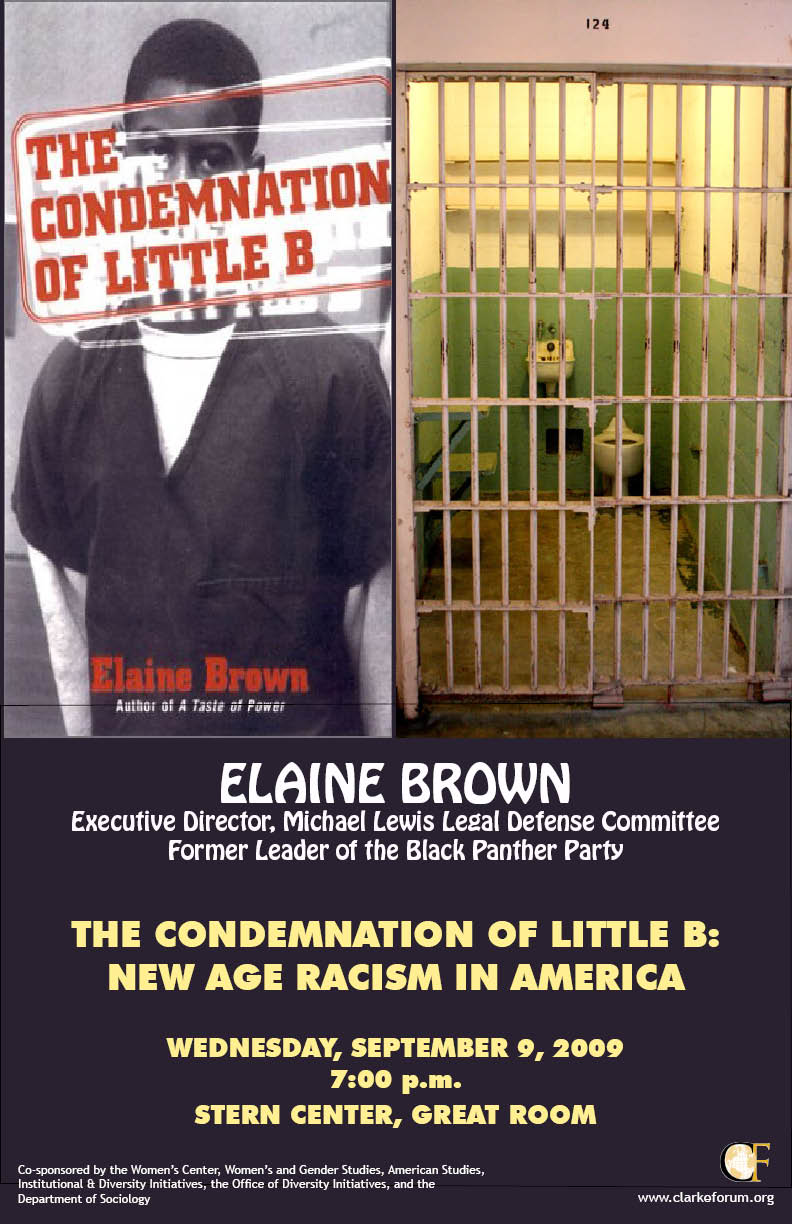
Elaine Brown

Executive Director of the Michael Lewis Legal Defense Committee and former leader of the Black Panther Party

The Condemnation of Little B–New Age Racism in America

elaine Brown posterWednesday, September 9, 2009
Stern Center, Great Room, 7:00 p.m.

In 1997, Michael “Little B” Lewis, a 13 year-old black adolescent, was sentenced to life imprisonment following his adult conviction for a murder Brown says he did not commit. What is the nexus between this tragedy and the relentless ramifications of slavery for black people in America, duplicitously entrenched now as a national policy of “New Age Racism?”
This program is sponsored by The Women’s Center, Department of Women’s and Gender Studies, Department of American Studies, Department of Sociology, The President’s Office of Institutional & Diversity Initiatives, and The Office of Diversity Initiatives.

Topical Background
The case of Michael Lewis, known as “Little B,” to some extent symbolizes current race relationships in the United States. At 13 years old, Lewis was arrested, tried and convicted as an adult for a murder that Brown believes he did not commit. Lewis was subsequently sentenced to life in prison. This case is an indirect reflection of the state of race relations in the U.S., as indicated by Read more

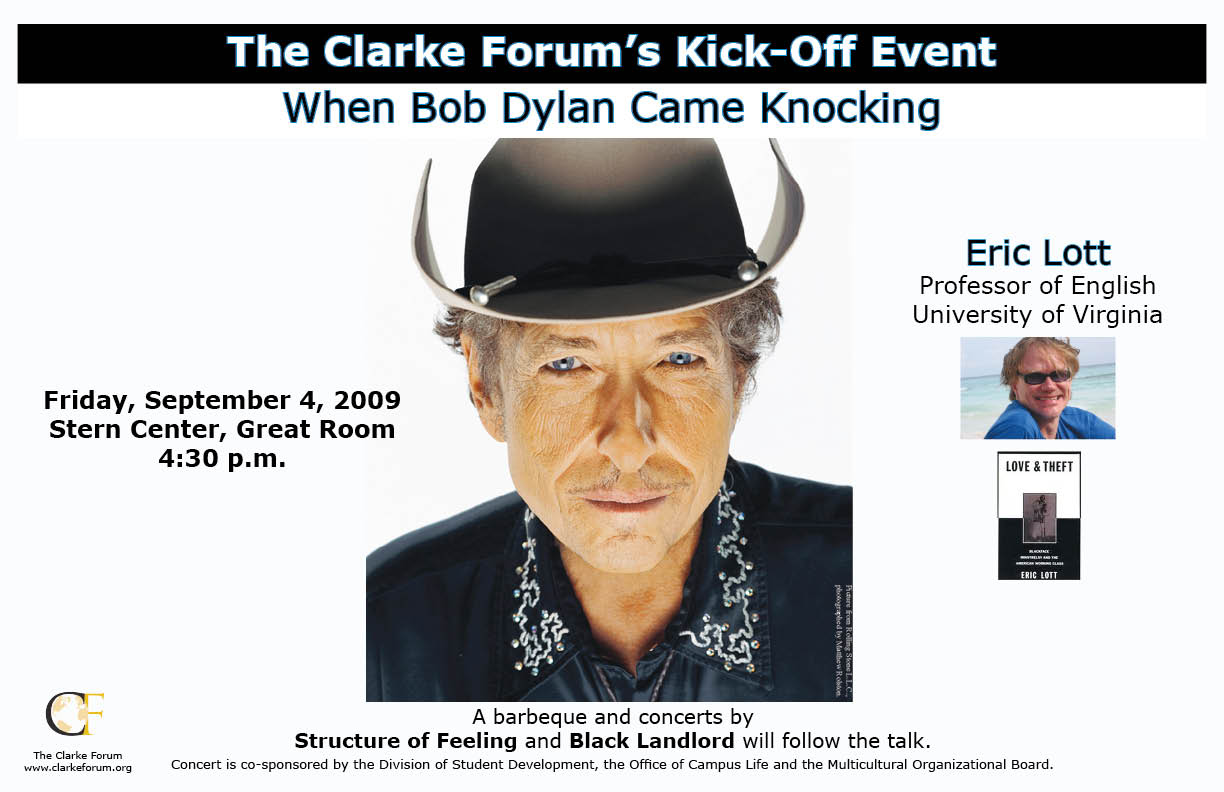
Eric Lott

Professor of English, University of Virginia

When Bob Dylan Came Knocking

Lott Poster
Friday, September 4, 2009
Stern Center, Great Room, 4:30 p.m.

Bob Dylan popularized Eric Lott’s book by putting its title on his 2001 album “Love and Theft.” Dylan’s “lift” of the title reflected Lott’s view that appropriations are fundamental to popular culture and that artistic creativity has an important bearing on education and identity formation.

Following Professor Lott’s talk, there will be a barbecue and concerts by Structure of Feeling and Black Landlord, named the “best local band” by Philadelphia Magazine in August 2009. Concerts are co-sponsored by The Division of Student Development, the Office of Campus Life and the Multicultural Organizational Board.

Topical Background
Cultural theorist Raymond Williams claims that culture is “one of the two or three most complicated words in the English language.” Certainly the meaning of the term is highly contested.

In his book Cultural Theory and Popular Culture: An Introduction, John Storey identifies six different definitions of the term:

• The “culture which is widely favored or well liked by many people.”
• The culture which is “left over after we have decided what is high culture.”
• “Mass culture,” that is, Read more

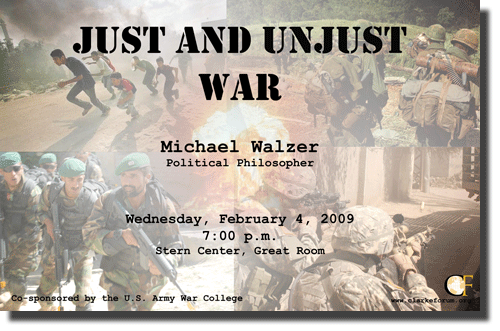
Dr. Michael Walzer

Professor Emeritus at the Institute for Advanced Study at Princeton University and Author

Walzer Poster

Just and Unjust Wars

Wednesday, February 4, 2009
Stern Center, Great Room – 7:00 p.m.

What are the underlying principles that distinguish just from unjust wars? In particular, how do the principles of proportionality and responsibility apply to situations of asymmetric warfare, such as the recent violence in the Gaza Strip?

Topical Background
Just War Theory has two dimensions: jus ad bellum and jus in bellum. The former refers to the justification for war while the latter refers to the conduct of war. A major issue regarding both dimensions is the principle of proportionality. This principle requires that the benefits of the war must be proportional to its expected harms and that the force used must be proportional to the wrong suffered and the possible anticipated benefit. The number of civilian casualties has an important bearing on the principle of proportionality.

Other dimensions of jus ad bellum include legitimate authority, intention, and last resort. Additional dimensions of jus in bellum involve distinction and military necessity. Distinction requires that force be directed solely at enemy combatants instead of non-combatant civilians. The concept of military necessity dictates that an Read more

Violence in Gaza: A Panel Discussion

Thursday, January 22, 2009
The Depot – 7:00 p.m.

Panelists:
David Commins, Benjamin Rush distinguished chair in liberal arts and sciences and professor of history at Dickinson College
Itzchak Weismann, visiting assistant professor of history at Dickinson on leave from the University of Haifa in Israel
Sherifa D. Zuhur, research professor of Islamic and Regional Studies, U. S. Army War College
Moderated by Ed Webb, assistant professor of political science and international studies at Dickinson Read more

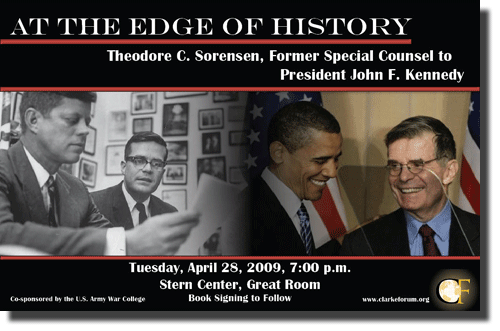
Ted Sorensen

Former Special Counsel & Advisor to President John F. Kennedy

From the Edge of History

Ted Sorensen Poster
Tuesday, April 28, 2009
Stern Center, Great Room – 7:00 p.m.

Booksigning to follow

In January 1953, freshman Senator John F. Kennedy hired 24-year-old Ted Sorensen as his number two legislative assistant. Over the next 11 years he became known as Kennedy’s “intellectual blood-bank” and “top policy aide.” He will talk on a variety of subjects including the McCarthy era, the Cuban Missile Crisis, the Vietnam War and the period following the assassination of JFK.

Mr. Sorensen will personally sign copies of his recently published memoir titled Counselor: A Life at the Edge of History, which will be available for purchase.

Topical Background
Throughout his long professional relationship with first Senator and then President John F. Kennedy, from 1953 to 1963, Theodore C. Sorensen witnessed many of the decade’s pivotal events first-hand, including:

•The Bay of Pigs Invasion. Prior to Kennedy’s ascension to the presidency, President Dwight D. Eisenhower’s administration formulated a plan to overthrow Cuba’s Communist leader Fidel Castro. Due to Cuba’s strategic location astride the access points from the Gulf of Mexico into the Atlantic Ocean, it is in a position to

Read more

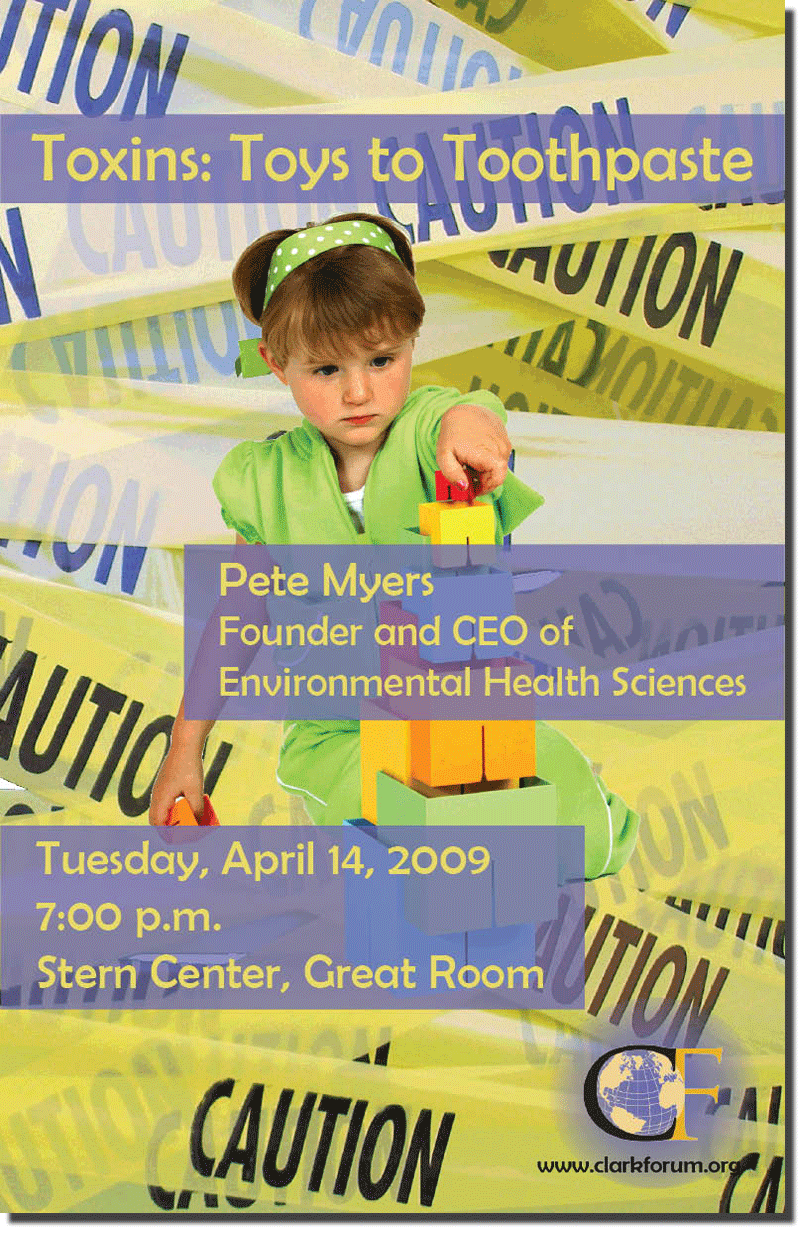
Pete Myers

Founder, CEO and Chief Scientist of Environmental Health Sciences

Toxins: Toys to Toothpaste

Pete Myers PosterTuesday, April 14, 2009
Stern Center, Great Room – 7:00 p.m.

Revolutionary advances in the environmental health sciences have discovered that low exposure to materials found in many of today’s consumer products – materials once thought safe – in fact have adverse consequences on human health.

Topical Background
From toys to raincoats to perfumes, toxins in today’s American household are found in unexpected places. These harmful substances migrate from homes to hospitals where they are found in the tubing of medical equipment and may even affect infants in the womb by way of the umbilical cord.

Exposure can come from dust in the air or from plasticized coverings. According to studies from the Environmental Working Group (EWG), children ingest more than 120 chemicals on a daily basis. Most of these chemicals are absorbed through the skin and mouth. For example, plastic rubber duckies floating in children’s bathtubs contain high levels of toxins.

Babies and children develop at faster rates than adults, which leads to greater vulnerability to chemicals. An adult’s body is able to resist and overcome many of the toxins found in everyday plastic products, but Read more

Euthanasia: Whose Right to Die is It?

Monday, April 13, 2009
Stern Center, Great Room – 7:00 p.m.
Euthanasia Poster

“Continuing the Conversation” will be held
immediately following the presentation, Stern 102.

Dr. Greg Lewis, Carlisle physician
Carol Poenisch, daughter Dr. Kevorkian’s 19th patient
Linda Smith, hospice nurse
Jim Hoefler, Dickinson professor of political science and policy studies

A panel discussion reflecting diverse perspectives, viewpoints, and experiences regarding physician-assisted suicide.

This program was created by the Clarke Forum Student Board.

Topical Background
In the 1990 case of Cruzan v. Director, Missouri Department of Health, the Supreme Court addressed the question of whether American citizens have a constitutional “right to die.” The Court ruled, in a 5-4 decision, that “the Fourteenth Amendment provides that no State shall ‘deprive any person of life, liberty, or property, without due process of law.’ The principle that a competent person has a constitutionally protected liberty interest in refusing unwanted medical treatment may be inferred from our prior decisions.” “Accordingly, the liberty guaranteed by the Due Process Clause must protect, if it protects anything, an individual’s deeply personal decision to reject medical treatment, including the artificial delivery of food and water.”

Seven years later, in the cases of Washington v. Glucksberg Read more

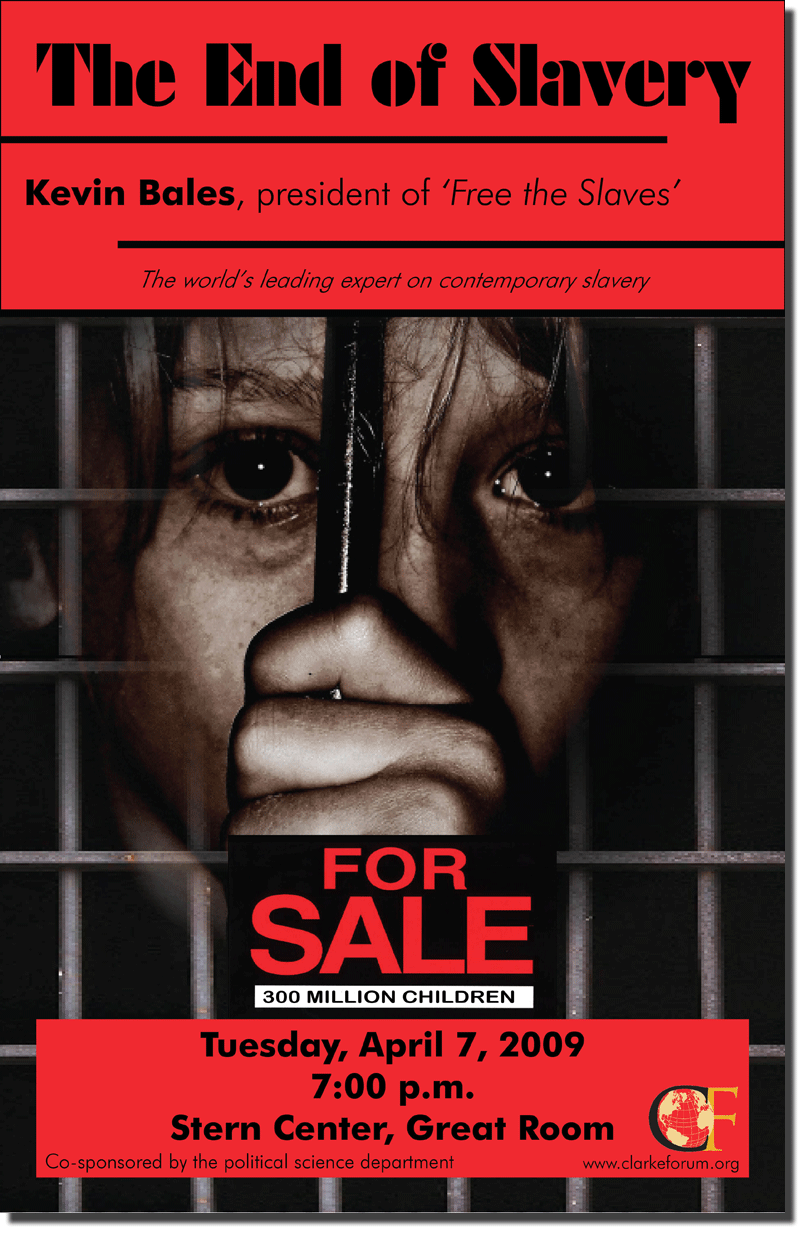
Kevin Bales

Author and President of Free the Slaves

The End of Slavery

Kevin Bales PosterTuesday, April 7, 2009
Stern Center, Great Room – 7:00 p.m.

The world’s leading expert on contemporary slavery will share his vision on how to end slavery in our time. Co-sponsored by the Department of Political Science.

Topical Background
According to human rights organizations, scholars, government agencies and journalists, slavery exists in virtually every country of the world and in almost every U.S. state. A growing antislavery movement has been hard at work documenting and exposing this troubling discovery.

Although slavery is illegal in every country of the world, it is estimated that there are more slaves today than ever before: 27 million, which is twice as many as the number of Africans enslaved during the four centuries of the transatlantic slave trade.

Slavery has evolved since the American Civil War when antebellum slavery meant that one person was owned completely by another and could be inherited as property. Today’s slavery, however, is defined as one person forcing another to work without pay, by the use of violence or psychological manipulation.

The different types of slavery that still persist today are:

•Chattel Slavery, where slaves are considered their masters’ Read more

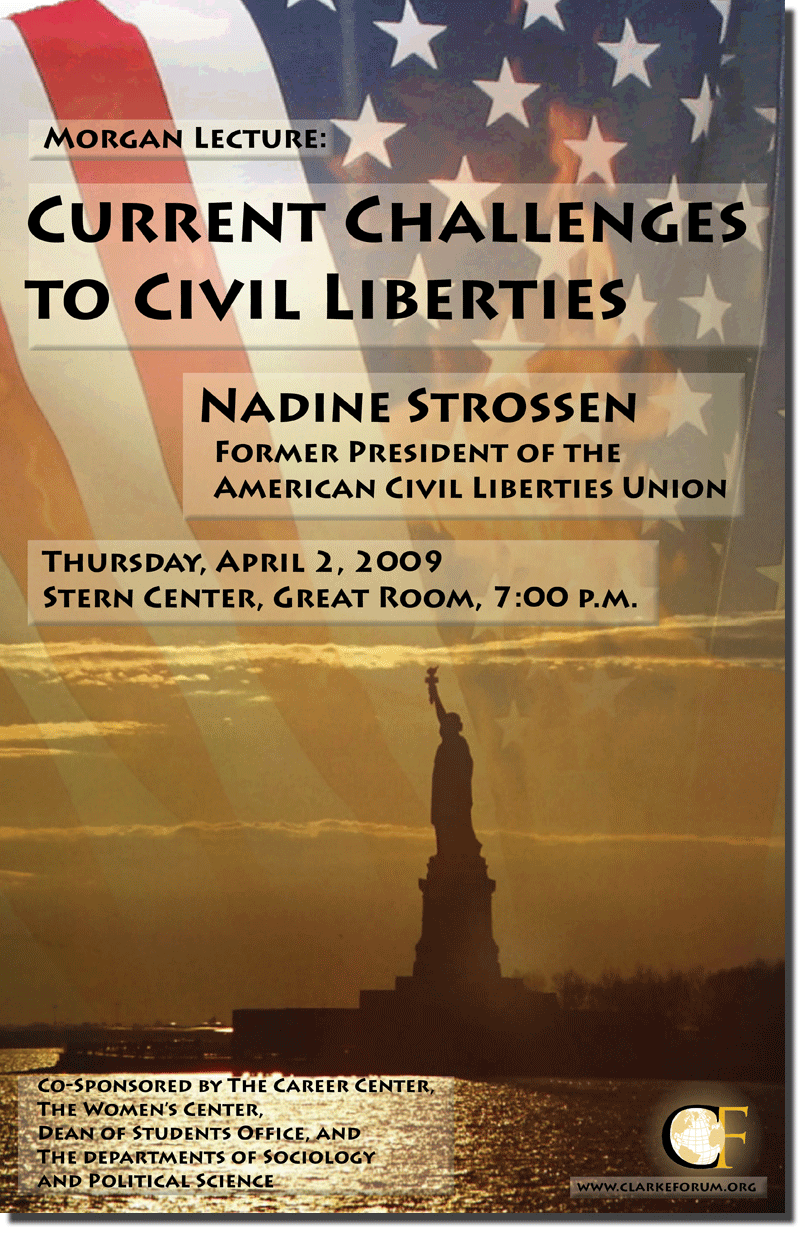
Nadine Strossen

Former President of the American Civil Liberties Union (1991-2008)

Morgan Lecture

Challenges to Civil Liberties

Nadine Strossen PosterThursday, April 2, 2009
Stern Center, Great Room – 7:00 p.m.

An interactive and informal conversation with the former ACLU president concerning current and future threats and challenges to civil liberties.

Co-sponsored by Department of Sociology, Department of Political Science, Office of Dean of Students, Women’s Center and Career Center.

Topical Background
In reaction to the 9/11 attacks, the Bush administration enacted a series of strong counter-terrorism measures. These policies included aggressive detention procedures, extraordinary rendition of prisoners to various countries, harsh interrogation tactics, and a sweeping domestic and international surveillance policy. While these anti-terrorist policies were all pursued in the name of protecting the country, some contended that they represented a serious threat to civil liberties. The American Civil Liberties Union (ACLU), the nation’s oldest and largest civil liberties organization, vigorously opposed these policies from their inception, fighting them in courtrooms and legislative bodies, with varying levels of success.

Both supporters and opponents of former President Bush are closely watching the Obama Administration to see what policies he will pursue in the ongoing war on terrorism. President Obama has already made significant changes, such Read more

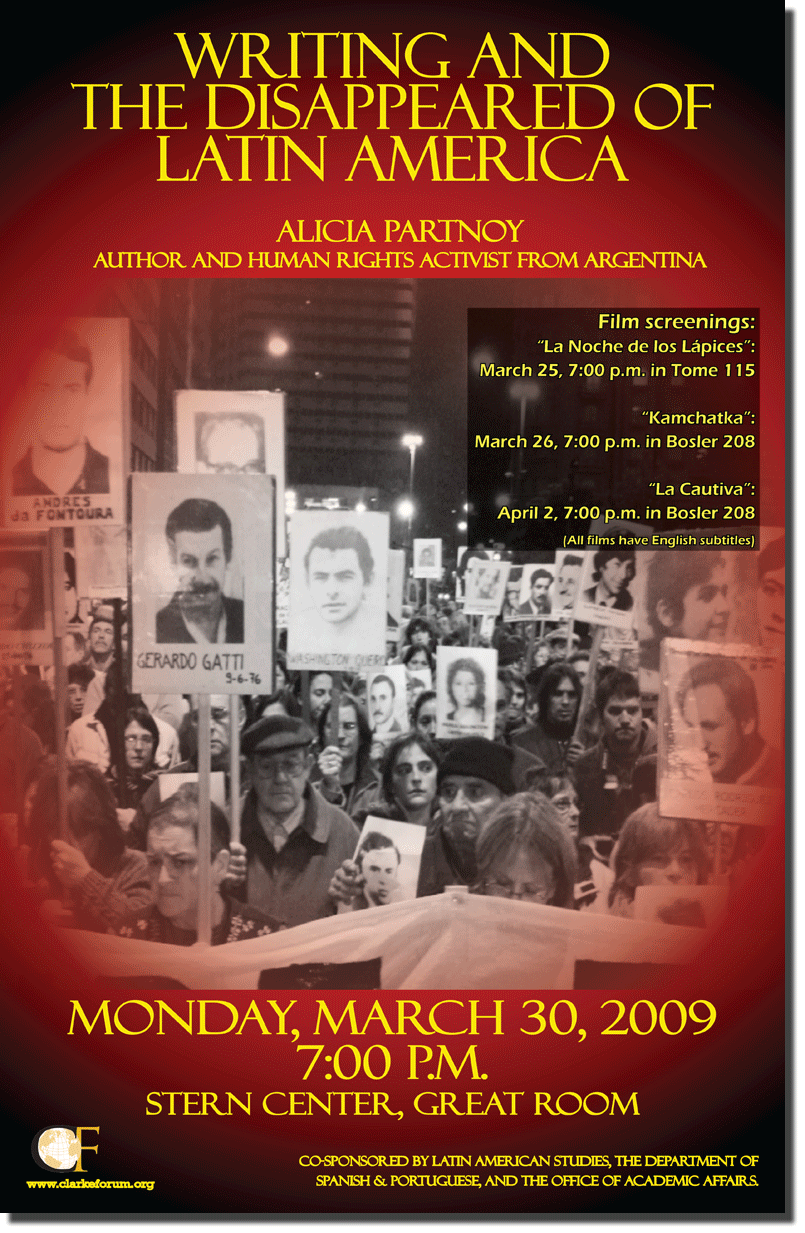
Alicia Partnoy

Author and Human Rights Activist from Argentina

Alicia Partnoy Poster

Writing and the Disappeared of Latin America

Monday, March 30, 2009
Stern Center, Great Room – 7:00 p.m.

A survivor’s perspective on the role of the writer in the struggle against feminicide and the “disappearing” of political dissidents in Latin America.

Co-sponsored by Latin American Studies, Department of Spanish & Portuguese, and First-Year Seminars.

Topical Background
After Perón’s death in 1974, the Argentinean government was left in the hands of his widow, Isabel Martínez de Perón, who empowered the military and the police to eradicate subversion. In 1976, a military junta seized power in Argentina and carried on a seven-year campaign against individuals who opposed it. Many people were kidnapped and taken to secret detention centers where they were tortured and eventually killed.

Human rights groups in Argentina estimate the number of “disappeared” to be close to 30,000. Many of these were peaceful citizens, writers, workers, and housewives not involved in politics. The dictatorship forced many individuals into exile, especially intellectuals, artists, and political activists. Between 1970 and 1985, nearly half a million citizens left Argentina for other Latin American countries, the United States, Canada, Australia and Europe, especially Spain.

About the Speaker Read more

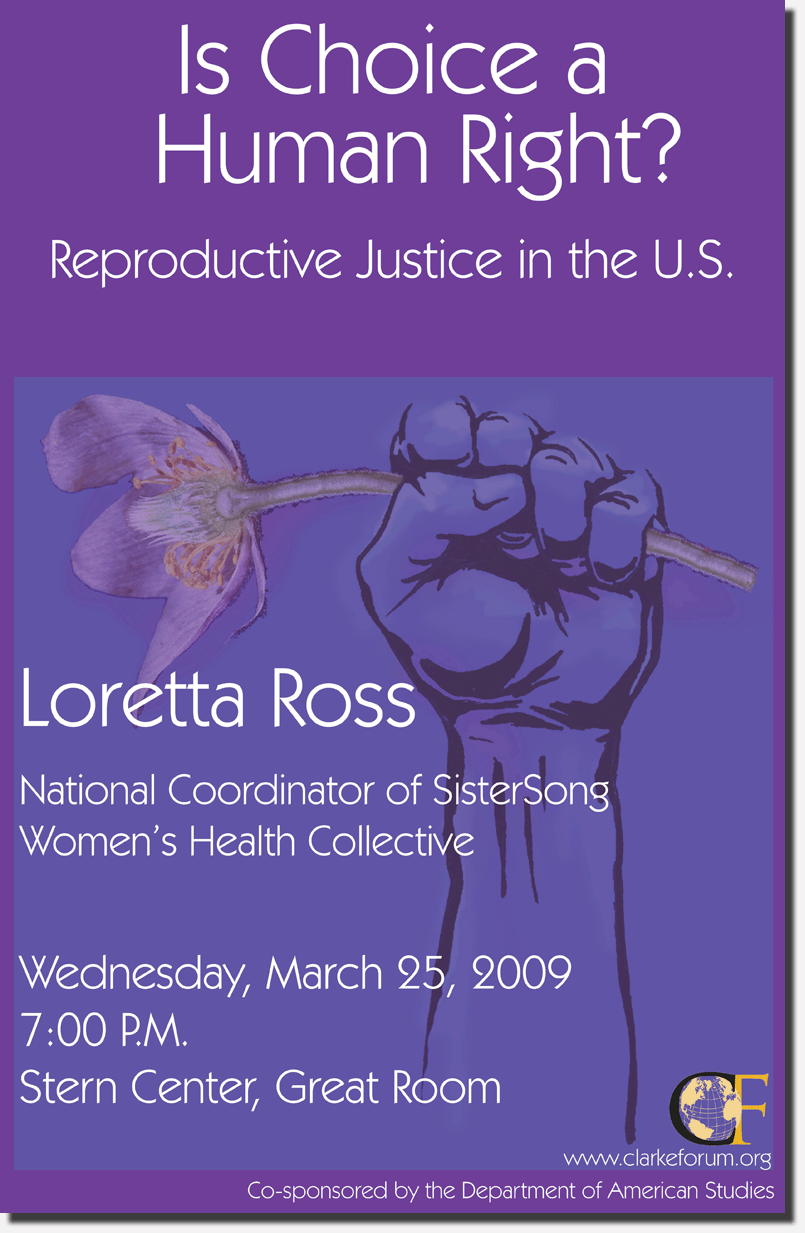
Loretta Ross

Founding Member and National Coordinator of SisterSong

Loretta Ross Poster

Is Choice a Human Right? Reproductive Justice in the U.S.

Wednesday, March 25, 2009
Stern Center, Great Room – 7:00 p.m.

Co-sponsored by the Department of American Studies.

Topical Background
Some consider a safe and healthy birth a human right. In the U.S., however, it is not a right that is fully protected for all women, especially women of color. African American women die during childbirth three to four times more often than white women.

SisterSong Women’s Health Collective is an organization attempting to limit needless deaths by shifting the focus of reproductive justice to the oppression women encounter during child birth through “their bodies, sexuality, labor and reproduction.” As the organization’s motto states, SisterSong is committed to “doing collectively what we cannot do individually.”

SisterSong began in 1997, with a grant from the Ford Foundation, and provides access to health services, along with relevant information and resources that are culturally and linguistically appropriate. In an effort to achieve reproductive justice, this collective works to “strengthen and amplify the collective voices of indigenous women and women of color” through public policy work, advocacy, service delivery and health education within our communities on the Read more

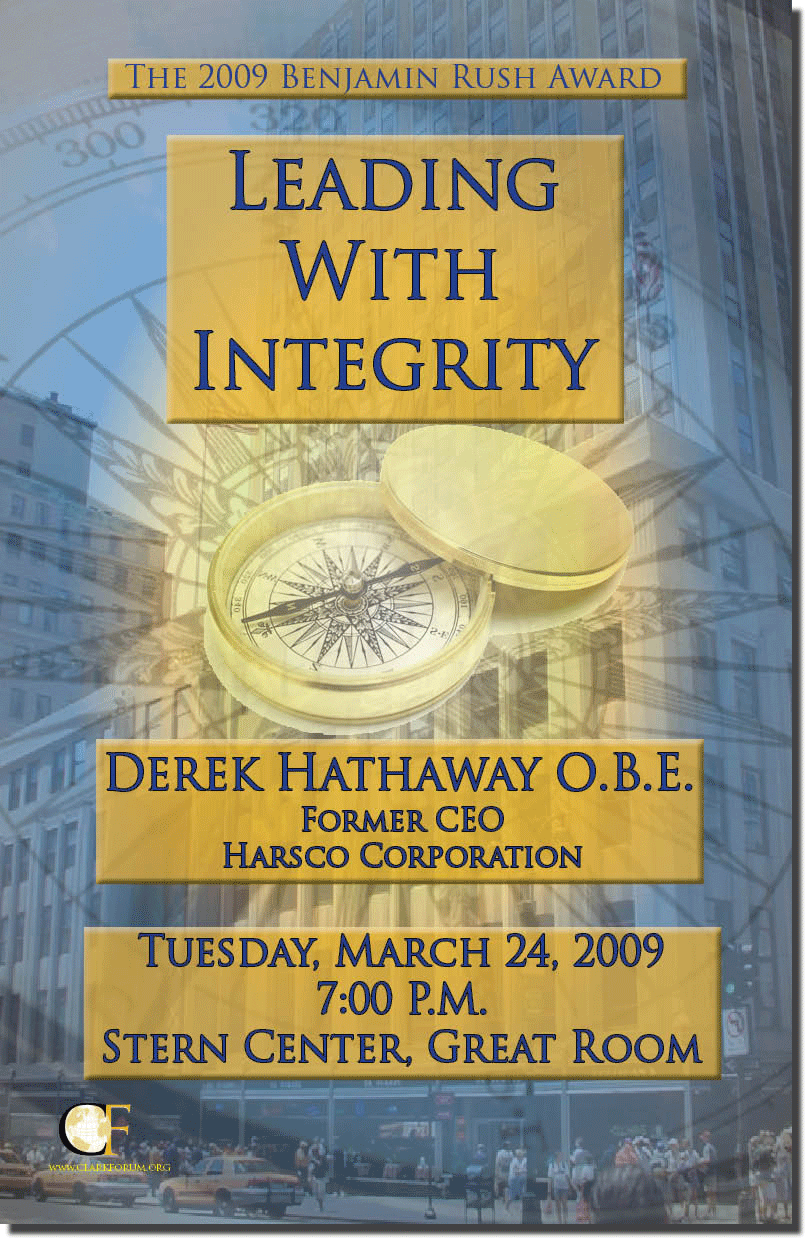
Derek Hathaway

Recently Retired Chairman and Chief Executive Officer of Harsco Corporation

Derek Hathaway Poster

Rush Award

Leading With Integrity

Tuesday, March 24, 2009
Stern Center, Great Room – 7:00 p.m.

Topical Background
According to a recent Gallup Poll, 80% of Americans believe that the moral values of our country are getting worse. Scandals and corruption in government, healthcare, law and many other sectors of our society appear to have eroded public confidence both in public and private institutions. Government scandals from both sides of the aisle have scorched the nation’s trust in the elected leadership of our government. Access to quality, trustworthy health care also remains an important issue as 59% of the country believes that the U.S. healthcare system has “major problems.” In our legal system, two-thirds of lawyers report having knowledge of “bill-padding” among their colleagues, while 55% of lawyers themselves report billing for unnecessary work. The crisis of confidence is even more obvious in the business sector.

Only three out of ten Americans reported in a recent poll that they believe Wall Street will make the right decisions regarding the current recession. In addition to a general mistrust of Wall Street, recent multi-billion dollar scandals involving business leaders, such as those Read more

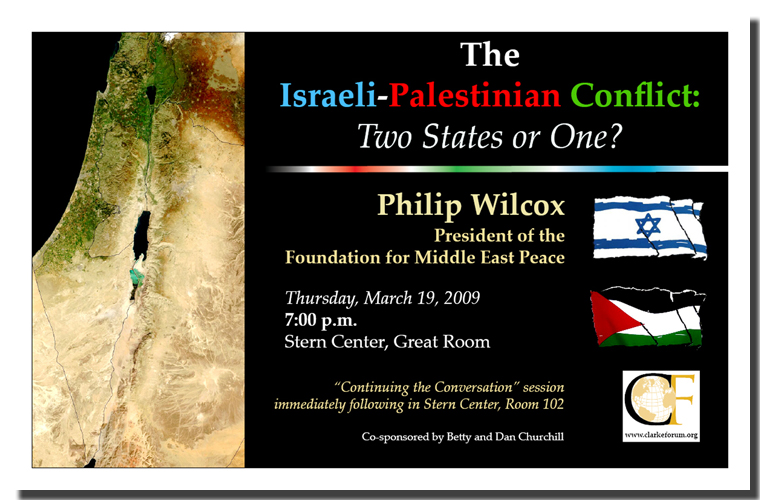
Philip Wilcox

The Israeli-Palestinian Conflict: Two States or One?

Wilcox PosterThursday, March 19, 2009
Stern Center, Great Room – 7:00 p.m.

Why has the conflict between Israelis and Palestinians been so intractable, and will President Obama’s policy succeed in bringing about real peace?

Co-sponsored by Betty R. ’58, and Dan Churchill.

About the Speaker
Philip C. Wilcox, Jr. is president of the Foundation for Middle East Peace, a Washington D.C.-based foundation devoted to fostering peace between Israelis and Palestinians. Wilcox retired from the U.S. Foreign Service in September 1997 after 31 years of service.

Wilcox graduated from Williams College with a B.A. in history and from Stanford Law School in 1961 with an LL.B.

After teaching school in Sierra Leone, West Africa, and practicing law in Denver, Colorado, Wilcox entered the Foreign Service in 1966. He served in Laos, Indonesia and Bangladesh. His last overseas assignment was as Chief of Mission and U.S. Consul General, Jerusalem.

Wilcox has held a variety of assignments, including Deputy Assistant Secretary of State for Middle Eastern Affairs, Principal Deputy Assistant Secretary for Intelligence and Research and as Ambassador at Large and Coordinator for Counter Terrorism.

In 2002, Wilcox received the Distinguished Service Award from Americans for Peace Read more

America's Role and Image in the World (Part 2)

Panel Discussion

How Green are Human Rights? An International Perspective

Tuesday, March 17, 2009
Anita Tuvin Schlechter Auditorium – 7:00 p.m.

A panel of experts from Dickinson’s partner universities abroad will discuss how different cultures assess the positive and negative interactions between human rights and environmental sustainability.

Co-sponsored by the Office of Global Education and the Center for Environmental and Sustainability Education. Read more

America's Role and Image in the World (Part 1)

Joe Szabo, author, publisher and lecturer

Uncle Sam Lampooned

Monday, March 16, 2009
Anita Tuvin Schlechter Auditorium – 7:00 p.m.

How America is perceived around the world through cartoons and illustrations by world-famous artists and cartoonists and through interviews conducted in over sixty countries.

Co-sponsored by the Office of Global Education and the Center for Environmental and Sustainability Education.

Topical Background
The use of cartoons in political satire is quite common. In the United States, political cartoons can be traced to the revolutionary period when Ben Franklin’s famous cartoon “Join or Die” was published in the Pennsylvania Gazette.

Criticism of the United States is often manifested in cartoons published on web sites and in newspapers. Some of these cartoons depict the United States as a menace or bully, suggesting a negative world-wide view of the United States. A BBC World Service Poll taken in 2007 indicated that only 35% of people around the world perceive U.S. influence as positive.

For example, in one cartoon image on the Witty World web site, cartoonist Tony Auth depicts the role the United States plays in international politics. In the image, an American writes on the wall of the International Criminal Court that “all Read more

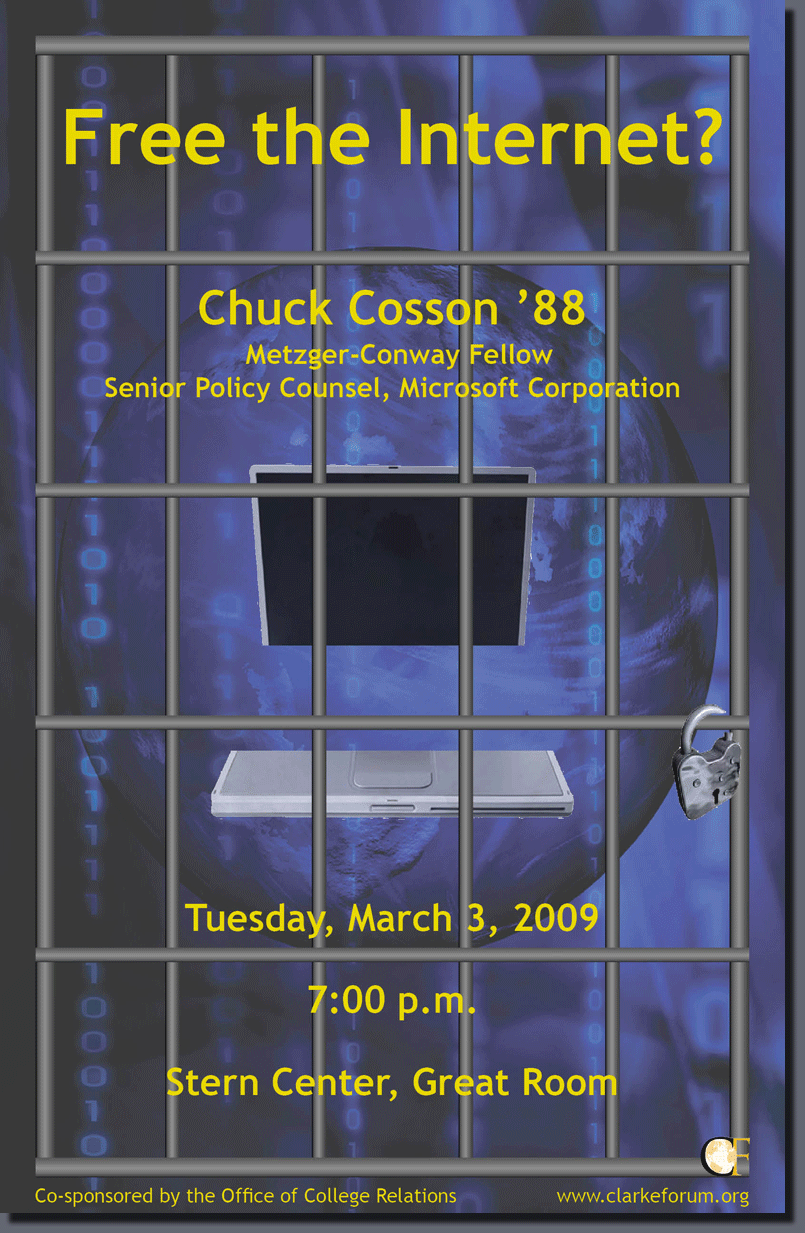
Chuck Cosson ’88

Senior Policy Counsel, Microsoft, Author, and Metzger-Conway Fellow

Chuck Cosson Poster

Free the Internet?

Tuesday, March 3, 2009
Stern Center, Great Room, 7:00 p.m.

Governments around the world are pressuring internet-related companies to comply with local laws that arguably conflict with internationally recognized human rights of freedom of expression and privacy. How should companies like Microsoft respond

Topical Background
In the early 1960s, the United States government wanted to create a network that would allow officials to exchange classified scientific and military information on research and development. With concerns about the Cold War and a fear of the Soviet Union’s technological capabilities, those in command needed a communications system that would function during and after a nuclear attack.

In response to this situation, the government established the Defense Advanced Research Projects Agency (DARPA) to develop a “galactic” computer network. Officially called ARPANET, this new system employed the theory of packet switching, where encoded messages are broken up into small pieces and transmitted over a channel, which formed the basis of internet connections. At first, ARPANET was connected to only four major computers at universities in the western United States (UCLA, Stanford Research Institute, UCSB, and the University of Utah). Initially limited to only Read more

Mark Myers

Former Director, U.S. Geological Survey

Science for a Crowded Planet

Mark Myers PosterThursday, February 26
Stern Center, Great Room, 7:00 p.m.

Although most people throughout human history have regarded earth’s basic resources as inexhaustible, in today’s crowded world we must act together to mitigate and adapt to the risks generated by a rapidly changing world.

Topical Background
The Earth’s resources are immense, but not unlimited. For instance, nearly half of the world’s original forest cover has been lost, and each year another 16 million hectares are cut or burned. Water is another resource that has been greatly affected. Water shortages are expected to affect nearly 3 billion people in 2025. Air pollution has also become a global environmental problem. It not only affects the quality of the air we breathe, but it also impacts the land and the water. The World Health Organization states that 2.4 million people die each year from causes directly attributable to air pollution.

On top of the depletion of its basic resources, the Earth’s population has exploded. Even though population growth has slowed, the absolute number of people continues to climb; by 2050 the world’s population is expected to rise by 40% to 9.1 billion. As population Read more

What’s Wrong with Public Service? A Challenge for Higher Education

All-Day Conference Co-Sponsored by the University of Maine and Dickinson College

Monday, February 23, 2009
Stern Center, Great Room
Sessions begin at 8:30 a.m.

In the context of recent proposals to create a public service academy, what are the advantages and disadvantages of a public service career and the role higher education plays in preparing students for the challenges of such a commitment?

Conference Schedule
Public Service Conference Schedule

Co-sponsored by Betty R. ’58, and Daniel Churchill. Read more

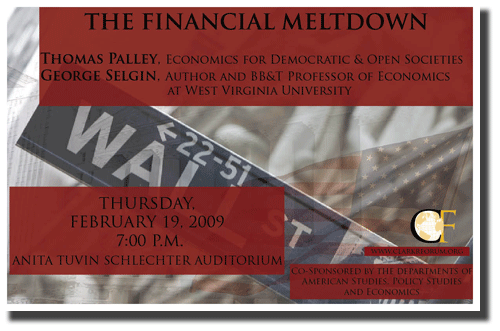
Thomas Palley and George Selgin

Thomas Palley, economist, author, and founder of Economics for

Democratic and Open Societies;

George Selgin, BB&T Professor of Economics, West Virginia University

The Financial Meltdown

Financial Meltdown PosterThursday, February 19, 2009
Anita Tuvin Schlechter Auditorium – 7:00 p.m.

What policies are necessary to deal with the near-collapse of the United States financial system and prevent similar crises in the future?
Co-sponsored by Department of Economics, Policy Studies and Department of American Studies.

Topical Background
In late 2008, the world witnessed the collapse of markets and large financial institutions as a severe crisis in the global economy commenced. Termed “a financial crisis unmatched since the Great Depression,” its effects have reached every corner of the world. The continuous decline of value in markets, accompanied by the global recession, has called into question the free market economic policies that have governed the global economy for decades.

Governments across the world intervened and authorized rescue packages, including bailouts for their markets in order to mitigate the effects of the crisis. The reasons for the global crisis are indefinite; however, an impetus was the subprime mortgage crisis that led to the near-collapse of the United States economy.

About the Speakers
Thomas Palley is an economist, author Read more