
Anita Tuvin Schlechter Auditorium, 7 p.m.
Tree Obsessions: Celebrating the Ephemeral in Long-Lived Plants
William (Ned) Friedman is the Arnold Professor of Organismic and Evolutionary Biology at Harvard University
In an age of environmental destruction and outright murder of our biological brethren, there is something deeply troubling about humanity’s relationship with the natural world. Technology has left us with mere facsimiles of nature – pixilated abstractions of biodiversity through satellite imagery, decoded strings of DNA – and we have become fundamentally disconnected from actual nature. I will argue that by mindfully engaging in the simple act of observing nature (and obsessing about it) in arboreta, botanical gardens, and our backyards, trees can help us forge a personal and empathic lifelong connection with the “other,” the vast and variant organisms with which we share the planet. As Johann Wolfgang Goethe aptly wrote: “To wander about among a vegetation which is new to one is pleasant and instructive. It is the same with familiar plants as with familiar objects: in the end we cease to think about them at all. What is seeing without thinking?” Indeed, seeing without thinking lies at the very heart of the human-created crisis of global change and extinction, and the disconnect between humans and the millions of other species and countless organisms with whom we share the planet. Can the simple practice of deepening our love of individual trees (that cannot love us back) make us better stewards of Earth’s biodiversity? I think so.
The program is presented by the Clarke Forum for Contemporary Issues and co-sponsored by The Trout Gallery and is in conjunction with the Trout Gallery exhibition Branch: Trees in American Art. It is also part of the Clarke Forum’s Leadership in an Age of Uncertainty Series.
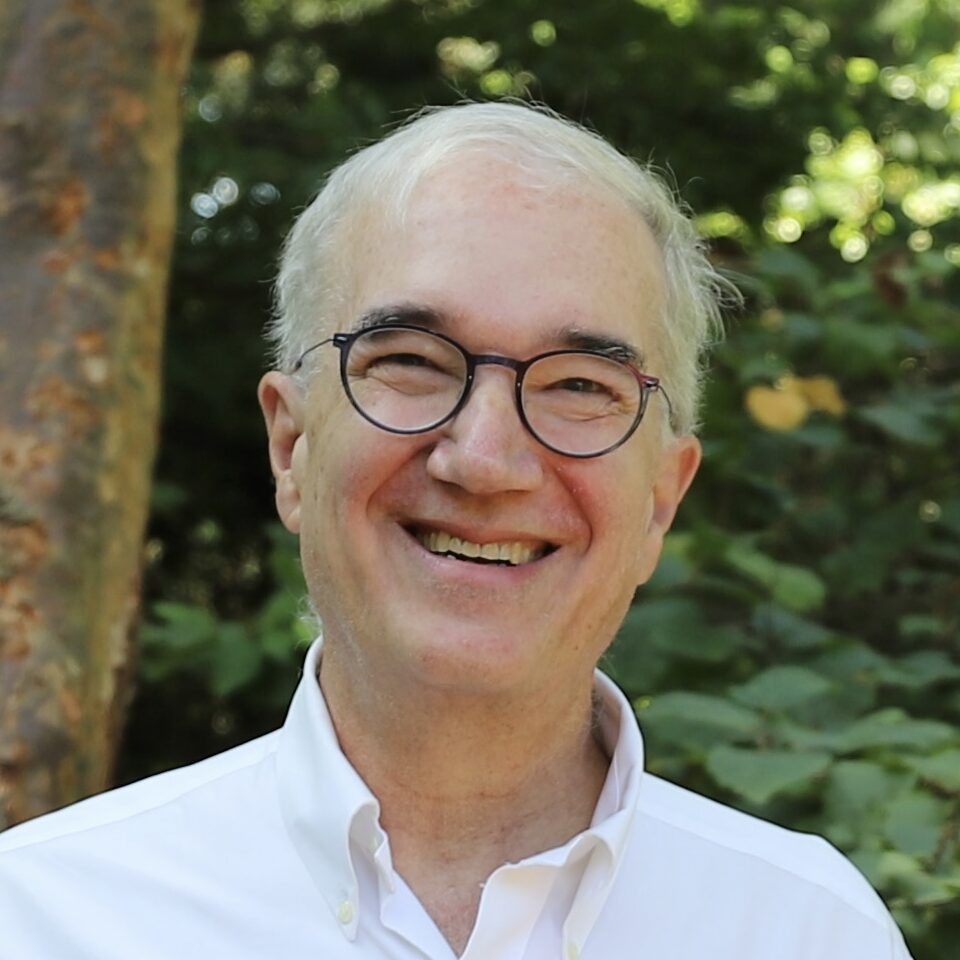 Biography (provided by the speaker)
William (Ned) Friedman is the Arnold Professor of Organismic and Evolutionary Biology at Harvard University and the eighth director of the Arnold Arboretum of Harvard University in its 152-year history. During his sixteen years at the helm of the Arboretum, Friedman has worked to expand the Arboretum’s global impacts through diverse environmental justice initiatives, a keen focus on ex situ conservation, and the promotion of a vast array of scientific scholarship within the living collections. As an evolutionary biologist, Friedman’s scholarly studies have fundamentally altered century-old views of the earliest phases of the evolution of flowering plants, Darwin’s so-called “abominable mystery.” He is also deeply interested in the history of early (pre-Darwinian) evolutionary thought, particularly the largely overlooked contributions of horticulturists and botanists.
Related Links
https://www.nytimes.com/2022/08/17/realestate/harvard-arnold-arboretum.html