
 Anita Tuvin Schlechter Auditorium, 7 p.m.
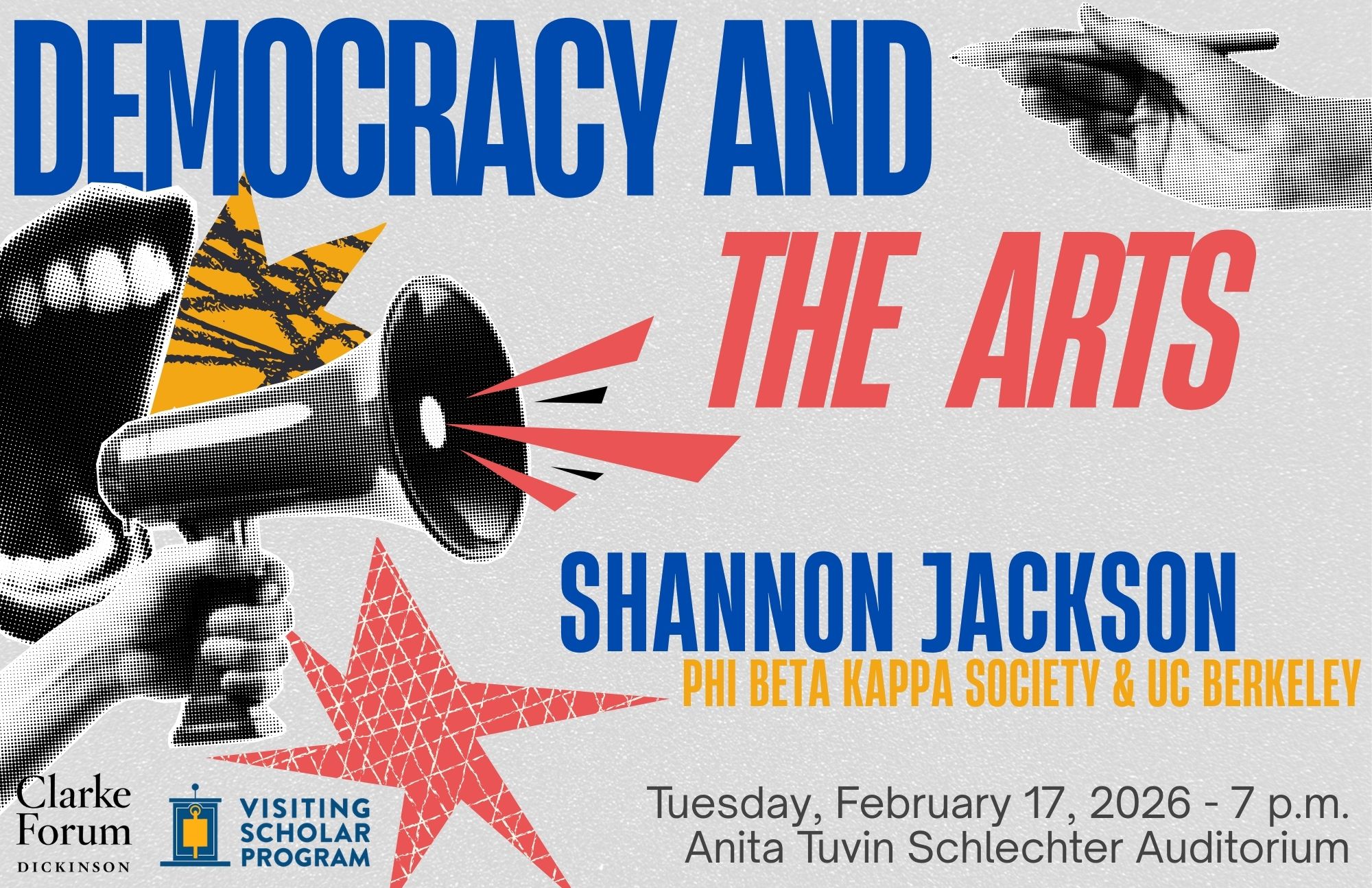
This event is in-person only. It will not be livestreamed nor recorded for future viewing.
Phi Beta Kappa Visiting Scholar Program
The Arts, Democracy, and Public Life
Shannon Jackson is the Cyrus and Michelle Hadidi Professor of the Arts & Humanities at UC Berkeley and the Chair of the History of Art Department
How do the arts activate public life? What is the role of the arts in sustaining democracy? In different eras and regions of the world, citizens have responded to these questions quite differently. As we mark the 250th anniversary of both the Phi Beta Kappa Society and of the United States of America, these questions have never been more resonant. The arts are key to advancing the rights of free assembly and of free expression. The arts contribute to social movements and to the formation of civic identity. This lecture alights upon a range of socially engaged art practices, investigating how the arts both shape and challenge our sense of community. Considering historic examples as well as those from our present moment, we will explore how public art can open us to new ideas of what democracy might mean.
This program is presented by the Clarke Forum for Contemporary Issues and the Phi Beta Kappa Society Visiting Scholar Program. The event is also part of the Clarke Forum annual theme, Thought Experiments.
Topic overview written by Supasinee Siripun ’27.
Biography (provided by the speaker)
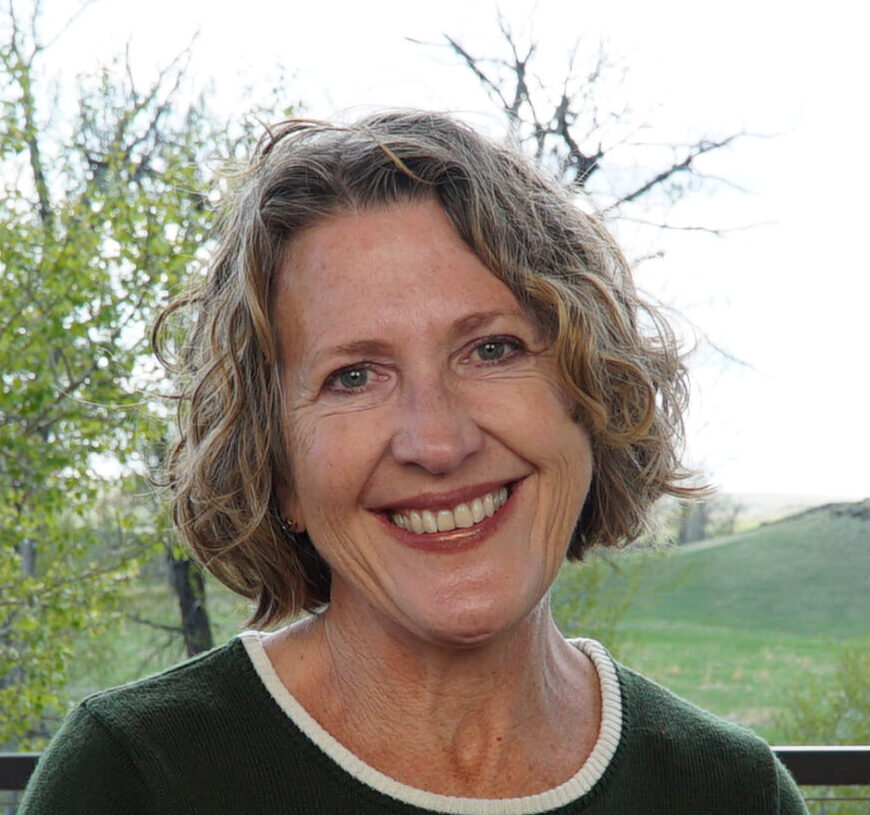 Shannon Jackson is the Cyrus and Michelle Hadidi Professor of the Arts & Humanities at UC Berkeley and the chair of the history of art department.
Jackson’s research, teaching, and convening focus on the role of visual, literary, performance, and media art forms in social movements and in public life, with a recent focus on ecological aesthetics. Her books include Back Stages, Public Servants, Social Works, and The Builders Association; recent online public projects include Relevance of Place, Media Art 21, and In Terms of Performance. Professor Jackson has been the recipient of numerous awards and grants, including the Mellon Foundation and the John Simon Guggenheim Foundation. She is a frequent speaker at museums, theaters, biennials, festivals, and universities around the world and serves on the advisory board of several organizations, including ZKM, BAMPFA, the Kramlich Art Foundation, and the Minnesota Street Project Foundation.
Phi Beta Kappa Visiting Scholar Program (from the PBK website)
 Since 1956, the Phi Beta Kappa Society’s Visiting Scholar Program has offered undergraduates the opportunity to spend time with some of America’s most distinguished scholars. The purpose of the program is to contribute to the intellectual life of the institution by making possible an exchange of ideas between the Visiting Scholars and the resident faculty and students.
Phi Beta Kappa Visiting Scholars travel to more than 100 colleges and universities each year, spending two days on each campus and taking full part in the academic life of the institution. They meet informally with students and faculty members, participate in classroom discussions and seminars, and give a public lecture open to the academic community and the general public. Over the last 67 years, over 720 Visiting Scholars have made over 5,900 visits to Phi Beta Kappa sheltering institutions.
Founded on Dec. 5, 1776, The Phi Beta Kappa Society is the nation’s most prestigious academic honor society. It has chapters at over 290 colleges and universities in the United States, nearly 50 alumni associations, and more than 700,000 members worldwide. Noteworthy members include 17 U.S. Presidents, 42 U.S. Supreme Court Justices and more than 150 Nobel Laureates. The mission of The Phi Beta Kappa Society is to champion education in the liberal arts and sciences, foster freedom of thought, and recognize academic excellence. For more information, visit www.pbk.org.