Aquaporin Water Channels: From Atomic Structure to Clinical Medicine
Monday, November 14, 2005
2005 Priestley Lecture and Award
Aquaporin Water Channels: From Atomic Structure to Clinical Medicine
Anita Tuvin Schlechter Auditorium, 7:30 P.M.
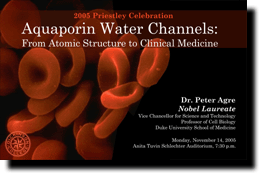
Peter Agre, Nobel Laureate and vice chancellor of science and technology at Duke University, presented the Priestley Award lecture on “Aquaporin Water Channels: From Atomic Structure to Clinical Medicine.” Agre discussed the high water permeability of certain biological membranes due to the presence of aquaporin water channel proteins, which have been associated with human clinical disorders such as brain edema and muscular dystrophy. Plant aquaporins are involved in numerous processes including the uptake of water by rootlets and carbon dioxide by leaves. Established in 1952, the annual Priestley Award honors a distinguished scientist who has made discoveries contributing to the welfare of mankind. The award commemorates Joseph Priestley, a Pennsylvania scientist, scholar and friend of Dickinson College, who isolated oxygen. Former Priestley Award recipients include Francis Crick, Stephen Jay Gould, Margaret Mead and Carl Sagan. Read more