
Anita Tuvin Schlechter Auditorium, 7 p.m.
Joseph Priestley Award Celebration Lecture
y code when ai?
Hadley Wickham is Chief Scientist at Posit PBC
Software engineering has irrevocably changed, and there is now relatively little need to personally type code. But I don’t think this means you should no longer learn to code. In fact, it’s now a better time to learn than ever before. Coding agents might have changed how we create code, but code as an artifact of reasoning and reproducibility is still incredibly valuable.
I’ll share what I’ve learned using AI tools in my own software engineering practice, particularly the importance of the “double-entry accounting” of programming—unit tests—and the importance of creating an adversarial environment for code generation. I’ll also include some speculation about how AI will affect data science. It’s less clear to me how this is going to play out, since it’s much harder to automatically validate the most important parts of data science.
This is a scary time, but it’s also exhilarating. I built an iPhone app in a couple of hours without ever having written Swift. The ceiling on what individuals can build has never been higher, and it’s easier than ever to bring your imagination to life.
The Joseph Priestley Award recipient is chosen by a different science department each year. The Department of Data Analytics selected this year’s recipient. The event is supported by the Priestley Fund and is presented by the Clarke Forum for Contemporary Issues and co-sponsored by the departments of biology, chemistry, data analytics, geosciences, environmental studies, mathematics & computer science, psychology, and physics & astronomy.
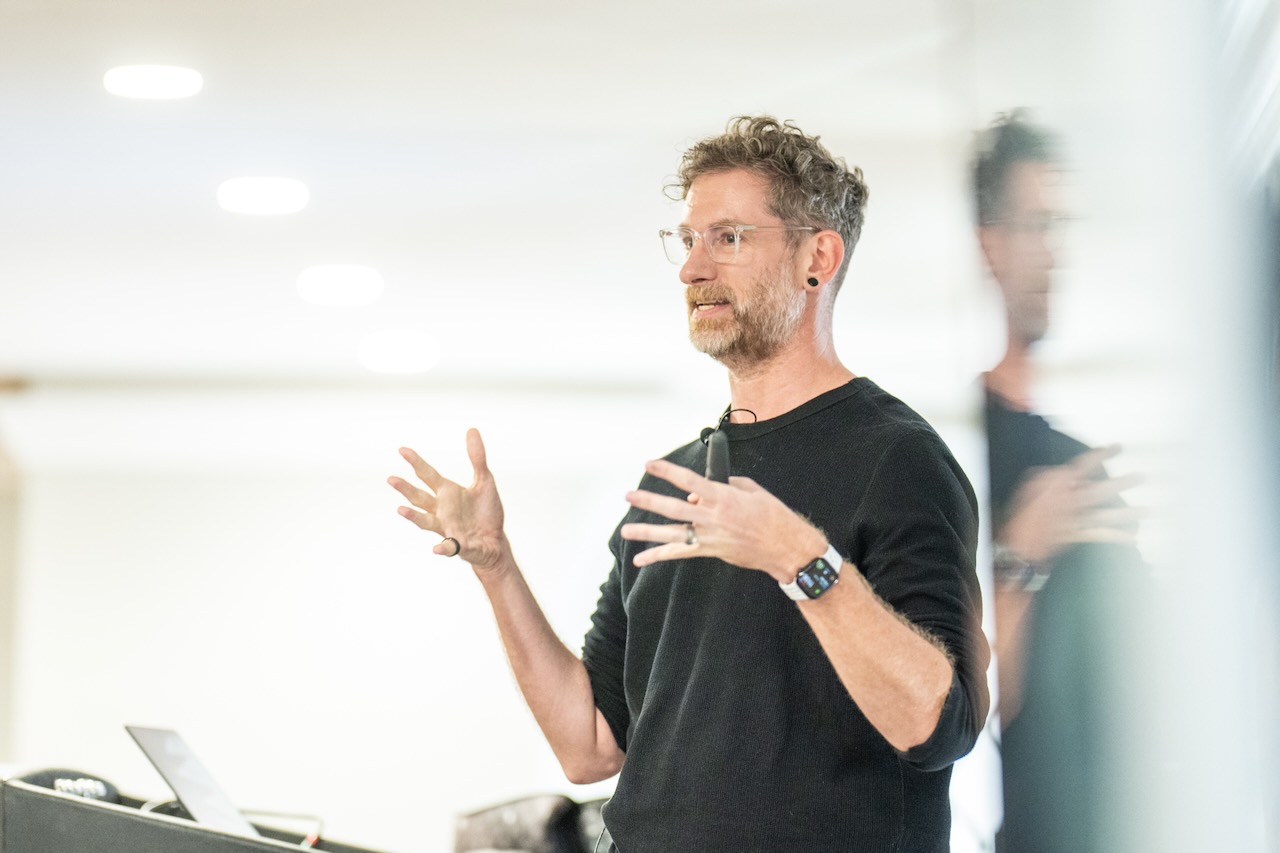 Biography (provided by the speaker)
Hadley Wickham is chief scientist at Posit PBC, winner of the 2019 COPSS award, and a member of the R Foundation. He builds tools (both computational and cognitive) to make data science easier, faster, and more fun. His work includes packages for data science (like the tidyverse, which includes ggplot2, dplyr, and tidyr)and principled software development (e.g. roxygen2, testthat, and pkgdown). He is also a writer, educator, and speaker promoting the use of R for data science.
Joseph Priestley Lecture
The Joseph Priestley Award is presented by Dickinson College in memory of Joseph Priestley, discoverer of oxygen, to a distinguished scientist whose work has contributed to the welfare of humanity. The award, first presented in 1952, recognizes outstanding achievement and contribution to our understanding of science and the world.